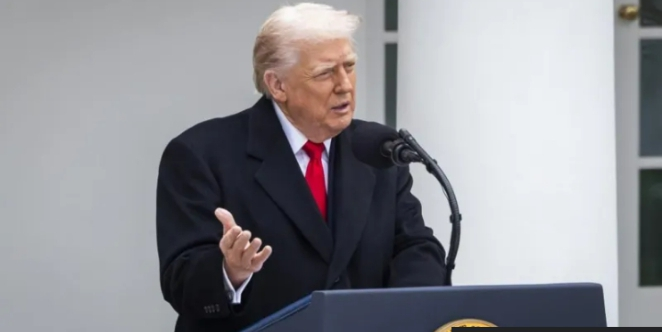
Venezuela faces mounting tension as Donald Trump threatens President Nicolás Maduro. The main focus keyphrase, “Trump threatens Venezuela’s Maduro”, underscores the growing crisis amid US military posturing in the Caribbean.
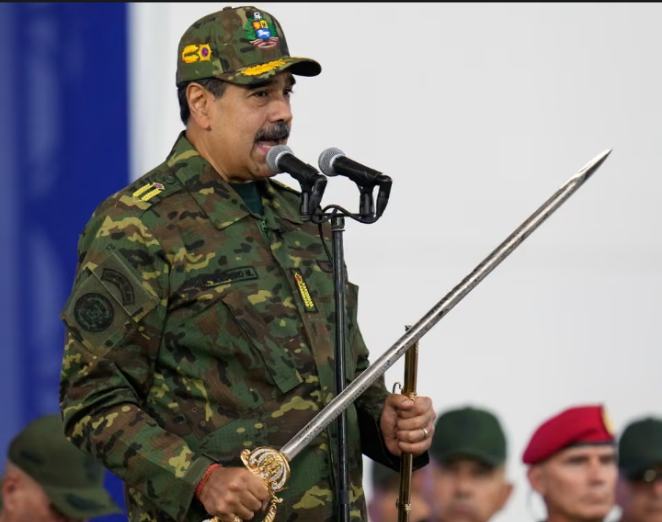
Maduro, clad in camouflage, addressed thousands in Caracas, pledging to defend the nation. He emphasized that citizens must prepare for any aggression. “Every inch of Venezuela is sacred,” he declared.
The Venezuelan leader invoked historical resistance, comparing today’s threat to Bolívar’s liberation campaigns. Maduro insists the people have a historic duty to oppose foreign interference in Venezuela’s sovereignty and independence.
Trump’s warnings suggest possible escalation. Speaking from Air Force One, he told reporters he could proceed the “easy way or the hard way,” signaling a US campaign with unclear objectives.
Analysts note Trump’s rhetoric blends anti-drug operations and political maneuvering. The administration frames Venezuela as a hub of cocaine trafficking, accusing Maduro of leading the so-called Cartel of the Suns.
US officials officially justify Caribbean operations as anti-narcotics missions. Critics argue Trump’s strategy appears as pressure to overthrow Maduro, rather than a conventional US foreign policy action targeting crime networks.
Douglas Farah, Latin America expert, warned that military moves risk emboldening Maduro. Past airstrikes failed to remove him in 2019, potentially strengthening his resolve against external threats.
Maduro emphasized national defense at rallies. He vowed to safeguard Venezuela’s mountains, plains, and skies. The president invoked religious faith, swearing before Christ to protect every inch of Venezuela from aggression.
US uncertainty fuels tension. Trump avoided specifics regarding troop deployment, leaving observers questioning whether airstrikes could escalate into direct US military intervention on Venezuelan soil.
Some sources close to Maduro dismiss US threats as bluff. Despite Trump’s show of force, Caracas officials believe Washington lacks appetite for full-scale conflict in South America.
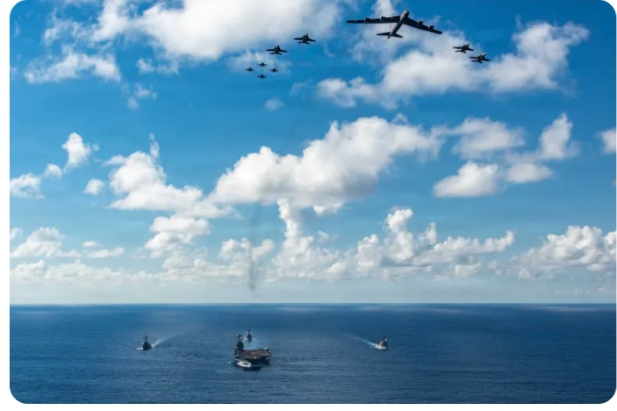
The Caribbean deployment signals power projection. Surveillance, naval patrols, and air assets support the US presence, ostensibly to counter drug trafficking. Yet critics see this as pressure against Maduro’s government.
Maduro claims public support strengthens resistance. He repeatedly told crowds that citizens must rise against imperialism, echoing Bolívar’s historic defense of South American independence centuries ago.
Trump’s messaging remains vague. He hinted at the campaign’s goals but refrained from details, saying, “If we can save lives, if we can do things the easy way, that’s fine.”
Despite Trump’s ambiguous threats, observers warn that future airstrikes could target Venezuela directly. Farah notes that an attack might aim at Caribbean ports, intending to disrupt cocaine trafficking routes.
Maduro’s government dismisses claims about the Cartel of the Suns, which the US designated as a terrorist organization. Analysts question whether the organization truly exists or is a political pretext.
Washington’s pressure campaign follows years of Venezuelan economic and political turmoil. Trump’s approach intensifies tensions with a leader who refuses to resign, reinforcing Maduro’s narrative of external aggression.
International concern grows over escalation. Analysts warn that an accidental confrontation could ignite regional instability, complicating diplomatic relations throughout Latin America and undermining broader US foreign policy goals.
Trump’s insistence on potential escalation contrasts with his reluctance to commit troops. Observers note this mirrors previous administrations’ dilemmas, balancing anti-narcotics missions with geopolitical risks in Venezuela.
Venezuelans watch nervously. Maduro’s speeches stress unity and preparedness. Citizens are urged to defend infrastructure, cities, and borders from any potential US military or political intrusion.
Maduro’s rhetoric combines patriotism with religious symbolism, framing defense as a sacred duty. He appeals to faith and nationalism, emphasizing Venezuela’s right to self-determination against foreign threats.
Analysts debate whether Trump intends symbolic strikes or a more extensive intervention. Past air campaigns against drug-smuggling boats highlight the Caribbean as a strategic zone for projecting US military power.
Opposition voices warn that Trump’s ambiguity risks miscalculation. The balance between deterrence and escalation remains delicate, with Venezuela’s sovereignty and regional stability hanging in the balance.
US military assets in the Caribbean include aircraft carriers, drones, and special operations units. While framed as anti-narcotics measures, the deployment sends a clear signal to Maduro’s government about US resolve.
Maduro vows continued defiance. He reassures citizens that Venezuela will not succumb to pressure. The government emphasizes resilience and readiness to repel both political and military threats.
Historical context underscores tension. Two centuries ago, Bolívar defended Venezuelan territory from colonial forces. Maduro draws on this legacy to frame the current US threat as part of ongoing imperialism.
Experts note that while Trump’s rhetoric is aggressive, actual intervention faces legal, logistical, and political hurdles. Any US strike could inflame anti-American sentiment throughout the region, complicating diplomatic relations.
Maduro’s domestic strategy relies on public demonstrations and media coverage. By showcasing unity and resilience, the government counters the image of weakness, reinforcing citizens’ willingness to resist external pressures.
The Trump threatens Venezuela’s Maduro campaign intersects with broader US policy in Latin America. Washington aims to assert influence, deter narcotics trafficking, and pressure regimes seen as hostile or destabilizing.
Venezuelan authorities reject external narratives labeling the nation as a hub of terrorism or drug trafficking. Maduro maintains that foreign pressure is part of an ongoing effort to undermine sovereignty.
Regional powers watch closely. Latin American neighbors weigh economic and diplomatic ramifications, concerned that escalation could disrupt trade, migration, and security networks throughout the Caribbean basin.
Maduro stresses moral responsibility. Leaders and citizens must defend Venezuelan territory, invoking faith, history, and nationalism. The message underscores that resistance is a civic and patriotic duty.
Trump’s administration appears focused on signaling capability rather than immediate action. Airstrikes on boats demonstrate force, but larger strategic moves remain uncertain, leaving Maduro and allies calculating responses.
Observers predict that Venezuela’s political future depends on domestic resilience and international reaction. A confrontation risks prolonged instability, with Trump threatens Venezuela’s Maduro serving as a flashpoint for wider conflict.
In Caracas, public rallies reinforce government messaging. Citizens chant slogans of defiance. Maduro’s speeches blend history, religion, and nationalism to maintain popular support amid external pressure.
Diplomatic channels remain active but tense. While Trump hints at dialogue, the threat of escalation casts a shadow over negotiations, making diplomacy fragile and contingent on US strategy shifts.
Maduro’s leadership style emphasizes visibility. Public appearances, military displays, and speeches create an image of unyielding strength, deterring opponents and signaling readiness to defend every inch of Venezuelan land.
The US debate on Venezuela remains polarized. Advocates for intervention cite drug trafficking and democratic restoration, while critics warn that military engagement risks destabilizing the Caribbean and Latin America broadly.
Analysts argue that the Trump administration’s next steps will define the campaign’s success or failure. Airstrikes, sanctions, or diplomatic pressure could all influence Maduro’s position and regional dynamics.
Venezuela’s future hinges on strategic calculation. Maduro must balance domestic support, historical symbolism, and international pressure, while Trump weighs options amid political and operational constraints.
Public perception matters. Venezuelans see resilience as both a civic duty and a national obligation. Maduro leverages this narrative to maintain legitimacy and resist perceived US interference.
Trump’s warnings aim to pressure Maduro without triggering large-scale war. The ambiguous nature of threats creates uncertainty, but also projects American strength, influencing both allies and adversaries.
Ultimately, Trump threatens Venezuela’s Maduro represents a high-stakes geopolitical maneuver, blending rhetoric, military presence, and diplomacy, with Venezuela’s sovereignty and regional stability hanging in the balance.
About The Author