TRUMP THREATENS HAMAS – Donald Trump has issued a blunt warning to Hamas, declaring the militant group will be forced to disarm or face immediate, decisive action from American and allied forces.
Speaking to reporters aboard Air Force One, Trump emphasized that his administration would not tolerate defiance, stressing that disarmament must happen within what he described as a “reasonable period of time.”
The warning comes as the Gaza ceasefire, brokered under Trump’s renewed Middle East peace plan, enters its fragile early stages with regional observers cautious about Hamas’s next moves.
Trump’s declaration signals a harder edge in his approach to the conflict, as Washington tightens its oversight on the implementation of his 20-point Gaza peace framework.
In his words, “If they don’t disarm, we will disarm them — and it will happen quickly, perhaps violently. But they will disarm.”
That stark message underscores a key pillar of Trump’s strategy: restoring order through strength, while securing what he calls a “new era of peace built on deterrence.”
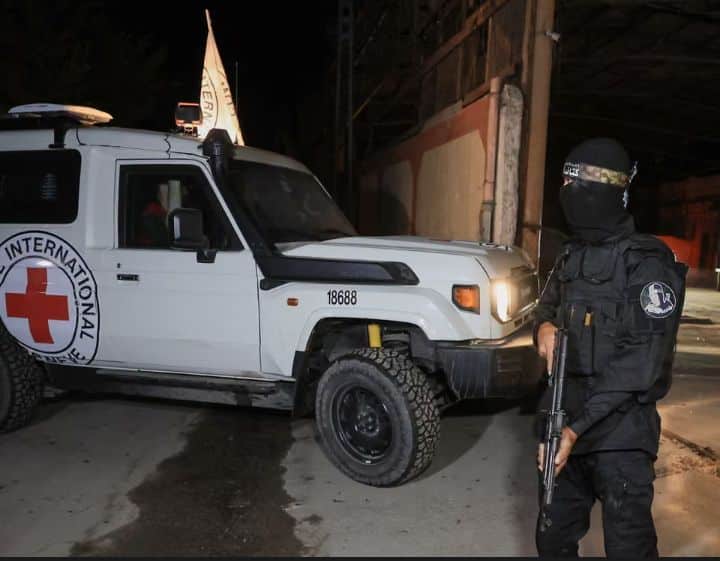
The president’s remarks followed questions surrounding Hamas’s continued presence in Gaza despite the signed ceasefire, which Trump insists must lead to a complete removal of armed factions.
Under phase two of the Gaza peace deal, Trump said Hamas would be stripped of weapons and limited to civilian political engagement under international supervision.
However, internal White House discussions have revealed friction between security advisers, with some urging a phased transition to prevent an abrupt collapse of Gaza’s fragile governance structure.
Trump, however, has remained adamant that no peace can last while Hamas retains weapons, framing disarmament as both symbolic and strategic for regional security.
Earlier in Cairo, the president reiterated that phase two of the peace deal had already begun, even as logistical challenges continue to stall several ground initiatives.
“Phase two has started,” Trump said. “It’s a cleanup operation now. Gaza needs stability, and that starts with the elimination of militant power.”
Officials familiar with the discussions said Trump’s team had met senior Hamas figures in secret talks to secure compliance with the initial ceasefire provisions.
According to aides, the meeting involved Trump’s Middle East envoy Steve Witkoff and his son-in-law Jared Kushner, who personally guaranteed Israel’s restraint under the truce.
The talks reportedly took place in Doha with Hamas political leader Khalil al-Hayya, who survived an Israeli assassination attempt just weeks before the accord was finalized.
Sources described the encounter as “tense but productive,” with Hamas pressured to release hostages and accept strict timelines for weapons surrender under US monitoring.
Trump’s negotiators reportedly told Hamas that the hostages were a liability, urging the group to engage in a structured exchange to maintain international credibility.
One envoy was quoted as saying Trump’s position was “non-negotiable” — that the US expects every one of the deal’s 20 points to be implemented without deviation.
Despite the stern tone, Trump’s team insists that limited cooperation from Hamas will be tolerated temporarily to maintain order during the transition period.
Officials acknowledged that reconstruction efforts in Gaza could not proceed effectively without some coordination with ground authorities, even if those authorities include former militants.
Trump has emphasized that the rebuilding of Gaza will be “dangerous but necessary,” describing it as the foundation for long-term peace under a demilitarized administration.
Observers note that Trump’s hardline stance has revived tensions between Washington and some humanitarian groups concerned about potential escalation if Hamas resists disarmament.
Still, Trump’s message has resonated with Israel and regional allies who view Hamas’s demobilization as the final test of the ceasefire’s legitimacy.
“The world will soon see,” Trump told reporters. “Either Hamas chooses peace and prosperity, or it chooses confrontation and annihilation. There will be no middle ground.”
The president’s framing reflects his signature doctrine — that peace is only achievable when adversaries understand the consequences of defiance.
Critics within the US foreign policy establishment have warned that Trump’s rhetoric risks reigniting violence, but his advisers argue it strengthens deterrence and accelerates compliance.
White House insiders revealed that Trump’s team views this disarmament phase as the “cornerstone” of his Middle East legacy, rivaling historic peace agreements of the past.
Under the plan, international observers from Egypt, Turkey, and Qatar are tasked with verifying Hamas’s disarmament while coordinating Gaza’s reconstruction funding.
Regional intelligence officials have already confirmed preliminary cooperation between Hamas intermediaries and foreign envoys as part of a verified weapons-surrender protocol.
Videos released from Gaza this week showed Hamas forces executing men accused of collaboration, a move Trump’s team condemned as proof the group must be disarmed swiftly.
“Hamas cannot be judge, jury, and executioner,” one US official said, adding that such acts highlight why Trump insists on removing weapons from the group’s control.
As part of the peace deal’s early enforcement, US security teams are reportedly monitoring Gaza’s internal operations through partner intelligence networks.
Trump’s aides suggest the US will leverage military pressure and sanctions to compel full compliance if Hamas stalls or violates the agreed timelines.
The president has already hinted at authorizing “targeted enforcement operations” should evidence emerge that weapons are being concealed or redistributed.
Analysts interpret this as a veiled threat of precision strikes or joint raids conducted with regional allies under the banner of “stability enforcement.”
Hamas leadership has so far avoided direct confrontation, but internal divisions within its ranks have complicated the implementation of the disarmament clause.
Some factions reportedly view Trump’s peace framework as a trap designed to dismantle their influence while legitimizing Israel’s expanded security role.
Nevertheless, Trump maintains that the plan offers Hamas “a path to redemption” — participation in governance without arms or terror as a political currency.
He argues that a disarmed Gaza could evolve into a thriving trade zone under US-backed development partnerships, transforming the territory’s global reputation.
Supporters of Trump’s approach call it pragmatic realism, noting his willingness to engage adversaries directly while enforcing compliance with visible power.
Opponents counter that his policy risks militarizing diplomacy and undermining fragile humanitarian progress made since the ceasefire began.
Still, the administration remains confident that the peace roadmap — grounded in deterrence — will force Hamas to either reform or vanish.
Trump’s foreign policy team insists that “there will be no second chances” if Hamas violates the ceasefire, warning that any aggression will be met “in full measure.”
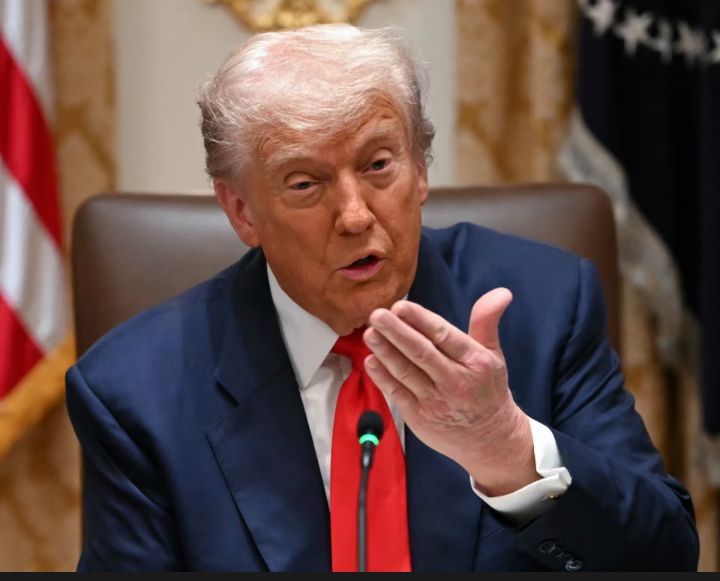
In private briefings, officials described the operation as a “reset of regional order,” with the US positioned as both arbiter and enforcer of Middle Eastern peace.
The White House has indicated it will hold direct accountability sessions with all stakeholders, ensuring every clause of the 20-point deal is fulfilled transparently.
Trump, now visibly invested in his Middle East legacy, said he would “personally oversee” the implementation process to guarantee peace “secured through strength, not sympathy.”
As the ceasefire’s second phase begins, the world watches whether Hamas will heed Trump’s threat or test the resolve of an administration ready for confrontation.
For Trump, the equation is clear — peace will stand only when power is respected, and those who challenge it will face consequences beyond negotiation.
About The Author