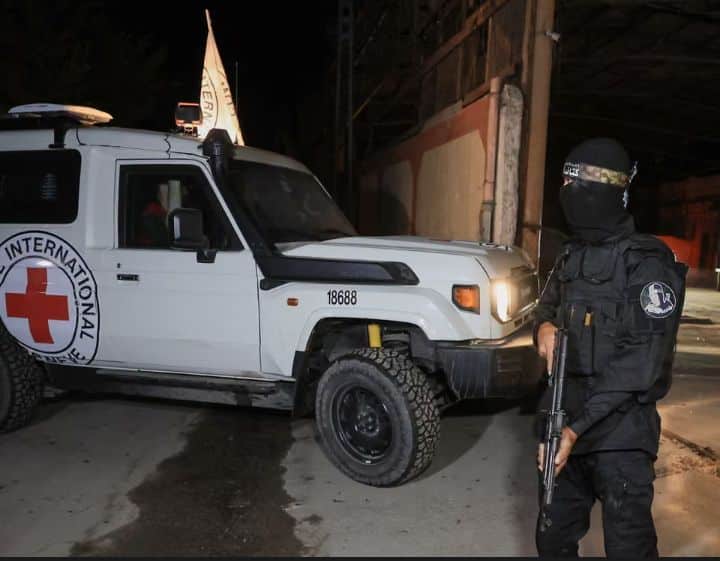
The ongoing Hamas executions in Gaza have ignited political turmoil and moral outrage, exposing deep divisions within Palestinian leadership and escalating insecurity across the war-torn Strip.
Video evidence showed blindfolded men publicly executed by masked gunmen, an image that quickly spread online, provoking shock, fear, and renewed debate over the legality of Hamas actions.
The Palestinian Authority condemnation was immediate, denouncing the acts as intolerable violations of law and morality, calling for Gaza’s governance to return to legitimate institutions, free from coercion.
Witnesses reported masked militants leading detainees into public streets before executing them at close range, a display designed to instill fear and demonstrate Hamas’s absolute control over territory.
These events have worsened Gaza ceasefire tensions, already fragile following the recent truce with Israel, leaving civilians trapped between the consequences of war and the terror imposed internally.
Mahmoud Abbas’s office labeled the killings “heinous crimes,” emphasizing that restoring lawful governance is essential to prevent chaos and rebuild trust among Palestinians traumatized by war.
The Palestinian Authority condemnation emphasized that impunity for such actions undermines Gaza’s political future, signaling that violence cannot replace accountable, representative governance in Palestinian society.

Human rights organizations quickly denounced the killings, highlighting that extrajudicial killings in Gaza constitute grave violations of international norms, calling for urgent accountability and public condemnation by all authorities.
Civilians expressed fear for their safety, as masked patrols and armed checkpoints restricted movement, creating a climate of intimidation while Hamas reinforced dominance across Gaza’s devastated streets.
Some families welcomed security forces, seeing them as deterrents against looting, yet the tension between perceived protection and coercion deepened, amplifying the social cost of Hamas executions in Gaza.
The U.S. President’s reaction created global shock, with the Trump response to Hamas crackdown dismissing outrage and describing killings as targeting gangs rather than innocent civilians.
He claimed the executions were necessary to maintain order, suggesting that Hamas was temporarily authorized to police Gaza, despite objections from international observers and Palestinian authorities.
Critics argue that Trump’s remarks normalize extrajudicial violence and risk emboldening Hamas, while the Palestinian Authority condemnation emphasizes the need for lawful enforcement rather than fear-driven coercion.
Hamas claimed the executed men were collaborators or criminals threatening Gaza’s fragile stability, presenting their actions as necessary measures in the aftermath of intense conflict.
The specter of extrajudicial killings in Gaza has created widespread dread among returning residents, whose hopes for safe resettlement have been overshadowed by the militia’s ruthless enforcement tactics.
Families returning to bombed neighborhoods reported gunfire and checkpoints, underscoring the grim reality of Gaza ceasefire tensions where internal violence now threatens civilian lives more than war damage.
The PA called for international oversight, stressing that legitimate institutions must govern Gaza to prevent the ongoing cycle of retribution and violence from becoming permanent.
Witnesses reported that executions were carried out swiftly and publicly, designed as warnings to potential rivals and reinforcing Hamas’s totalitarian authority across areas already devastated by conflict.
Militia leader Ashraf al-Mansi rejected claims that Hamas had intimidated his forces, asserting that his group controlled northern neighborhoods and would retaliate if Hamas overstepped boundaries.
The Palestinian Authority condemnation stressed that the violent approach deepens the national divide, undermining both West Bank leadership and broader Palestinian aspirations for stability and legitimacy.
Street patrols have grown more frequent, as masked units and checkpoints enforce compliance, intensifying the climate of fear while residents navigate postwar reconstruction under constant surveillance.
The Trump response to Hamas crackdown drew condemnation from international human rights organizations, highlighting a perceived U.S. tolerance of unlawful killings and a failure to uphold basic humanitarian standards.
The President’s remarks framed executions as gang purges, minimizing civilian suffering and ignoring the long-term political consequences of empowering armed militias in Gaza.
Humanitarian observers warned that the killings exacerbate trauma, creating a generation of residents who fear authority figures rather than trust them, deepening the consequences of Hamas executions in Gaza.
Some Gazans described a paradoxical sense of safety amid fear, suggesting that armed presence, while coercive, offered deterrence against rival factions and lawlessness emerging from postwar instability.
The Palestinian Authority condemnation repeated calls for the reestablishment of lawful governance, arguing that Hamas’s monopoly of violence undermines both trust and prospects for long-term recovery.
Masked gunmen continue to patrol Gaza City, enforcing curfews and intimidating locals, further fueling internal conflicts and widening the divide between citizens and the authorities claiming to protect them.
Reports of clashes between armed clans and Hamas units illustrate that Gaza ceasefire tensions are worsening, with rival militias testing both the government’s and Hamas’s ability to control territory.
Executions and arrests in northern Gaza have sparked intense debate, as families watch neighborhood leaders targeted for alleged collaboration, underscoring the precarious security situation after the ceasefire.
Many residents describe returning home as a relief but acknowledge the threat posed by armed groups, creating constant vigilance and fear as Hamas strengthens control.
The Trump response to Hamas crackdown signaled tolerance for internal violence, raising questions about the U.S. approach to governance and human rights in postwar Gaza.
Observers warned that normalizing such behavior risks long-term destabilization, as factions respond with their own armed enforcement, perpetuating cycles of extrajudicial killings in Gaza and retribution.
Militia fighters have solidified their presence in northern sectors, asserting control over roads and residential areas, demonstrating that Hamas executions in Gaza remain a tool for political dominance.
Families displaced by prior bombing and fighting face uncertainty, with their ability to return home contingent on allegiance or compliance with armed authorities enforcing order.
Reports confirm that enforcement is selective, targeting perceived rivals while allowing pro-Hamas actors freedom, highlighting the stark imbalance in power and the dangers of extrajudicial authority.
International observers have noted the pattern of executions as an effort to intimidate and consolidate power, rather than ensure justice or maintain civil order.
The Palestinian Authority condemnation urged intervention from humanitarian organizations and regional actors to halt abuses and restore confidence in legal governance across Gaza.
Residents describe streets patrolled by masked men, checkpoints at every intersection, and sporadic gunfire as everyday realities under Hamas, reinforcing fear while attempting to maintain order.
Civilians returning to their homes during Gaza ceasefire tensions expressed relief at seeing armed forces providing some security but remain apprehensive about arbitrary arrests and killings.
Children and families bear witness to the consequences of conflict and internal purges, adding psychological strain and highlighting the need for formal justice structures.
The Trump response to Hamas crackdown also complicates diplomacy, with international actors questioning whether U.S. acceptance of Hamas policing undermines the push for accountability.
Humanitarian agencies face logistical challenges, operating amid armed patrols, checkpoints, and fear of sudden reprisals tied to accusations of collaboration or resistance.
Reports of extrajudicial killings in Gaza show that despite ceasefire agreements, enforcement remains lethal, blending security operations with political punishment under the guise of law.
Militias contesting Hamas authority have engaged in firefights, leaving neighborhoods in uncertainty, underscoring the fragile balance between governance and anarchy that pervades postwar Gaza.
The public executions have sparked panic, reshaping citizen perceptions of power, and demonstrating that Hamas executions in Gaza are as much a political tool as a punitive measure.
Residents struggle to differentiate between criminal enforcement and political repression, raising concerns that cycles of violence could extend indefinitely without external intervention.
International condemnation is broad, but Hamas retains significant control, while the Palestinian Authority condemnation serves largely as moral and political opposition rather than immediate enforcement.
Trump’s indifference or tacit approval reflects a pragmatic approach focused on stability, but risks eroding U.S. credibility and emboldening armed groups in Gaza indefinitely.
Observers note that Gaza ceasefire tensions are not merely residual from Israeli operations but increasingly fueled by internal struggles between militias, Hamas, and civilian groups.
As the situation persists, families returning to northern neighborhoods confront both the physical devastation of war and the looming threat posed by armed enforcers.
The long-term impact of extrajudicial killings in Gaza may shape governance and civil society for years, reinforcing fear and weakening prospects for democratic development.
Community leaders and activists stress that accountability is urgent to prevent normalization of violence, particularly when masked gunmen execute citizens under public scrutiny.
Reports indicate that local militias, empowered by Hamas, continue to expand their presence, ensuring that Hamas executions in Gaza remain a tool to suppress dissent and consolidate influence.
Civil society appeals highlight the ethical dilemma, as citizens weigh personal safety against the demand for justice and restoration of legitimate authority in Gaza.
The Trump response to Hamas crackdown is criticized internationally as tolerating authoritarianism, raising concerns about U.S. foreign policy priorities versus human rights obligations.
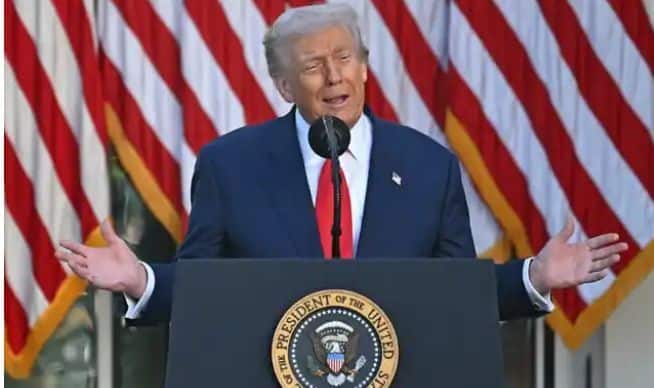
Street-level tension, combined with public executions, leaves Gaza residents navigating an environment where survival depends on compliance and avoidance of perceived collaboration with rivals.
Masked gunmen, checkpoints, and rapid executions remain common, reinforcing a system of control that blends political enforcement with fear-driven social regulation.
Observers argue that Gaza ceasefire tensions are exacerbated by weak institutions and competing armed factions, suggesting that true peace will require restoration of legitimate governance.
Families displaced by violence now face uncertainty, while ongoing internal purges threaten to destabilize neighborhoods rebuilt only partially after wartime destruction.
The Palestinian Authority condemnation underscores that only lawful governance can provide stability, warning that reliance on armed enforcement will perpetuate cycles of violence and mistrust.
The consequences of Hamas executions in Gaza are profound, shaping political, social, and humanitarian conditions, leaving residents caught between fear and fragile security structures.
Without reform, internal purges will likely continue, creating long-lasting trauma and undermining reconstruction efforts across Gaza, even as ceasefire agreements attempt to maintain peace.
Masked enforcement, public executions, and militia clashes combine to make governance in Gaza resemble a system dominated by coercion rather than law, threatening the civil future of its population.
The situation illustrates the difficulty of post-conflict recovery when armed groups operate with near impunity, and when external powers tolerate selective violence for perceived stability.
Residents report that even minor disputes can escalate into violent encounters, reinforcing the perception that extrajudicial killings in Gaza are now an institutionalized aspect of governance under Hamas.
The human cost is severe, and observers warn that normalization of violence may hinder educational, social, and economic recovery, leaving Gaza trapped in cycles of fear and retaliation.
As humanitarian organizations attempt aid delivery, masked patrols and internal violence complicate logistics, demonstrating that Gaza ceasefire tensions persist, not solely due to external threats, but internal factional conflict.
The lessons of this crisis underscore the urgent need for accountability, structured governance, and international attention to prevent Hamas executions in Gaza from becoming routine.
Without intervention, residents may face years of internal terror, limited mobility, and an environment where armed enforcers dictate the rules of daily life, solidifying power through fear.
This postwar reality, combined with inconsistent international oversight and the Trump response to Hamas crackdown, suggests that political instability may persist, undermining the prospects for long-term peace.
Civilians remain at the mercy of armed groups, highlighting the paradox of security enforced through violence, where the very presence of order also instills deep anxiety.
The continuing cycle of internal enforcement, militia clashes, and public executions demonstrates that extrajudicial killings in Gaza are shaping governance, security, and social relations across the Strip.
Rebuilding civil institutions, restoring public trust, and curbing arbitrary violence remain central challenges as Gaza transitions from wartime destruction to an uncertain peace dominated by armed authority.
The implications of Hamas executions in Gaza resonate beyond immediate victims, affecting governance, diplomacy, humanitarian aid, and the psychological landscape of the entire population.
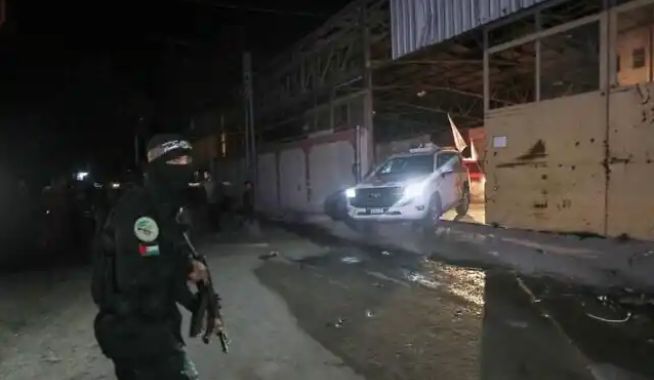
Residents, activists, and international observers now watch closely, understanding that the persistence of armed enforcement and internal purges threatens to entrench cycles of fear for years to come.
The struggle for lawful governance versus coercive control remains unresolved, underscoring the need for international engagement, oversight, and renewed pressure on Hamas to comply with humanitarian norms.
Without such interventions, the legacy of Hamas executions in Gaza and related abuses may define the postwar period, leaving the Strip’s population caught between survival and fear.
About The Author