The growing Ukraine war risks for US economy are becoming a major concern, as a new report warns that the ongoing conflict could destabilize trade and the global financial system.
The Center for Freedom and Prosperity report, authored by economists Daniel J. Mitchell and Robert O’Quinn, argues that peace in Ukraine would deliver “massive economic benefits” to the United States and its allies.
According to the analysis, the continued war in Ukraine threatens the US dollar’s dominance as the world’s reserve currency, potentially weakening America’s economic leverage across global markets and increasing long-term financial instability.
Economists noted that the Ukraine war risks for US economy include escalating debt levels, energy losses, and a potential one percent rise in interest rates that could add $300 billion to national debt.
The authors further claim that American industries such as aviation and energy have already lost billions in missed opportunities, while China and Russia are actively leveraging the crisis to challenge the dollar’s supremacy.
“Every day the war continues, the Ukraine war risks for US economy multiply,” Mitchell warned. “The financial consequences extend far beyond geopolitics; they reach American households and investors.”
The report underscores that ending hostilities would enable the United States to “normalize trade” with both Russia and Ukraine, paving the way for massive reconstruction contracts estimated at $520 billion.
O’Quinn explained that peace could reclaim $100 billion in lost energy investment projects, including ExxonMobil’s Arctic ventures, while reopening vast industrial opportunities for US-based corporations previously barred by sanctions.
He added that the Ukraine war risks for US economy go beyond short-term market tremors, predicting that extended conflict would push global inflation higher and weaken investor confidence in the American financial system.
Boeing, according to the report, stands to lose between $50 billion and $100 billion if sanctions persist, as global aviation markets pivot towards China’s growing aerospace sector.
“The potential loss for Boeing and related US industries is staggering,” O’Quinn wrote. “Every month of continued warfare shifts more global demand away from American-made products.”
The report’s findings have been shared with the White House, emphasizing that ending the war would not reward Russian aggression but would help “restore global economic stability.”
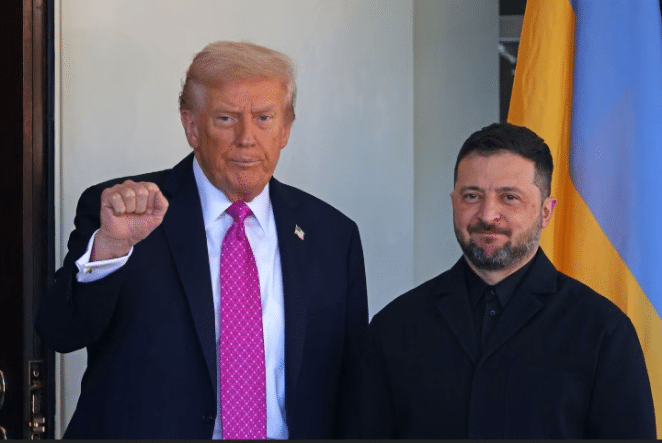
Former President Donald Trump has reportedly made renewed diplomatic efforts to end the conflict since returning to the Oval Office in January. Yet, his Budapest summit with Russian leader Vladimir Putin collapsed amid irreconcilable demands.
The report’s conclusions add weight to Trump’s argument that prolonging the war serves neither Ukrainian nor American interests. The Ukraine war risks for US economy, analysts suggest, are becoming a political and economic liability for Washington.
A White House insider told The Independent that “this is a very significant piece of work and will influence administration strategy,” stressing that “economic imperatives must now align with foreign policy goals.”
“The point is simple,” the source added. “Ending the war is not just a diplomatic priority — it’s an economic necessity for America’s future prosperity.”
Among the report’s most striking warnings is the potential erosion of the US dollar as the global reserve currency. Russia and China, it said, are exploiting wartime uncertainty to promote alternative trading systems.
“Both nations view the war as a strategic opening to weaken the dollar’s role,” the authors state. “That shift could redefine global commerce and American influence.”
The paper warns that if international reliance on the dollar declines, it could increase borrowing costs and restrict Washington’s ability to finance its massive debt, amplifying the Ukraine war risks for US economy.
Such an outcome would reverberate across industries — from manufacturing and agriculture to technology — further tightening financial conditions for ordinary Americans already facing high inflation.
Energy executives cited in the report argue that sanctions on Russia have cost American firms billions in foregone profits, while European competitors also suffer under the strain of lost supply chains.
British economist Daniel Mitchell said, “This conflict has revealed how vulnerable Western economies are when political decisions interrupt critical trade flows. It’s time to recalibrate.”
He added that the Ukraine war risks for US economy have parallels in Europe, where companies like BP and Shell have written off tens of billions due to divestments in Russia.
“British companies from BP to banks and manufacturers have suffered similar losses,” he said. “The shared transatlantic burden underscores the urgency of diplomatic resolution.”
The report lists BP’s $25.5 billion write-off from its Rosneft stake — the largest single corporate loss since the war began — as an indicator of how deeply sanctions are biting across sectors.
Meanwhile, Germany’s Uniper lost $22 billion and Finland’s Fortum $4.1 billion, illustrating the heavy toll of prolonged sanctions and disrupted trade across the Western alliance.
Mitchell noted that “in the UK, firms tied to Russian markets have seen revenues evaporate, mirroring the American experience.” This interconnected strain is shaping new debates in both Washington and London.
As one Washington-based energy lobbyist told The Independent, “Economic diplomacy is now as urgent as military aid. The world cannot afford a long war.”
The authors urged US policymakers to “lead from the front” in seeking an end to the conflict through negotiation, emphasizing that economic recovery depends on restored stability in Eastern Europe.
They also urged European governments to collaborate on a “framework for peace” that balances deterrence with development, allowing both Ukraine and Russia to reintegrate into global trade networks.
Experts argue that while sanctions were necessary to deter aggression, maintaining them indefinitely risks locking the global economy into prolonged stagnation.
O’Quinn stressed that “ending the war would channel resources back into productive industries rather than military expenditure, fostering growth across both continents.”
The Center for Freedom and Prosperity believes the administration must act swiftly to protect US economic interests, with analysts calling for a reevaluation of sanctions and new trade guarantees for allied firms.
The Ukraine war risks for US economy, they say, demand bipartisan urgency to preserve dollar stability, revive American competitiveness, and prevent financial contagion from spreading globally.
Some policymakers argue for a calibrated approach — maintaining military support for Kyiv while pursuing parallel talks with Moscow to de-escalate tensions and unlock stalled markets.
Others, however, warn that premature diplomacy could embolden Russia. As one senior defense official said anonymously, “We can’t trade peace for weakness. But we also can’t ignore the economic warning lights.”
Financial analysts caution that the next six months could define whether the Ukraine war risks for US economy materialize into a wider crisis, especially if energy disruptions or currency shifts intensify.
“The uncertainty is toxic for global markets,” said Wall Street strategist Karen Lewis. “Investors are watching Washington’s every move for signs of stability or escalation.”
Lewis added that “peace dividends” from ending the conflict could lift US GDP by as much as two percent annually, while continued warfare could cut growth in half.
With inflation still hovering around 4%, any rise in interest rates linked to declining dollar confidence would further squeeze American households already burdened by high costs.
Ultimately, the report concludes that diplomacy remains the most cost-effective tool at Washington’s disposal, urging the Trump administration to double down on negotiations rather than military escalation.
“The choice is clear,” it states. “Continue the war and risk economic erosion, or end it and unleash a wave of prosperity and global confidence.”
For now, both sides appear far from compromise. Yet the report’s message resonates: the Ukraine war risks for US economy are too severe to ignore, and peace may be the only sustainable solution.
About The Author