

Trump sues BBC for January 6 speech edit, turning a long-telegraphed threat into legal action that intensifies his global confrontation with major media institutions.
The lawsuit, filed in a Florida federal court, seeks up to $10bn in damages over a BBC Panorama broadcast examining Trump’s role before the Capitol attack.
Trump alleges the BBC deliberately edited his January 6, 2021 speech in a way that falsely portrayed him as encouraging violence among supporters.
According to the complaint, the broadcaster combined remarks delivered nearly an hour apart, presenting them as a single, continuous call to action.
The edited sequence suggested Trump told the crowd, “we’re going to walk down to the Capitol… and we fight. We fight like hell.”
Trump’s legal team argues that construction was deceptive, malicious, and designed to influence public opinion during a sensitive election period.
The Panorama episode aired just days before the 2024 US presidential election, a timing Trump claims was not coincidental.
In the filing, Trump seeks $5bn for defamation and another $5bn under Florida’s Deceptive and Unfair Trade Practices Act.
The BBC has acknowledged the edit was an “error of judgment” and issued an apology, but has denied any legal basis for defamation claims.
That admission, however, forms a central pillar of Trump’s case, which argues the broadcaster effectively conceded ethical wrongdoing.
Trump made his intentions clear earlier this year, publicly warning the BBC he would sue if accountability was not imposed.
“In a little while, you’ll see I’m suing the BBC for putting words in my mouth,” Trump told reporters at the White House.
“Literally, they had me saying things I never said coming out,” he added, reiterating a long-standing grievance with media coverage.
The lawsuit marks a significant escalation in Trump media legal battles, extending his aggressive litigation strategy beyond American news organizations.
Since his return to office, Trump has pursued or secured settlements against several major US broadcasters and media corporations.
ABC News, owned by Disney, agreed to pay $15m following a defamation lawsuit linked to comments by anchor George Stephanopoulos.
Paramount, parent company of CBS News, settled for $16m over disputed editing of a pre-election interview with Kamala Harris.
Those settlements emboldened Trump allies, who argue the BBC case follows a pattern of journalistic misconduct finally being challenged.
Legal experts note the BBC lawsuit is distinct, targeting a publicly funded foreign broadcaster rather than a commercial US outlet.
Trump’s legal team argues Florida courts have jurisdiction because the BBC conducts substantial business in the state.
They cite the BBC’s commercial website operations and its involvement with BritBox, a streaming service available in the US.
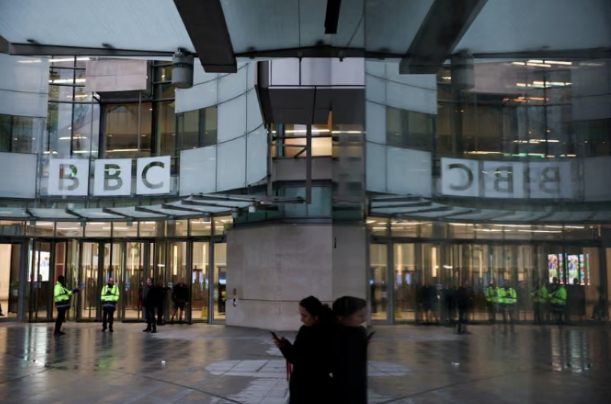
The BBC disputes that claim, emphasizing that Panorama does not air in the United States and BBC iPlayer is unavailable domestically.
Nevertheless, Trump’s lawyers argue digital distribution collapses traditional geographic boundaries in modern media consumption.
At the heart of the dispute is how journalists contextualize political speech, particularly language involving words like “fight.”
Trump supporters argue such language was metaphorical, common in political rhetoric, and stripped of context by selective editing.
Critics maintain the overall tone of Trump’s January 6 address was incendiary and contributed to the violence that followed.
Trump has repeatedly denied responsibility for the Capitol attack, insisting he never instructed supporters to engage in violence.
He has described January 6 as a protest that “got out of control,” while condemning what he calls unfair historical framing.
After returning to office earlier this year, Trump pardoned hundreds convicted over the Capitol riot, including some violent offenders.
That move reignited debate about accountability and further polarized public opinion around Trump’s actions that day.
The BBC Panorama controversy has already produced serious internal consequences within the broadcaster.
BBC director general Tim Davie and BBC News chief Deborah Turness resigned amid accusations of systemic editorial failures.
Their departures followed a leaked memo alleging persistent bias in coverage of Trump, Gaza, and transgender issues.
The memo was authored by Michael Prescott, a former adviser to the BBC’s editorial standards committee.
Prescott accused the corporation of serious governance failures and a breakdown in internal accountability mechanisms.
Those allegations intensified pressure on the BBC board, already facing political criticism from multiple directions.
Trump’s lawsuit now adds international legal risk to an institution grappling with questions of credibility and neutrality.
In the complaint, Trump’s legal team writes the BBC showed “no meaningful institutional changes” after apologizing for the edit.
They argue reputational damage was extensive and irreversible, amplified by the BBC’s global reach and authority.
Press freedom groups have condemned the lawsuit, warning it could chill investigative journalism worldwide.
“You don’t get to demand $10bn over an alleged journalistic blunder,” said Seth Stern of the Freedom of the Press Foundation.
Stern called the damages claim “preposterous,” noting Trump won the 2024 election and suffered no demonstrable financial loss.
He also questioned how associating Trump with January 6 could be defamatory given Trump’s own public statements and pardons.
Trump allies counter that accountability matters regardless of election outcomes or political context.
“This lawsuit is about truth and consequences,” a Trump spokesperson said, accusing the BBC of reckless election interference.
The BBC declined to comment immediately on the filing, referring to previous statements denying legal liability.
Internally, staff face uncertainty as legal costs mount and public trust becomes increasingly fragile.
The case raises broader questions about how media organizations edit long political speeches for broadcast formats.
It also tests whether public apologies can shield institutions from litigation in an era of aggressive political lawfare.
Read also: Hollywood director Rob Reiner, wife Michele tragically killed; Son arrested in fatal stabbing
Trump sues BBC for January 6 speech edit at a moment when global journalism is under unprecedented political pressure.
The lawsuit’s outcome could redefine boundaries between editorial judgment, political accountability, and legal exposure.
For Trump, the case reinforces a presidency defined by confrontation with institutions he views as hostile or unaccountable.
For the BBC, it represents one of the most consequential legal and reputational challenges in its modern history.
As the case proceeds, both sides appear determined, setting the stage for a transatlantic legal battle with far-reaching implications.
About The Author


