The Trump infrastructure freeze has escalated tensions amid the ongoing US government shutdown 2025, affecting millions of citizens dependent on federal project funding across Democratic states.
White House Budget Director Russell Vought announced the Trump infrastructure freeze on social media, highlighting that $11bn in projects would pause immediately in select urban areas.
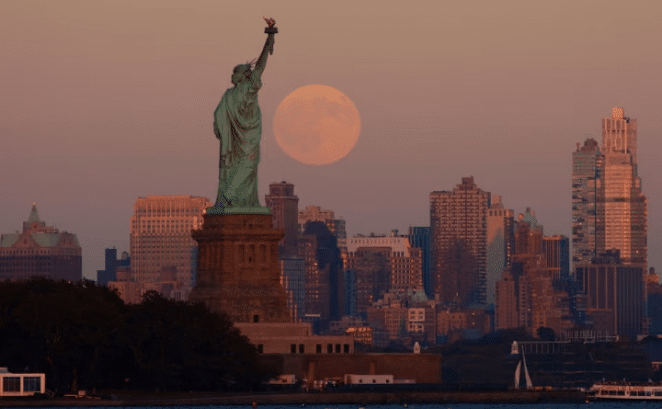
Projects impacted include low-priority Army Corps projects in New York, San Francisco, Boston, and Baltimore, signaling a direct hit on major metropolitan infrastructure development programs nationwide.
The Office of Management and Budget explained that Donald Trump wants to reorient federal priorities, emphasizing strategic project allocation while targeting opposition-controlled Democratic states.
This Trump infrastructure freeze follows an earlier $28bn freeze on transportation and energy projects, demonstrating a consistent strategy to pressure Congress to end the government shutdown.
The government shutdown 2025 began on 1 October, creating significant disruption for federal operations, with Trump’s freeze tactics adding political friction and delaying critical urban infrastructure initiatives.
Trump also promised federal budget cuts targeting “Democrat agencies,” including the elimination of 4,100 federal jobs, a move intensifying the political confrontation with opposition lawmakers.
Army Corps projects affected include a San Francisco waterfront park, bridge expansions in Cape Cod, and critical water and wastewater systems in New York City, totaling $7bn for the city.
Additional frozen projects span Illinois, Maryland, Oregon, New Mexico, New Hampshire, Massachusetts, New Jersey, Rhode Island, and Delaware, all states that voted against Trump in 2024.
OMB officials cited the status of many projects in “sanctuary jurisdictions,” which resisted Trump’s immigration policies, as influencing the decision to enforce the Trump infrastructure freeze.
The freeze illustrates how political strategy intersects with infrastructure funding, directly affecting local economies reliant on federal construction, maintenance, and improvement projects across Democratic states.
Residents in affected cities face potential delays in critical urban development, public works improvements, and environmental management projects, complicating municipal planning and public service delivery under the Trump infrastructure freeze.
Federal employees involved with Army Corps projects are left uncertain about job security, timelines, and project continuity, heightening stress amid the prolonged government shutdown 2025 and Trump administration interventions.
Congressional Democrats criticized the Trump infrastructure freeze as punitive, arguing that withholding funds for political gain undermines the equitable distribution of federal resources in Democratic-controlled cities.
Critics also warn that prolonged freezes on Army Corps projects could increase future costs, as delayed infrastructure repairs and construction may face inflation and logistical complications nationwide.
Supporters of Trump claim the Trump infrastructure freeze enforces fiscal discipline, redirects funds toward national priorities, and pressures states to align with federal policy goals during the government shutdown 2025.
The pause affects urban development projects essential for public safety, transportation, and environmental protection, with billions frozen potentially delaying flood control, sanitation, and urban renewal initiatives across multiple states.
New York’s $7bn share represents the largest concentration of frozen funding, reflecting the city’s extensive network of water, wastewater, and transportation infrastructure requiring immediate federal attention.
Boston and Cape Cod bridge expansions also face setbacks, potentially affecting commuter safety, traffic management, and regional connectivity, critical for both economic activity and local government planning.
Baltimore projects are similarly impacted, with water systems and public infrastructure work at risk, highlighting the Trump infrastructure freeze as a broad, politically targeted disruption across Democratic states.
The political context underscores the Trump infrastructure freeze as part of a broader strategy to leverage federal funding during the government shutdown 2025 to pressure Congressional Democrats into negotiations.
States affected are concerned about cascading economic consequences, including stalled construction jobs, delayed public works, and reduced municipal capacity to maintain essential services under prolonged Trump administration freezes.
Local governments must navigate these challenges while maintaining public confidence, with city planners exploring alternative financing and project scheduling amid the uncertainty of federal funding availability.
The Army Corps of Engineers did not immediately comment on project delays or potential cancellations, leaving affected cities without clear guidance on the resumption of critical infrastructure work.
Trump’s approach to the Trump infrastructure freeze signals a willingness to politicize federal funding, raising concerns about long-term impacts on bipartisan cooperation and infrastructure planning in Democratic states.
Economic analysts warn that prolonged freezes could exacerbate inequalities, disproportionately affecting urban centers with large populations dependent on timely federal support for transportation and environmental infrastructure projects.
As the government shutdown 2025 continues, negotiations between Trump administration officials and Congressional Democrats remain critical, with the fate of billions in Army Corps projects hanging in the balance.
Observers note that political leverage over infrastructure funding may set a precedent, influencing how future administrations prioritize projects, allocate resources, and engage in federal budget negotiations during crises.
Municipal leaders are urging Congress to act quickly to resume funding, emphasizing the urgency of completing essential public works projects delayed by the Trump infrastructure freeze.
Public perception of the Trump infrastructure freeze may impact voter sentiment, shaping the political landscape as citizens evaluate the administration’s use of federal project funding as a negotiation tool.
While some argue the Trump infrastructure freeze enforces necessary fiscal oversight, others fear long-term damage to urban planning, transportation networks, and environmental management in Democratic states.
The Trump administration has indicated that frozen projects may eventually be canceled if political deadlock persists, creating uncertainty and tension for state and city governments relying on federal project completion.
Federal budget cuts, political standoffs, and the Trump infrastructure freeze collectively highlight the complex intersection of partisan politics, urban development, and national infrastructure strategy in the US government shutdown 2025.
Ultimately, the Trump infrastructure freeze raises pressing questions about equitable federal funding, political accountability, and the prioritization of essential projects that impact millions of Americans nationwide.
About The Author