US President Donald Trump has intensified his push to bring Greenland under American control, insisting that the Arctic island is essential for national security and strategic defense interests.
Speaking at his Mar-a-Lago club in Florida, Trump emphasized, “We need Greenland for national security, not for minerals. If you look up and down the coast, Russian and Chinese ships are everywhere. We have to have it.”
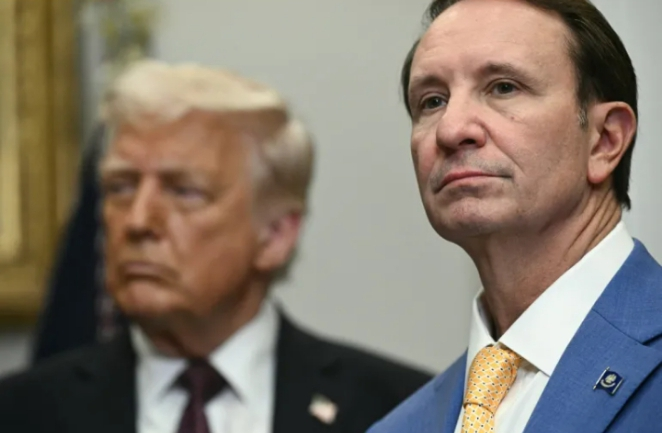
On December 21, Trump appointed Louisiana Governor Jeff Landry as a special envoy to lead the effort, praising him for understanding “how essential Greenland is to our national security.”
Landry posted on X that it was “an honour to serve… in this volunteer position to make Greenland a part of the US,” while stressing that it would not affect his gubernatorial duties.
The remarks drew immediate condemnation from Danish Prime Minister Mette Frederiksen and Greenlandic Prime Minister Jens-Frederik Nielsen, who insisted, “Greenland belongs to Greenlanders. You cannot annex another country. Not even with an argument about international security.”
Nielsen added on Facebook, “These US moves may sound big, but they do not change anything for us. We decide our own future,” reaffirming Greenland’s self-governance and autonomy from American control.
Frederiksen described the situation as “difficult,” noting that Denmark’s long-term allies were putting the country in a challenging diplomatic position, raising questions about trust and consistency between the two nations.
Danish Minister of Foreign Affairs Lars Lokke Rasmussen said he would summon US envoy Kenneth Howery to express Denmark’s “deep anger” over Landry’s appointment and called the annexation comments “totally unacceptable.”
The Trump administration further heightened tensions by suspending leases for five large offshore wind projects on the US East Coast, including two developed by Denmark’s state-controlled energy company, Orsted.
The European Union quickly rallied behind Denmark, with European Commission chief Ursula von der Leyen and European Council President Antonio Costa declaring “full solidarity” and underscoring that “territorial integrity and sovereignty are fundamental principles of international law.”
Since returning to the White House in January, Trump has repeatedly stated that the United States “needs” Greenland, highlighting its strategic location, military installations, and potential mineral resources, which could secure American interests.
Trump has declined to rule out military action, emphasizing the island’s role in US defense plans, including the presence of a ballistic missile defense system and monitoring facilities that protect American assets and allies.
While Greenland’s population of approximately 57,000 overwhelmingly favors independence from Denmark, opinion polls show that residents do not wish to become part of the United States, complicating Trump’s ambitions.
The situation has drawn attention from international observers, with analysts warning that US pressure risks destabilizing the Arctic region and undermining long-standing alliances between NATO members and other partners.
Frederiksen and Nielsen’s joint statement stressed, “The US shall not take over Greenland,” asserting the island’s right to determine its own political future without interference from foreign powers seeking strategic gain.
Trump’s insistence on Greenland follows a pattern of aggressive foreign policy moves, reflecting a belief that strategic territories should be directly controlled by the United States to counter rival powers and emerging threats.
The appointment of Landry, a sitting governor, is unusual, signaling Trump’s personal interest in Greenland and his willingness to bypass traditional diplomatic channels to achieve his objectives rapidly and publicly.
Experts note that Greenland’s mineral deposits, including rare earth elements, could reduce American reliance on Chinese imports, adding an economic dimension to Trump’s stated national security rationale and motivating assertive policies.
The US president argued, “If you take a look at Greenland, you look up and down the coast, you have Russian and Chinese ships all over the place… We have to have it,” framing the island as a strategic necessity.
Denmark’s formal protest underscores the limits of US influence over self-governing territories, highlighting the delicate balance between strategic ambitions and respect for sovereign nations and international norms.
The EU’s public support for Denmark reinforces the principle that territorial claims cannot be arbitrarily challenged, sending a message to the Trump administration that Greenland’s sovereignty is non-negotiable and must be respected.
Trump’s rhetoric has raised questions about the stability of US-Denmark relations, which have historically been cooperative, with longstanding collaboration in NATO and joint defense initiatives across the North Atlantic.
Analysts caution that persistent American pressure could strain ties further, as Greenlandic leaders navigate the dual goals of asserting autonomy and maintaining beneficial relations with both Denmark and the United States.
The suspension of wind energy projects adds an economic lever to Trump’s diplomatic strategy, creating additional pressure on Denmark and signaling the administration’s willingness to intertwine energy policy with foreign affairs.
Greenlandic officials have reiterated that they “decide our own future,” emphasizing that external attempts to control the island will not override the will of its residents or the authority of its self-governing government.
Trump’s push for Greenland illustrates a broader pattern of bold US foreign policy actions that prioritize strategic and economic advantage, often at the cost of traditional diplomatic norms and long-term alliance goodwill.
Observers note that the controversy comes amid growing Arctic competition, with Russia and China expanding their presence, prompting Washington to assert its interests more aggressively than in previous administrations.
The debate over Greenland also raises questions about international law, sovereignty, and the role of self-governing territories, highlighting the challenges of balancing strategic imperatives with respect for established legal frameworks.
Trump’s continued insistence that “we have to have it” reinforces a confrontational stance, one that risks diplomatic fallout with European allies while projecting an image of decisive, security-focused leadership at home.
The conflict surrounding Greenland demonstrates how a single territory, rich in resources and strategically located, can become a flashpoint for international tension, especially when major powers assert competing claims.
As the situation develops, both Denmark and Greenland are standing firm, while the United States continues to apply political, economic, and rhetorical pressure, leaving the region at the center of an emerging geopolitical struggle.
Trump’s approach reflects a willingness to challenge diplomatic norms, while Denmark, Greenland, and the EU emphasize the principles of sovereignty, self-determination, and international law as counterweights to US ambitions.
The Greenland dispute underscores the interconnectedness of security, resource management, and diplomacy, showing how strategic priorities can clash with national autonomy, creating friction even among long-standing allies.
Trump’s public insistence on controlling Greenland, combined with the appointment of a high-profile envoy, ensures that the island remains a central issue in US foreign policy, with implications for Arctic security and international relations.
In the coming months, the standoff is expected to continue, with Greenlandic officials asserting independence, Denmark protecting sovereignty, and the Trump administration maintaining pressure, leaving the future of the island uncertain.
The dispute highlights the limits of American influence when strategic objectives collide with international law and the self-determined goals of smaller, autonomous regions, raising questions about global norms and US foreign policy conduct.
Read also: Trump warns Maduro not to ‘play tough’ as Russia, China back Venezuela amid rising tensions
Even as Trump frames Greenland as essential to defense and security, the island’s residents remain focused on independence and local governance, illustrating the tension between geopolitical strategy and the democratic aspirations of a small population.
The United States’ push for Greenland serves as a reminder of the complex interplay between security, natural resources, and diplomacy, emphasizing that territorial ambitions cannot be separated from legal, political, and ethical considerations.
Trump’s statements, including “we have to have it,” reinforce a confrontational posture that could shape US-Arctic relations for years, ensuring Greenland remains a key strategic and diplomatic focus moving forward.
About The Author