Volodymyr Zelensky arrived in Davos for a highly anticipated meeting with Donald Trump, as the United States seeks to advance a Ukraine peace deal. The meeting comes amid renewed diplomatic efforts to end the conflict between Russia and Ukraine, which has persisted for over three years.
Zelensky’s visit coincides with the World Economic Forum 2026, drawing global leaders to the Swiss Alps to discuss geopolitical tensions, economic recovery, and international cooperation.
The meeting between Trump and Zelensky is scheduled for 12pm GMT, with Zelensky delivering a speech to delegates shortly afterward.
US President Donald Trump has repeatedly stated that the peace deal is “reasonably close,” suggesting progress in negotiations that have included multiple rounds of talks between Kyiv, Moscow, and US envoys.
Steve Witkoff, Trump’s special envoy, is set to travel to Moscow to meet Russian President Vladimir Putin to continue discussions on the remaining obstacles.
Speaking in Davos, Witkoff said, “We’ve made a lot of progress. Negotiations are down to one last issue, so if both sides want to solve this, we’re going to get it solved.”
He highlighted that creating a tariff-free zone in Ukraine could significantly boost the country’s economy, potentially serving as a key incentive for Moscow to compromise on certain points. Witkoff emphasized the importance of urgent action, reflecting a broader US strategy to broker a settlement before momentum is lost.
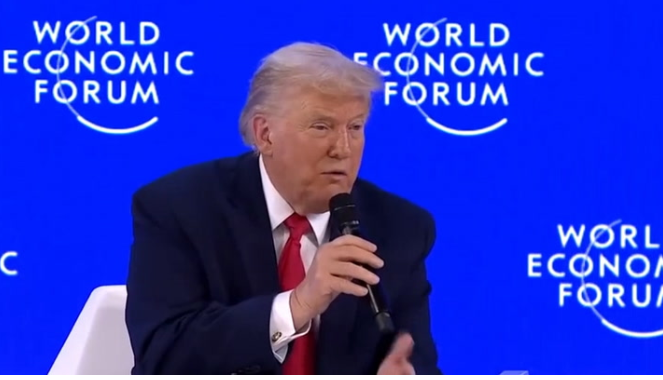
Trump, addressing delegates at the forum, described the talks as promising. “I believe they’re at a point now where they can come together and get a deal done. And if they don’t, they’re making a serious mistake,” he said, referring to both Russian and Ukrainian leaders.
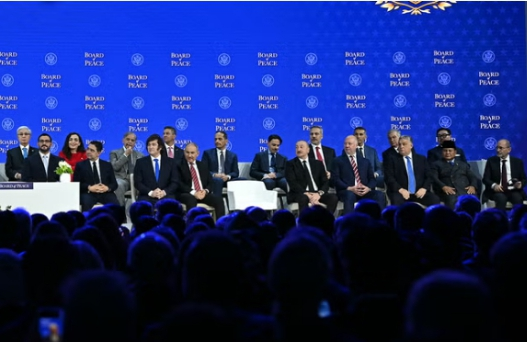
The US president also unveiled the so-called “Board of Peace,” an initiative intended to involve global leaders in supporting diplomatic solutions, with invitations extended to Vladimir Putin, Israeli Prime Minister Benjamin Netanyahu, and others.
The Board of Peace initiative has drawn mixed reactions. While some world leaders expressed interest in participating, others, including the United Kingdom, have raised concerns about the inclusion of Russia.
Foreign Secretary Yvette Cooper stated that the UK would not attend the ceremony, citing unease over Russia’s involvement in peace talks. Critics argue that the initiative could face challenges in achieving meaningful results without broad international support and sustained pressure on Moscow.
Despite the optimism from Washington, analysts caution that fundamental differences remain unresolved.
Natia Seskuria, an Associate Fellow at the Royal United Services Institute, explained that while Trump’s diplomatic push has accelerated the process, the lack of pressure on Russia means that core territorial disputes remain intact.
“Moscow has refused to offer meaningful concessions, particularly regarding the Donbas region, which Ukraine considers non-negotiable,” she said. According to Seskuria, the main obstacle in the talks continues to be Russia’s maximalist territorial claims.
The diplomatic push comes at a time of ongoing military activity in Ukraine. Ukrainian troops continue training exercises in key regions, highlighting the persistent security concerns even as political negotiations progress.
The interplay between military readiness and diplomatic negotiations underscores the complexity of achieving a lasting peace deal, as both sides maintain strategic leverage while exploring compromise.
Earlier in the week, delegations from Ukraine and Russia held meetings to discuss potential frameworks for ending the war.
Although specific details remain confidential, reports suggest progress on the structure of security guarantees for Ukraine.
However, the central issues of sovereignty, territorial control, and recognition of disputed regions continue to stall comprehensive agreement.
Analysts suggest that these unresolved issues could undermine the long-term viability of any deal brokered in the near term.
Trump’s strategy appears to focus on direct engagement with both Kyiv and Moscow, leveraging personal diplomacy to expedite negotiations.
The approach contrasts with traditional multilateral efforts, relying instead on high-level meetings and public statements to create momentum.
Critics argue that this strategy risks sidelining European partners, who have played a critical role in supporting Ukraine and maintaining regional security.
The delicate balance between diplomacy, domestic political considerations, and international legitimacy remains a central challenge.
In Moscow, Russian President Vladimir Putin confirmed that he would meet with Steve Witkoff and Jared Kushner, Trump’s son-in-law, to discuss the proposed peace plan.
The Kremlin declined to comment on the current stage of negotiations, signaling a cautious approach ahead of the discussions.
Kremlin spokesperson Dmitry Peskov emphasized Russia’s recognition of Trump’s personal efforts in the peace process while avoiding any commitment regarding potential outcomes.
The US and Ukraine have expressed cautious optimism regarding the deal, though both sides acknowledge that previous statements about being “close” to an agreement have often preceded stalled negotiations.
Trump’s repeated claims of progress aim to maintain momentum and reinforce confidence in the possibility of resolution.
Observers note, however, that repeated announcements of near-success without substantive breakthroughs could undermine credibility if no agreement is ultimately reached.
Beyond the immediate negotiations, the Board of Peace initiative represents a broader vision for international diplomacy.
By involving global leaders such as Argentina’s President Javier Milei and Hungary’s Prime Minister Viktor Orban, Trump aims to create a coalition of support for peace initiatives.
While the practical impact of this board remains uncertain, the symbolic value underscores the US administration’s desire to frame itself as central to resolving the European conflict.
Hungary’s political landscape adds additional context to the discussions, as Prime Minister Viktor Orban prepares for a challenging reelection campaign in April.
Orban’s relatively pro-Russian stance and opposition to EU financial support for Kyiv illustrate the varied approaches within European leadership regarding the Ukraine conflict. Coordination among allies, both within and outside the EU, remains a critical component of any enduring peace strategy.
The stakes of the negotiations are high. A successful Ukraine peace deal could reshape European security, redefine US diplomatic influence, and set precedent for addressing territorial disputes through international mediation.
Conversely, failure could prolong the conflict, exacerbate humanitarian crises, and weaken trust in diplomatic mechanisms. The next few days of meetings, speeches, and bilateral discussions in Davos and Moscow are likely to be pivotal in determining whether a meaningful agreement can be achieved.
Zelensky’s speech at the World Economic Forum is expected to address both the progress and challenges in peace talks, highlighting Ukraine’s priorities and appealing for continued international support.
By presenting a unified message at the global forum, Ukraine aims to reinforce the legitimacy of its positions while signaling commitment to diplomacy.
The outcomes of these discussions may influence broader geopolitical strategies, including sanctions, security guarantees, and economic recovery plans for the region.
As Steve Witkoff departs for Moscow, all eyes are on the outcome of the meetings with Putin. The success of these talks will depend not only on diplomatic skill but also on the willingness of both sides to compromise on long-standing disputes.
The complex mix of military, economic, and political factors makes the path to peace difficult but potentially transformative.
Analysts emphasize that sustained engagement, credible guarantees, and international oversight will be essential to ensure any deal is durable and effective.
Ihe ongoing efforts in Davos and Moscow represent the most concentrated diplomatic push to resolve the Ukraine conflict in years.
With high-level meetings between Trump, Zelensky, and Putin, and the establishment of the Board of Peace, the international community watches closely.
While progress has been reported, fundamental issues remain unresolved. The coming days may determine whether diplomacy can finally deliver a sustainable Ukraine peace deal, or if the status quo of tension and conflict will persist.
Ukraine peace deal,
Davos World Economic Forum,
Donald Trump,
Volodymyr Zelensky,
Steve Witkoff
About The Author