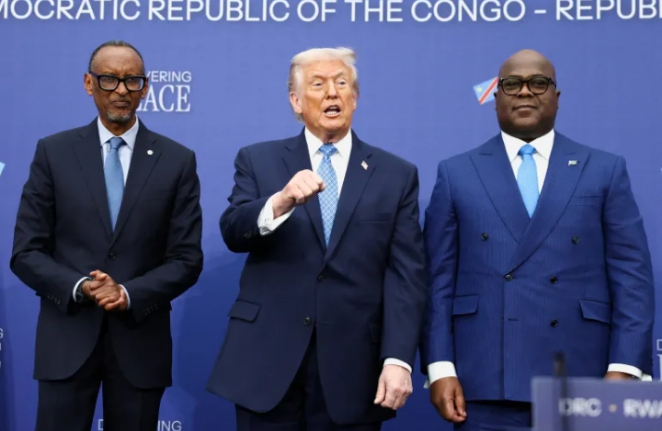
The DRC-Rwanda peace deal took centre stage in Washington as leaders from both nations joined the US president to finalise an agreement aimed at ending years of conflict.
Trump hailed the signing as a monumental breakthrough, declaring it “a great day for Africa and the world,” even as violence continues simmering across eastern Congolese territories.
The ceremony in Washington formalised terms established earlier, marking what participants described as a crucial step toward easing tensions that have destabilised the region for decades.
President Felix Tshisekedi emphasised that the DRC-Rwanda peace deal could finally usher in an era of shared prosperity, regional collaboration and a renewed sense of continental confidence.
He called the framework “a turning point” and insisted the agreement would allow communities “who have suffered for far too long” to imagine a peaceful and dignified future again.
Rwanda’s leader Paul Kagame echoed this cautious optimism, reminding observers that “there will be ups and downs” but promising Rwanda would remain committed to fulfilling its obligations.
The DRC-Rwanda peace deal emerged after both leaders met earlier this year in Doha, where Qatari mediation opened a discreet but effective channel of constructive dialogue.
Months of negotiations followed, leading to conditions requiring Rwanda to halt its backing of the M23 armed group, a force responsible for sweeping advances in eastern Congo.
In return, Kinshasa agreed to pursue the neutralisation of Hutu militias accused of past atrocities, a thorny issue long embedded in regional historical memory and political mistrust.
Trump framed the moment as one of decisive achievement, saying the DRC-Rwanda peace deal offered an opportunity “to end a conflict many believed would never truly stop.”
His administration has described the outcome as a validation of US mediation, highlighting Washington’s continued ability to shape diplomacy despite turbulence on many global fronts.
Beyond political symbolism, the accord included economic arrangements, particularly a new commitment by the United States to purchase rare earth minerals extracted in both countries.
Trump announced that several American companies would soon enter Congolese and Rwandan markets, helping expand mining output while, in his words, ensuring “everybody makes a lot of money.”
Rare earth minerals have become strategic assets for technological manufacturing, renewable energy systems and advanced medical devices, increasing global competition for secure and reliable supply chains.
The economic dimension underscored how the DRC-Rwanda peace deal is intertwined with broader geopolitical considerations, as major powers seek influence over critical mineral corridors.
Analysts argue the commercial benefits could either incentivise stability or intensify rivalries if oversight and revenue distribution prove unequal or vulnerable to corruption.
In Goma, however, the optimism expressed in Washington felt distant to residents still living under the shadow of the M23 conflict and the daily threat of displacement.
A young woman named Amani described ongoing fear, stating, “There can be no peace as long as the front lines remain active and civilians remain unprotected.”
Her sentiment reflects widespread scepticism across the east, where repeated ceasefires and agreements have historically collapsed, often within weeks of being celebrated.
Observers warn that without immediate de-escalation on the ground, the DRC-Rwanda peace deal risks becoming yet another ambitious document overshadowed by entrenched war dynamics.
Some humanitarian organisations say pressure must now intensify on regional actors to monitor compliance, verify disengagement and support dialogue between affected communities.
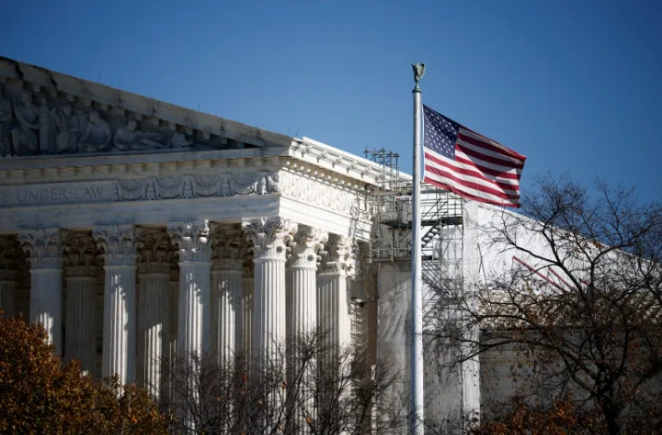
The United States Institute for Peace, the venue for the signing, described the accord as “a foundation rather than a finished product,” urging perseverance through inevitable setbacks.
Trump, however, focused on the symbolism, telling attendees the event represented “hope returning to a place where despair had been far too common for far too long.”
He also used the platform to contrast his praise for Congo and Rwanda with criticism he had recently directed at Somalia, comments that drew backlash internationally.
Somali communities abroad condemned his language, calling it discriminatory and damaging to communities already struggling with stigma, displacement and political instability.
Despite that controversy, Kagame and Tshisekedi avoided engaging publicly with Trump’s remarks, choosing instead to spotlight progress made through continued US mediation.
Experts note that both leaders stand to gain diplomatically, strengthening their bargaining power at home by demonstrating international support and foreign investment commitments.
Yet the success of the DRC-Rwanda peace deal will hinge not on ceremonies but rather on troop redeployments, border cooperation, intelligence sharing and disarmament operations.
Implementing these changes in areas scarred by distrust will require broad participation, logistical resources and robust monitoring by regional institutions and global partners.
Some analysts believe the economic incentives tied to rare earth minerals may motivate both countries to maintain stability long enough for trust to gradually rebuild.
But critics caution that mineral wealth has historically fuelled violence in the Congo, creating a risk that commercial interests might once again escalate local tensions.
For now, leaders hope the combination of political commitments and economic opportunities will create powerful incentives for preserving a fragile peace.
Residents in towns near M23-controlled zones say the situation remains unpredictable, with periodic clashes and forced evacuations casting doubt on long-term security.
Still, some civil society organisations insist the DRC-Rwanda peace deal must be given a chance, arguing that dialogue has yielded more progress than previous military attempts.
Grassroots peace advocates across both countries are urging authorities to address grievances that have festered for years, including displacement, land disputes and ethnic tensions.
Tshisekedi stressed that economic development must accompany demilitarisation, saying, “Peace without livelihoods is temporary. Stability must be felt in everyday life.”
Kagame emphasised discipline and mutual respect, telling participants, “Success depends on us. We must resist any temptation to return to dangerous patterns of the past.”
The US administration argues its involvement provides an added layer of accountability, ensuring the DRC-Rwanda peace deal cannot be ignored once international commitments take effect.
Some regional leaders welcomed the agreement, calling it an overdue step toward continental cohesion and an encouraging sign for African-led solutions backed by external support.
Yet academics studying the Great Lakes region caution that structural issues, including refugee crises, political rivalries and resource disputes, will continue testing the agreement.
The signing nonetheless marks one of the most ambitious US mediation efforts in Africa in years, reflecting Washington’s desire to counter geopolitical competitors in key regions.
Trump framed the peace deal as part of a broader record of international dispute resolution, even claiming he had helped resolve “eight major conflicts,” a figure disputed by experts.
He portrayed the moment as proof of effective leadership, stating, “People said peace here was impossible. But with determination, integrity and courage, we made it happen.”
The American delegation emphasised that ongoing dialogue must include local actors, humanitarian agencies and regional security bodies to ensure inclusive and durable outcomes.
Military analysts say the M23 conflict remains the most immediate threat to stability, with the group maintaining fortified positions, supply networks and strategic territory.
If Rwanda withdraws its alleged support, the group may lose operational capacity, potentially opening the door for negotiations or reintegration initiatives.
Conversely, failure to follow through could reignite hostilities, undermining the DRC-Rwanda peace deal and casting doubt on Washington’s ability to enforce compliance.
Communities in the east, exhausted from displacement, hunger and insecurity, say they are desperate for a breakthrough that finally holds.
A teacher in Rutshuru said, “We just want silence. Silence instead of shells. Silence where children can sleep without fear.”
Whether this silence arrives soon depends on decisions made over the coming months, especially as election cycles and regional alliances shift.
Diplomats argue that the political will shown during the signing must be matched by transparent, verifiable actions that signal irreversible commitment to peace.
Civil society figures believe accountability for perpetrators of atrocities is essential for healing, but political leaders appear cautious about pursuing prosecutions during a fragile transition.
The DRC-Rwanda peace deal faces a long road ahead, but diplomats insist that even incremental progress can create momentum toward a more stable future.
Some observers believe the mineral-trade agreements could anchor peace if managed fairly, though others warn they could become flashpoints if communities feel excluded.
Environmental experts also urge caution, noting that increased mining could worsen ecological damage unless strict regulations and community protections are established.
For now, Washington’s role remains pivotal, with analysts predicting the US will continue leveraging commercial partnerships to maintain influence and support stability.
As the ceremony concluded, Trump reiterated his optimism, saying, “We will see how it all works out, but I believe it will work out wonderfully.”
Tshisekedi and Kagame departed Washington with renewed expectations, though fully aware that domestic challenges await them upon returning home.
The coming months will determine whether their handshake in the United States becomes a historic milestone or another missed opportunity in a region longing for peace.
The world will watch closely as the DRC-Rwanda peace deal moves from promise to test, carrying with it hopes, doubts and the fragile possibility of transformation.
About The Author