Economic innovation took center stage this year as the Nobel Prize in Economics was awarded to a trio of researchers whose pioneering work unveiled how technology-driven growth reshapes global markets.
Joel Mokyr of Northwestern University received half of the 11m Swedish kronor (£867,000) Nobel economics prize for identifying historical conditions that enable sustained technological progress to support productivity.
Philippe Aghion of the Collège de France, Insead business school, and London School of Economics shared the remaining economics prize with Peter Howitt of Brown University for their innovative research.
The Royal Swedish Academy of Sciences highlighted how the trio explained the mechanisms of innovation-driven economic growth, noting its critical role in lifting living standards and supporting global prosperity.
Mokyr, a Dutch-born American-Israeli economic historian, emphasized that societies adopting technological innovations consistently experience greater productivity gains, showing that historical adoption patterns directly link to economic innovation and development.
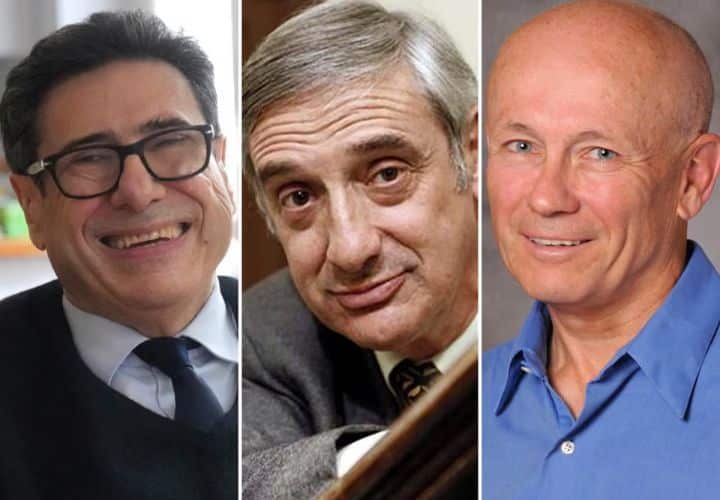
Aghion, a French economist, warned that protectionist policies, including Donald Trump’s tariffs, could undermine global economic growth, stifling innovation and slowing technology-driven economic development across multiple countries worldwide.
He emphasized that innovation in green industries and robust regulation of monopolistic tech firms are necessary to ensure future economic innovation and sustainable growth under changing global market conditions.
Howitt and Aghion’s research stresses creative destruction, where outdated firms are replaced by innovative competitors, demonstrating that technology-driven growth requires dynamic markets capable of fostering continuous economic innovation.
Accepting the Nobel economics prize, Aghion stated that artificial intelligence presents enormous potential for growth, but governments must implement competition policies to ensure new tech firms support rather than restrict innovation.
“Superstar firms may dominate markets and inhibit future innovators,” Aghion explained, highlighting the importance of competition frameworks to maintain continuous technology-driven growth and equitable global economic innovation.
The award comes amid concerns over sluggish productivity gains, rising political tensions, and uneven improvements in global living standards since the 2008 financial crisis and increasing attention to technology-driven growth.
Mokyr argued that societies historically prepared for technological change through education, trade openness, and supportive institutions experience stronger economic innovation and sustained productivity growth over the long term.
The Nobel prize committee noted that innovation has historically fueled economic growth, but these gains are not automatic, emphasizing that future prosperity depends on policy and technological adoption.
John Hassler, chair of the prize committee, stressed the importance of upholding creative destruction mechanisms, warning that stagnation could occur without continuous technology-driven growth and widespread economic innovation policies globally.
Aghion highlighted that AI, renewable energy, and biotechnology are unprecedented opportunities for technology-driven growth, but careful policy must prevent monopolies from limiting access to these economic innovation opportunities.
Mokyr’s research shows technological revolutions historically coincide with cultural and institutional support, proving that societies investing in education and innovation foster economic innovation and long-term productivity growth.
Howitt explained that creative destruction ensures resources are reallocated toward more productive, innovative companies, creating a cycle of continuous economic innovation and supporting technology-driven growth worldwide.
Governments worldwide are focusing on leveraging innovation for economic recovery, with the Nobel economics prize highlighting the vital role of technology-driven growth in addressing productivity slowdowns and raising living standards.
Aghion warned that protectionism and restrictive immigration policies threaten international collaboration, which is essential for technology-driven growth and the global diffusion of economic innovation across borders and industries.
The Nobel economics prize celebrates research showing that innovation, competition, and creative destruction collectively underpin long-term economic growth and global prosperity in a technology-driven economy increasingly shaped by AI.
Mokyr, Howitt, and Aghion demonstrate that understanding historical patterns, promoting competition, and fostering innovation-friendly policies are critical for translating technology-driven growth into broad-based economic innovation and societal benefit.
The 2025 Nobel economics prize recognition emphasizes that policymakers must carefully balance technological development, regulatory oversight, and market competition to maximize the positive impact of innovation on global growth.
This award coincides with heightened attention on AI, automation, and green technologies, emphasizing that the Nobel economics prize recognizes research helping societies harness technology-driven growth for economic resilience and equity.

The trio’s research provides a roadmap showing how creative destruction, competitive markets, and regulatory frameworks create sustainable technology-driven growth while ensuring that economic innovation benefits society broadly.
Joel Mokyr, Philippe Aghion, and Peter Howitt’s Nobel prize achievement highlights the critical role of research in understanding technological progress, fostering innovation, and promoting long-term global economic growth.
About The Author