

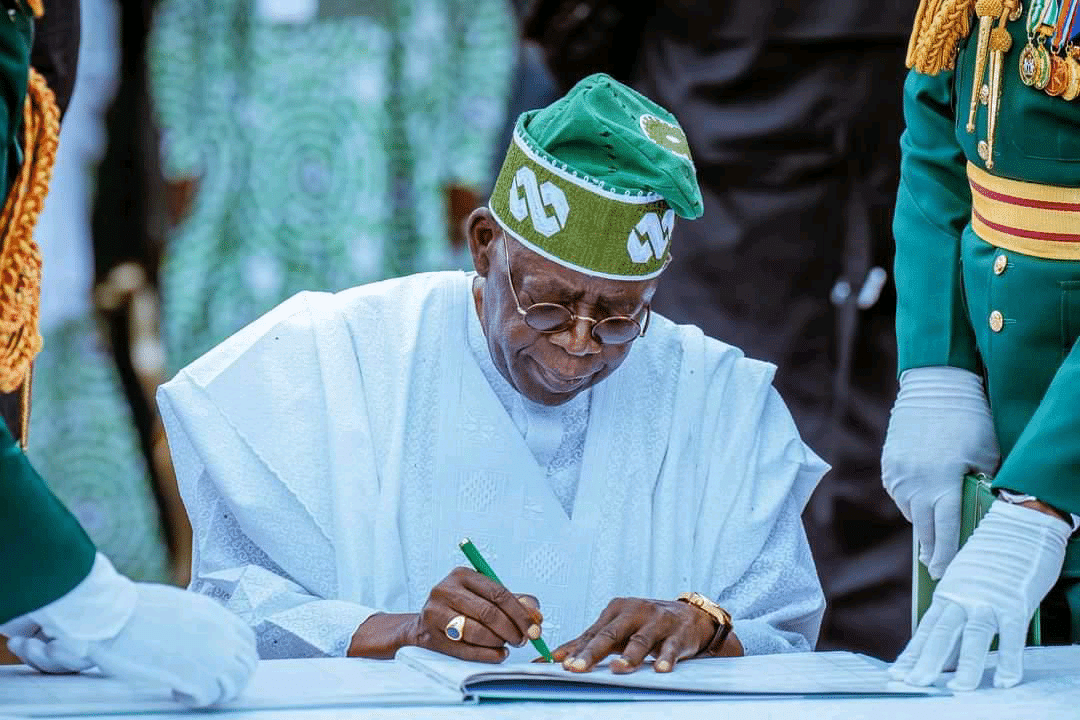
President Bola Ahmed Tinubu has forwarded a major Constitution Alteration Bill to the Senate, seeking approval for the creation of state police across Nigeria.
The proposed amendment seeks to revise key sections of the 1999 Constitution in order to establish a clear legal and institutional structure for the operation of state police forces across the federation.
If approved, it would allow individual states to run their own policing systems alongside federal security agencies.
The President has repeatedly backed constitutional reforms that would give state governments more authority over internal security.
In February, he urged the National Assembly to fast-track the amendment process, arguing that Nigeria’s current security situation requires a more decentralised policing model.
He maintained that granting states control over their own police formations would significantly improve responses to insecurity, especially terrorism, banditry, kidnapping, and other violent crimes affecting different parts of the country.
The proposed legislation also outlines a framework aimed at strengthening how policing is managed within Nigeria’s federal structure, ensuring clearer roles and responsibilities between federal and state authorities.
Tinubu, in his Democracy Day remarks, had earlier restated his administration’s firm stance against insecurity, declaring that terrorists and bandit groups, along with their supporters, would be decisively dealt with under the law.
He also revealed that security operations had neutralised over 13,000 terrorists within the past year, while noting a drop in terrorism-related fatalities compared to previous years.
Despite these gains, he admitted that the ongoing abductions of schoolchildren in parts of Oyo and Borno States remain a troubling reminder of the nation’s security challenges.
The state police proposal has continued to gain political momentum, with lawmakers in both the Senate and House of Representatives already advancing constitutional amendment steps aimed at decentralising policing powers.
The bill is now expected to face detailed consideration at the National Assembly, where legislators will examine its structure, legality, and impact on Nigeria’s federal security system.

More details soon..
About The Author

👍