President Bola Ahmed Tinubu has formally requested the Senate to screen and confirm new nominations into key positions within the Federal Government, including the appointment of tax reform expert Taiwo Oyedele as Minister of State for Finance.
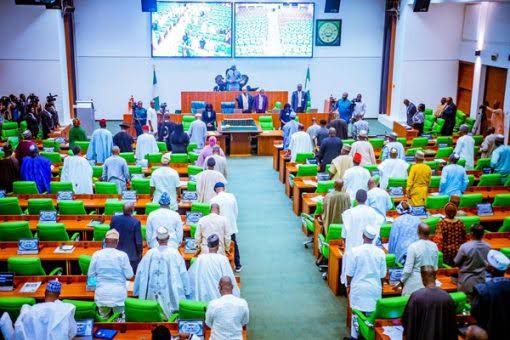
The request, which was communicated in a letter to lawmakers, was read during plenary by Senate President Godswill Akpabio, signalling the commencement of legislative procedures for the confirmation of the nominees.
In a separate communication, the President also asked the upper chamber to approve the appointment of former senator Magnus Abe as chairman of the Nigerian Upstream Petroleum Regulatory Commission (NUPRC).
The nominations are part of ongoing efforts by the administration to strengthen governance structures and reposition key economic and regulatory institutions.
Tinubu seeks Senate confirmation of Oyedele as minister
As part of the proposed cabinet adjustments, Tinubu asked lawmakers to consider Oyedele’s nomination as Minister of State for Finance, a role that would see him replace Doris Uzoka-Anite.
The development marks a significant shift within the Federal Executive Council as the administration intensifies economic reform efforts aimed at stabilising Nigeria’s fiscal framework.
Until his nomination, Oyedele served as chairman of the Presidential Committee on Fiscal Policy and Tax Reforms, where he led several initiatives designed to overhaul Nigeria’s tax administration and improve revenue generation.
Government officials believe his appointment could help accelerate the implementation of fiscal policy reforms currently being pursued by the Tinubu administration.
Oyedele, who hails from Ikaram in Akoko, Ondo State, is widely regarded as a leading expert in taxation, public finance, and economic policy.
The 50-year-old economist and accountant built a strong reputation in both the public and private sectors before his nomination to the ministerial role.
Before joining the government’s reform committee, he spent more than two decades at PwC, where he joined in 2001 and rose through the ranks to become Fiscal Policy Partner and Africa Tax Leader.
His experience in tax advisory and economic policy development is expected to play a critical role in Nigeria’s ongoing fiscal reforms.
Analysts say the nomination reflects the administration’s intention to prioritise expertise in shaping policies that could expand government revenue while reducing pressure on businesses and individuals.
Economic observers have also noted that the government’s tax reform agenda requires strong institutional leadership to ensure successful implementation.
If confirmed by the Senate, Oyedele will be expected to work closely with the Ministry of Finance and other economic agencies to strengthen fiscal discipline and improve Nigeria’s tax framework.
Meanwhile, the President also asked the Senate to confirm Magnus Abe as chairman of the Nigerian Upstream Petroleum Regulatory Commission.
Abe, a former senator who represented Rivers South-East Senatorial District, has extensive political and legal experience that observers believe could strengthen oversight of Nigeria’s upstream petroleum sector.
His nomination followed the resignation of Gbenga Komolafe from the leadership of the regulatory body.
The Nigerian Upstream Petroleum Regulatory Commission is responsible for regulating Nigeria’s upstream oil and gas industry, including licensing, exploration oversight, and compliance monitoring.
Industry stakeholders say leadership stability at the commission remains crucial as Nigeria seeks to boost oil production and attract new investments into the energy sector.
Alongside Abe’s nomination, Tinubu also asked the Senate to confirm two individuals as non-executive commissioners of the regulatory commission.
They include Paul Yaro Jezhi, a former chairman of the Trade Union Congress of Nigeria in Kaduna State, and Sunday Adebayo Babalola, a former deputy director at the now-defunct Department of Petroleum Resources.
According to lawmakers, the nominations have been referred to the Senate Committee on Petroleum Upstream for further legislative consideration.
The committee is expected to conduct screening exercises before submitting its report to the Senate for final approval.
Observers say the appointments could influence the direction of Nigeria’s economic reforms and petroleum sector governance.
With Nigeria seeking to stabilise its economy and boost investor confidence, the administration has increasingly relied on experienced technocrats and policymakers to lead key institutions.
Political analysts also note that Tinubu’s request for Senate approval reflects the constitutional process required for confirming top government appointments.
Under Nigeria’s system of governance, nominees for ministerial positions and leadership roles in strategic agencies must undergo legislative scrutiny before assuming office.
For the Tinubu administration, the outcome of the confirmation process will determine how quickly the nominees can begin implementing policy priorities.
Lawmakers are expected to commence the screening process in the coming days as part of their oversight responsibilities.
About The Author