President Bola Tinubu has taken a decisive step to revive one of Nigeria’s most ambitious deep-offshore oil developments, approving a package of targeted incentives aimed at unlocking Shell’s $5bn Bonga Southwest project, a long-stalled investment widely seen as critical to the country’s energy future.
The move signals a renewed push by the Federal Government to restore investor confidence in Nigeria’s oil and gas sector, particularly at a time when global energy capital is becoming increasingly selective and competition among producing countries is intensifying.
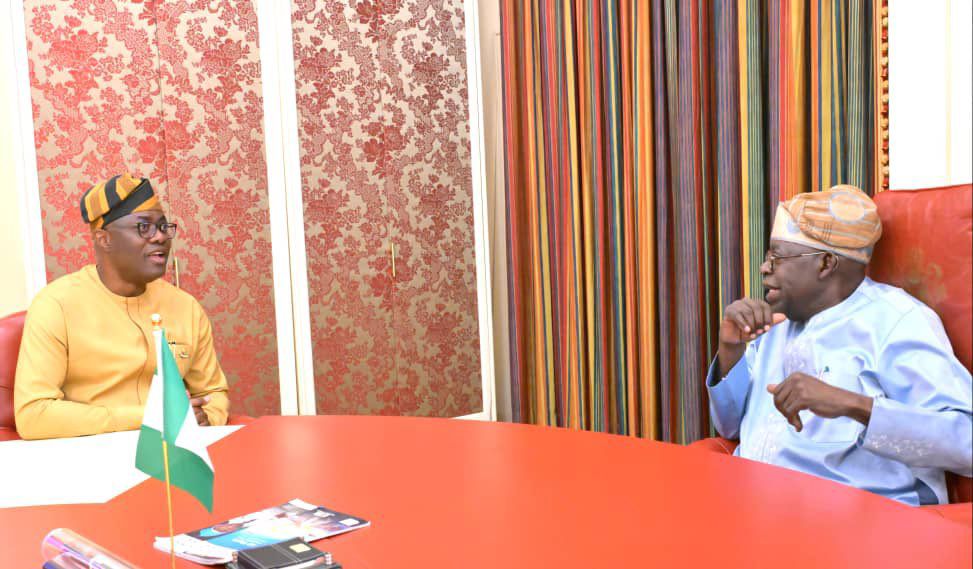
The approval was granted after Tinubu received a high-powered delegation from Shell, led by the company’s Global Chief Executive Officer, Wael Sawan, at the Presidential Villa in Abuja.
The President subsequently directed his Special Adviser on Energy, Olu Verheijen, to fast-track the gazetting of the incentives in line with Nigeria’s existing legal and fiscal frameworks, including the Petroleum Industry Act (PIA) 2021.
Why the Bonga Southwest project matters
Located roughly 120 kilometres offshore Nigeria in water depths exceeding 1,000 metres, Shell’s $5bn Bonga Southwest project has remained in limbo for more than a decade.
Despite its enormous resource potential, the project was repeatedly delayed due to prolonged fiscal disagreements between the Federal Government and Shell Nigeria Exploration and Production Company, alongside its joint venture partners.
At peak production, the project is expected to deliver up to 150,000 barrels of crude oil per day, alongside significant volumes of associated gas.
Industry experts say its development could substantially boost Nigeria’s oil output, which has struggled in recent years due to underinvestment, operational challenges, and regulatory uncertainty.
Beyond production volumes, analysts note that deepwater projects such as Bonga Southwest are capital-intensive but highly strategic, offering long-term revenue streams, technology transfer, and advanced offshore engineering opportunities.
Shell’s $5bn Bonga Southwest project and Tinubu’s incentive strategy
According to a statement issued by the President’s Special Adviser on Media and Public Communication, Sunday Dare, Tinubu described the newly approved incentives as “disciplined, targeted, and globally competitive,” stressing that they were carefully designed to attract fresh capital without eroding government revenues.
“These incentives are not blanket concessions,” the President said.
“They are ring-fenced and investment-linked, focused on new capital and incremental production, strong local content delivery, and in-country value addition.”
Tinubu was unequivocal about timelines, stating that Shell’s $5bn Bonga Southwest project must reach a Final Investment Decision (FID) within the lifespan of his first term in office.
The directive underscores the administration’s determination to convert policy reforms into tangible investments rather than prolonged negotiations.
The President further emphasised that the incentives would be implemented strictly within Nigeria’s existing laws, reinforcing the government’s commitment to regulatory certainty and fiscal discipline.
The revival of Shell’s $5bn Bonga Southwest project is expected to have far-reaching implications for Nigeria’s economy.
Government officials estimate that the project could generate thousands of direct and indirect jobs across multiple sectors, including offshore fabrication, marine logistics, engineering services, and energy support industries.
Foreign exchange inflows from crude oil exports are also projected to rise significantly once production commences, providing much-needed relief for Nigeria’s external reserves.
In addition, sustained government revenues over the project’s lifespan could strengthen fiscal stability and support public spending.
Tinubu noted that the project would deepen Nigerian participation in offshore operations, aligning with local content objectives and helping to build indigenous capacity in high-value segments of the energy industry.
Shell expresses renewed confidence
Responding to the presidential approval, Shell CEO Wael Sawan said Nigeria’s investment climate had improved markedly under the current administration.
He described the government’s engagement style as pragmatic and forward-looking, adding that Shell was increasingly confident about Nigeria as a destination for long-term capital.
Sawan also highlighted Shell’s recent investment footprint in the country, revealing that the company and its partners had invested nearly $7bn in Nigeria over the past 13 months, particularly in projects such as Bonga North and the HI development.
According to him, these investments reflect growing confidence in Nigeria’s reform trajectory and its potential to remain a key player in the global energy market.
The Bonga field, operated by Shell, holds historical significance as Nigeria’s first deepwater oil development, having commenced production in 2005.
Over the years, it has served as a benchmark for offshore operations in the country, demonstrating Nigeria’s technical capacity to execute complex deepwater projects.
Industry watchers believe that unlocking Shell’s $5bn Bonga Southwest project could pave the way for other delayed deepwater investments, sending a strong signal to international oil companies and financiers that Nigeria is once again open for business.
Tinubu reiterated his administration’s commitment to policy consistency, regulatory clarity, and execution speed, noting that these factors are essential for reversing years of declining investment in the energy sector.
He stressed that Nigeria must remain competitive in attracting global capital, particularly as energy transition pressures reshape investment decisions worldwide.
For many observers, the presidential backing of Shell’s $5bn Bonga Southwest project represents more than just a single project approval.
It is seen as a test case for Nigeria’s ability to align policy intent with investor expectations and deliver large-scale energy projects in a timely and transparent manner.
As the gazetting process begins and stakeholders await the next steps toward Final Investment Decision, attention will remain firmly fixed on whether this long-awaited breakthrough will finally translate into barrels, jobs, and revenue for Africa’s largest oil producer.
About The Author