

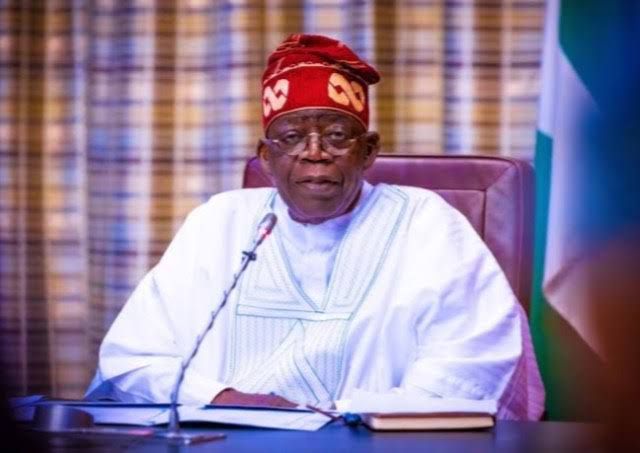
President Bola Ahmed Tinubu has sharply criticised opposition parties over what he described as persistent misrepresentation of the Electoral Act, warning that such narratives could erode public trust in Nigeria’s democratic institutions.
Speaking at the national convention of the All Progressives Congress (APC) in Abuja, the President defended the integrity of the electoral framework, insisting that the law reflects a broad-based national consensus rather than a partisan imposition.
Tinubu Electoral Act Criticism and Democratic Integrity
Addressing party delegates, Tinubu stressed that criticisms of the Electoral Act must be grounded in facts rather than political expediency. According to him, the law emerged from an extensive legislative process that involved public hearings, stakeholder consultations, and parliamentary scrutiny by the National Assembly.
He argued that attempts to portray the Act as flawed or biased ignore the rigorous process that led to its passage, thereby misleading the public and undermining confidence in democratic institutions.
The President maintained that the Tinubu Electoral Act criticism from opposition figures risks weakening the very democratic system it seeks to improve, noting that constructive engagement—not distortion—is essential for institutional growth.
He said the Electoral Act represents Nigeria’s collective effort to strengthen electoral transparency, improve credibility, and deepen democratic consolidation.
Rejects One-Party State Allegations
Amid growing concerns about the dominance of the ruling party, Tinubu dismissed claims that Nigeria is drifting toward a one-party state. He emphasised that democracy thrives on competition and robust opposition, describing such elements as critical to effective governance.
According to him, the APC does not seek to eliminate opposition but rather welcomes credible voices that can challenge policies and improve decision-making.
The President framed recent defections into the ruling party not as a sign of democratic erosion, but as an indication of increasing public confidence in the APC’s leadership and policy direction.
However, he acknowledged that political dominance must be managed responsibly, warning that unchecked power without internal discipline could destabilise even the strongest parties.
Internal Party Discipline and Unity
In a candid moment, Tinubu cautioned APC members against internal divisions, stressing that political parties often fail due to internal conflicts rather than external opposition.
He warned that personal ambition, ego, and lack of discipline could weaken party cohesion if not carefully managed. The President urged stakeholders to prioritise unity and collective interest over individual pursuits.
According to him, unity remains the party’s most valuable asset, and delegates must ensure that internal contests do not create lasting fractures within the party structure.
He emphasised that the outcome of party conventions should strengthen—not divide—the organisation, calling for maturity and political responsibility among members.
Economic Reforms and Policy Direction
Beyond politics, Tinubu used the platform to defend his administration’s economic reforms, describing them as necessary interventions aimed at stabilising Nigeria’s economy.
He acknowledged that the reforms have imposed short-term challenges but insisted they were critical for long-term sustainability. The President reiterated that no nation can achieve growth by maintaining inefficient systems or avoiding difficult decisions.
He pointed to emerging signs of recovery, including declining inflation rates, improving investor sentiment, and increased activity in the capital market.
Tinubu also highlighted progress in foreign exchange reforms, fiscal restructuring, and infrastructure development, noting that these measures are gradually restoring confidence in Nigeria’s economic outlook.
Support from Key Government Figures
Several top government officials and party leaders echoed the President’s position at the event, reinforcing the administration’s narrative of reform and recovery.
The Minister of Finance and Coordinating Minister of the Economy, Wale Edun, commended the administration’s economic direction, stating that recent policy decisions have begun to stabilise key sectors and improve overall confidence.
Edun noted that the government inherited significant economic challenges but has taken decisive steps to address structural weaknesses, including reforms in fuel subsidy management and foreign exchange policy.
Similarly, the Chairman of the convention coordinating committee, Aminu Bello Masari, described the gathering as a defining moment for the party, emphasising the importance of unity and shared vision.
Governors under the Progressives Governors Forum also pledged continued support for the administration, highlighting the need for coordinated efforts between federal and state governments to drive economic growth and social development.
Political Implications Ahead of 2027
The renewed Tinubu Electoral Act criticism debate comes at a time of heightened political activity, with early alignments and realignments already shaping the landscape ahead of the 2027 general elections.
Analysts say the President’s strong defence of the Electoral Act signals the ruling party’s intention to maintain confidence in the electoral framework while countering opposition narratives.
At the same time, concerns about political balance and institutional independence remain central to public discourse, particularly as defections continue to reshape party dynamics across the country.
While Tinubu’s remarks underscore a commitment to democratic principles, the broader challenge will be ensuring that electoral processes remain transparent, inclusive, and credible in the face of increasing political competition.
Balancing Reform and Democratic Trust
As Nigeria navigates a complex political and economic transition, the debate surrounding the Electoral Act highlights the delicate balance between reform, governance, and public trust.
The administration’s emphasis on institutional credibility and policy discipline reflects an effort to reposition the country for long-term stability.
However, sustaining that momentum will require continuous engagement with stakeholders, transparent communication, and adherence to democratic norms.
For now, the President’s message is clear: criticism is welcome, but it must be rooted in accuracy and aimed at strengthening—not undermining—Nigeria’s democratic foundation.
About The Author
