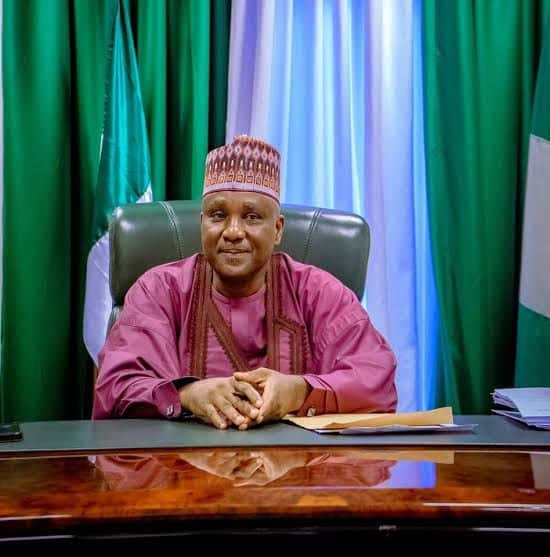
President Tinubu rejects the U.S. Nigeria CPC designation, affirming Nigeria’s commitment to religious freedom, unity, and interfaith harmony.
President Bola Ahmed Tinubu has firmly rejected the U.S. Nigeria CPC designation, describing it as misleading and inconsistent with the country’s democratic and constitutional values.
The President insisted that Nigeria remains a pluralistic nation committed to religious freedom, unity, and equal rights for citizens of all faiths.
The Nigeria CPC designation, announced by U.S. President Donald Trump, placed Nigeria on a list of countries accused of tolerating or failing to prevent violations of religious liberty.

However, Tinubu argued that such a categorization does not reflect the true picture of Nigeria’s diverse society, where millions of Christians and Muslims have coexisted peacefully for decades.
In a statement shared via his verified X account, @officialABAT, the President reaffirmed that Nigeria’s democracy is anchored on constitutional guarantees of freedom of thought, conscience, and religion.
He maintained that his administration continues to engage religious leaders and community representatives to promote unity and resolve conflicts peacefully.
“Nigeria stands firmly as a democracy governed by constitutional guarantees of religious liberty. Since 2023, our administration has maintained open engagement with Christian and Muslim leaders, addressing security challenges that affect citizens across faiths and regions,” Tinubu stated.
The President emphasized that the Nigeria CPC designation undermines the long-standing work of successive governments, religious institutions, and civic organizations striving to sustain interfaith harmony.
He described the U.S. position as a distortion of facts that ignores Nigeria’s continuous progress toward peace and equality.
“The characterization of Nigeria as religiously intolerant is inaccurate. It fails to recognize the sincere efforts by government and citizens to safeguard freedom of religion and belief for all Nigerians,” Tinubu said.
He stressed that religious tolerance has been a defining feature of Nigeria’s identity since independence. The nation’s Constitution, he noted, explicitly forbids any form of state-endorsed discrimination or persecution based on religion.
“Religious freedom and tolerance remain at the heart of our collective identity. Nigeria opposes all forms of religious persecution and will never condone them,” he affirmed.
Tinubu further highlighted that his administration’s inclusive policies have strengthened dialogue between faith communities, reducing mistrust and promoting peaceful coexistence.
He said that ongoing collaboration between the government and faith-based groups has produced tangible results in promoting stability and national cohesion.
The Nigeria CPC designation, he added, disregards these positive strides and presents an unfair image of a country where citizens of different beliefs live, work, and worship side by side.
He reminded the international community that most of Nigeria’s security challenges stem from terrorism, banditry, and socio-economic factors, not from religious intolerance.
The President pledged to continue engaging constructively with the United States and other global partners to promote mutual understanding and respect for religious rights worldwide.
“Our administration remains committed to working with the U.S. government and international community to strengthen cooperation and protect communities of all faiths,” he concluded.
This is not the first time Nigeria has been placed under the CPC category. A similar situation occurred in past years, but Nigeria was later removed after diplomatic interventions.
The latest move, however, has reignited debates about how external governments assess complex societies like Nigeria’s — where diversity is both a challenge and a strength.
Analysts say that while the Nigeria CPC designation is intended to draw attention to human rights concerns, it often oversimplifies realities in nations with multifaceted social structures.
Nigerian officials argue that such labels overlook the context of terrorism and economic hardship that fuel unrest, portraying conflicts as religious when they are not.
Faith leaders across the country have also supported Tinubu’s stance, describing the designation as unfair and politically motivated.
Both Christian and Muslim leaders have acknowledged the administration’s efforts to promote unity and dialogue through inclusive policy measures and peace-building initiatives.
Nigeria, Africa’s most populous nation, continues to be home to one of the world’s most vibrant interfaith communities.
Despite sporadic violence, the overwhelming majority of Nigerians live together peacefully, working, trading, and intermarrying across religious divides. This coexistence, President Tinubu noted, remains a source of national pride and unity.
Tinubu’s rejection of the U.S. Nigeria CPC designation underscores his administration’s determination to defend the nation’s image and uphold its constitutional values.
He reaffirmed Nigeria’s unwavering belief in freedom of religion and expression, stressing that the government will continue to protect the rights of all citizens regardless of faith or belief.

More news at ireport247news
About The Author