Sudanese officials have launched strong accusations against the Rapid Support Forces, describing the takeover of El-Fasher as a calculated act of genocide that devastated communities and scarred generations permanently.
Thousands of families fled through desert routes, leaving behind bodies, burning houses, and entire neighborhoods swallowed by fear. Witnesses described El-Fasher’s fall as “a nightmare that never ended.”
The Sudanese ambassador to Egypt, Imadeldin Mustafa Adawi, condemned the paramilitary forces, claiming they executed civilians, raped women, and targeted aid workers during their violent capture of North Darfur’s capital.
Adawi called on the international community to recognize the RSF war crimes in El-Fasher as genocide, demanding urgent intervention from the United Nations, African Union, and humanitarian agencies worldwide.
He emphasized that Sudan would boycott any negotiations including the United Arab Emirates, which Khartoum accuses of financially supporting the RSF with weapons and intelligence during the ongoing civil war.
The Gulf state has denied all allegations, but Sudanese authorities insist that external sponsorship has fueled atrocities, prolonging conflict and worsening the humanitarian crisis in Darfur and beyond.
Prime Minister Kamil Idris also declared that those responsible for RSF war crimes in El-Fasher must face international justice, insisting trials be held under international criminal law.
He warned that impunity would embolden paramilitary groups, saying justice for victims of North Darfur’s siege is essential to rebuilding Sudanese unity and restoring trust in global human rights mechanisms.

For many survivors, the horror began long before the final assault. Eighteen months of siege reduced food supplies to nothing, forcing families to eat roots and contaminated water.
The El-Fasher massacre marked the end of the Sudanese army’s resistance in Darfur, leaving tens of thousands trapped inside the ruined city, surrounded by armed RSF patrols and snipers.
“The streets were full of corpses,” said a displaced father of four, describing how machine guns sprayed crowds trying to flee. “They shouted, kill them all, leave no one alive.”
He told aid workers that his wife was killed by a drone strike as they attempted to escape. His voice trembled describing nights spent hiding among ruins and sand barriers.
Others tell of rape, torture, and looting, saying RSF troops stormed houses and used sexual violence as a weapon of terror. “They humiliated us completely,” one survivor said tearfully.
Rasha, a 45-year-old woman now in a displacement camp, described being dragged into a house and assaulted. “I begged them to stop. They laughed and said no one cares.”
Her story echoes those of countless women across Darfur, where Sudanese conflict survivors speak of systematic abuse aimed at destroying families, identities, and the will to resist occupation.
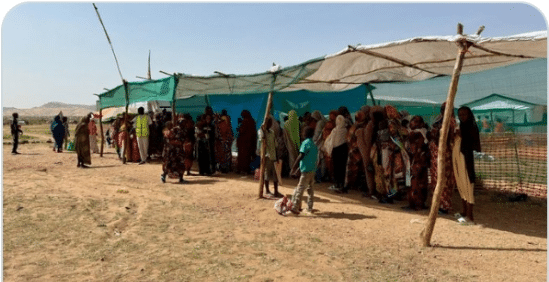
Aid organizations say at least 62,000 people have fled from El-Fasher to the northern town of Al Dabbah, where overcrowded camps struggle with shortages of food, medicine, and shelter.
“People arrived exhausted, barefoot, traumatized,” said Caroline Bouvard, Sudan country director for Solidarites International. “We are seeing entire villages vanish under fear and forced displacement.”
Bouvard noted that communication from El-Fasher remains cut off, describing a “complete blackout.” Aid convoys are unable to reach trapped populations due to constant RSF roadblocks and insecurity.
Officials fear thousands remain unaccounted for in surrounding villages. Many are believed to have died on the roads, abandoned in the desert, or buried in makeshift graves after failed escapes.
Local activists warn that the world’s silence risks normalizing genocide. “Every day the RSF kills, and the world debates,” said one human rights advocate in Khartoum, his voice breaking.
International responses have so far included condemnation from Egypt, Saudi Arabia, and the United States. Yet survivors insist that words are meaningless without action to stop the Sudan war crimes.
“They left us with nothing,” said a displaced teacher in Tawila, clutching a child. “They took our sons, burned our homes, and now we live under plastic sheets.”
Eyewitnesses recount horrific scenes inside El-Fasher’s main market, where RSF fighters allegedly executed hundreds of civilians accused of helping government soldiers. Bodies were left to rot under the sun.
Doctors say hospitals were targeted during bombardments. Medical staff fled, leaving wounded civilians without care. “The smell of blood and smoke mixed in the air,” said one volunteer medic.
Satellite images show widespread destruction across residential areas, confirming accounts of systematic burning. Analysts compare the devastation to earlier atrocities in Rwanda and Bosnia.
The United Nations has called the situation in Darfur the “world’s worst humanitarian crisis,” warning that RSF war crimes in El-Fasher could escalate into a broader regional catastrophe.
Sudanese officials insist the international community must designate the RSF as a terrorist organization, freezing its assets and imposing sanctions on commanders and financiers involved in atrocities.
The army, meanwhile, continues sporadic clashes in other regions, but morale remains low after the loss of North Darfur. Refugees describe a country bleeding from within, divided by greed and revenge.
Despite despair, there is defiance. Volunteers and youth groups are organizing food drives and medical missions to assist survivors, calling themselves “the generation of endurance and hope.”
“We are not giving up,” said one organizer in Port Sudan. “They can destroy cities, but they cannot destroy our spirit or our dream of peace.”
Analysts say Sudan’s refusal to participate in peace talks involving the UAE complicates diplomacy but reflects widespread anger over perceived external interference in the Sudan civil war.
UAE officials maintain they seek peace, not war, but regional mistrust deepens as accusations grow. Many Sudanese view the conflict as a proxy battle shaped by international rivalries.
Experts warn that unless accountability is enforced, RSF war crimes in El-Fasher could become a template for future atrocities elsewhere in Africa, undermining international law and civilian protection.
Humanitarian agencies are urging safe corridors for evacuation and medical aid. The UN estimates that 15,000 people remain trapped without food, water, or medicine inside El-Fasher’s ruins.
Survivors now live in limbo—between the pain of what they’ve lost and the uncertainty of what lies ahead. Their faces reflect exhaustion, fear, and an unyielding will to endure.
Children draw scenes of helicopters and guns in dusty refugee camps. “They remember everything,” a teacher whispered, holding up a crayon sketch of burning houses labeled “home.”
As famine looms, aid workers warn that neglect will cost countless lives. “Each day of silence adds another grave,” said a relief coordinator monitoring displacement routes across North Sudan.
Observers argue that the only path forward lies in truth and justice. The Sudanese government vows to compile evidence for international prosecutors, documenting mass killings and sexual violence.
Global leaders face pressure to act decisively. “The conscience of humanity cannot remain neutral,” one diplomat said. “To ignore RSF war crimes in El-Fasher is to abandon the principles of civilization itself.”
As darkness falls over the desert, the echoes of RSF war crimes in El-Fasher still haunt survivors who wander through camps, carrying memories too heavy to forget or forgive.
About The Author