Nigeria’s states are squandering their long-awaited revenue windfall on growing overheads and debt servicing rather than using it to drive sustainable development, analysts have warned, raising concerns over fiscal discipline at the subnational level.
A new report by civic tech group BudgIT, titled 2025 State of States, reveals that while states’ total receipts from the Federal Account Allocation Committee (FAAC) and internally generated revenues have more than doubled in a single year, the gains are largely being spent on recurrent items such as personnel costs, administrative overheads, and public debt obligations.
According to the report, allocations to 35 states surged by 110.74 percent to N11.38 trillion, while Internally Generated Revenue (IGR) climbed from N8.66 trillion in 2023 to N14.4 trillion in 2024. Yet, these figures have not translated into visible infrastructure or social development across many states.
Fiscal Imbalance Deepens Despite States’ Revenue Windfall
BudgIT’s analysis shows that personnel and overhead expenses are growing faster than capital outlays.
Personnel costs rose by 23.24 percent in 2024, while overhead spending jumped from N1.5 trillion to N2.44 trillion, outpacing the increase in capital investments.
“States are expected to increase and expand the quality of their infrastructure and general investments,” BudgIT said, emphasizing that in a federal structure, subnationals play a critical role in areas such as land reform, energy provision, and local economic development.
However, instead of channeling the states’ revenue windfall into productive sectors, many governors continue to prioritize short-term administrative spending and debt repayment.
Analysts say this pattern is undermining Nigeria’s growth potential at a time when inflation, unemployment, and infrastructure decay remain major national concerns.
Economic analyst Matilda Adefalujo of Meristem Research said the imbalance stems more from weak political will than economic constraints.
“Spending on capital investments requires discipline and long-term planning.
Many states focus on recurrent obligations because they are politically easier to justify,” she said.
“A high-interest rate environment has also pushed up the cost of servicing debts, but the solution lies in cutting waste and expanding the tax base to fund real development.”
Benue, Kogi, and Ogun States Illustrate the Spending Gap
BudgIT’s data highlights how several states are experiencing an alarming rise in recurrent expenditure despite enjoying historic inflows from FAAC.
In Benue State, operating expenses rose by 126.6 percent between 2023 and 2024, driven by interest payments and debt servicing.
The state now records one of the highest overhead-to-capital expenditure ratios in the North-Central region, underscoring mounting fiscal pressure despite higher revenue inflows.
Similarly, Kogi State recorded an 111.8 percent rise in overhead costs, pushing total recurrent spending up by 55.7 percent year-on-year.
The report noted that allocations to education, healthcare, and social protection lag far behind the resources devoted to general administration and debt repayment.
Even in Ogun State, considered one of Nigeria’s more fiscally disciplined subnationals, 69.8 percent of the 2024 budget was spent on recurrent costs, despite allocating N150 billion to capital projects.
This imbalance mirrors a nationwide trend where states’ revenue windfall fails to stimulate meaningful development or employment creation.
Financial expert Tilewa Adebajo, CEO of CFG Advisory, said the surge in subnational debt explains much of the recurrent pressure.
“Rising debt levels of the states are increasing interest payments, which in turn crowd out spending on social infrastructure,” he explained.
“If the trend continues, many states will find themselves unable to fund essential services or attract investment.”
Debt Levels and Inflation Add to Fiscal Strain
BudgIT data also shows that Nigeria’s total subnational debt climbed from N9.89 trillion in 2023 to N10.57 trillion in 2024.
Although the appreciation of the naira — which strengthened to N1,421.7/$1 in October — helped moderate external debt values, high local interest rates at 27 percent remain a major burden on state finances.
Head of Research at FBNQuest Merchant Bank, Tunde Abidoye, attributed much of the rise in recurrent spending to inflation, which peaked at 34.8 percent last December, and the sharp depreciation of the naira earlier in the year.
“States face high fiscal deficits as recurrent expenditure continues to outpace capital spending,” Abidoye warned.
“Without fiscal reforms, the states’ revenue windfall will keep disappearing into salaries, allowances, and debt charges instead of driving growth.”
Analysts Call for Fiscal Reforms and Capital Prioritization
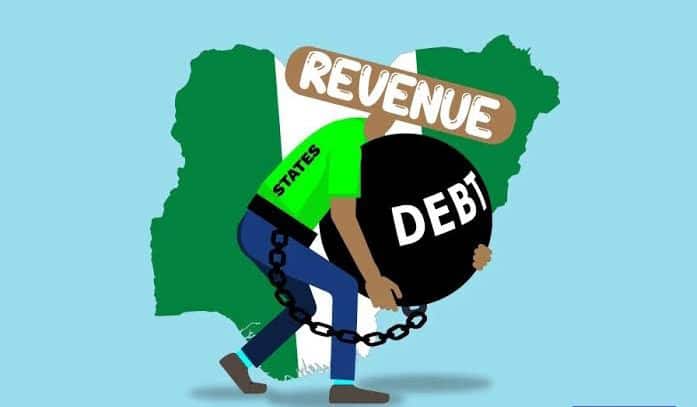
Experts are calling for urgent fiscal reforms to ensure states channel more of their revenues into productive investments.
They argue that sustained overdependence on FAAC allocations and rising administrative costs could weaken Nigeria’s fiscal stability and economic prospects.
BudgIT urged governors to strengthen transparency, improve procurement practices, and set capital investment targets that directly benefit citizens.
“Governments must show measurable impact in infrastructure, education, healthcare, and job creation,” the report said.
“The states’ revenue windfall offers an opportunity to reset fiscal priorities — not to entrench wasteful spending patterns.”
With oil prices stabilizing and FAAC inflows remaining high, analysts say the coming fiscal year could determine whether states use the opportunity to build resilient economies or continue down a path of unsustainable consumption.
About The Author