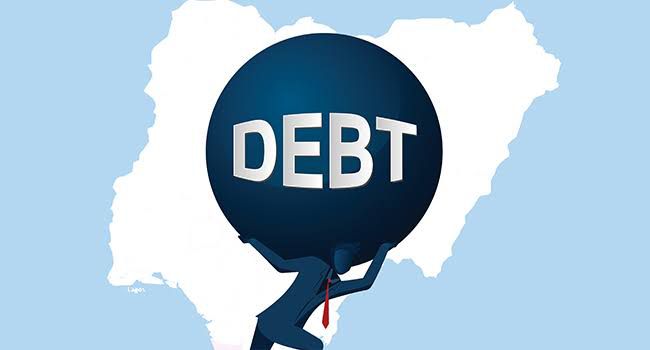

Thirty-one Nigerian states are facing a deepening debt crisis as their combined domestic debt stock hit N2.57 trillion in the first quarter of 2025, according to fresh data from the National Bureau of Statistics (NBS) and the Debt Management Office (DMO).
Disturbingly, these states attracted no foreign capital inflow within the same period, highlighting growing investor apathy toward subnational economies.
The figures reveal an alarming dependence on domestic borrowing and federal allocations, painting a picture of weak fiscal independence among states.
Within one year, 10 states collectively increased their debt by N417.71bn, while others managed to reduce theirs.
Only five states and the Federal Capital Territory (FCT) recorded any form of foreign capital inflow in Q1 2025, securing a combined $5.63bn—a significant rise from the $3.38bn recorded in Q1 2024. Collectively, these six jurisdictions carried N1.30tn in domestic debt, representing 33.48% of Nigeria’s total subnational domestic debt of N3.87tn.
At the top of the list, Abuja emerged as the biggest winner, with inflows soaring from $593.58m in Q1 2024 to $3.05bn in Q1 2025, marking a more than fivefold increase.
The FCT also slashed its domestic debt by 35%, cutting obligations from N94bn to N61.11bn.
Lagos, Nigeria’s commercial hub, attracted $2.56bn, slightly below the $2.78bn it secured in Q1 2024.
While still the most indebted state at N874.04bn, Lagos reduced its domestic debt by N55.37bn, maintaining its dual image as both Nigeria’s economic powerhouse and its most burdened debtor.
Other states made modest gains. Kaduna, Kano, Ogun, and Oyo attracted small inflows ranging from $0.12m to $7.95m, while also reducing their domestic debts.

Ogun remains the second-most indebted in this group at N190.14bn.
By contrast, the 31 states with zero foreign inflows carried 66.52% of Nigeria’s subnational debt, amounting to N2.57tn.
This marks a rise from 64.66% in March 2024, despite an overall decline in subnational debt year-on-year.
Among them, the top five debtors—Rivers (N364.39bn), Delta (N204.72bn), Enugu (N188.42bn), Imo (N122.09bn), and Cross River (N115.12bn)—alone accounted for nearly N1tn, or 39% of the debt stock.
Notably, Rivers State posted the sharpest increase, adding N131.82bn in new debt within one year.
Conversely, Delta State recorded the biggest debt reduction nationwide, cutting N130.17bn from its obligations. Abia, Bayelsa, Cross River, and Imo also posted significant declines, while Niger, Enugu, and Taraba expanded their borrowing aggressively.
Amid the mounting debt crisis, the Director-General of the DMO, Patience Oniha, has urged states to explore Public-Private Partnerships (PPPs) and improve tax revenue collection as sustainable alternatives to borrowing.
“Borrowing should not be the major way to source funds. You must increase your revenues by increasing your tax revenues,” Oniha said at a workshop in Lagos.
She stressed that PPPs could fast-track infrastructure delivery, reduce fiscal strain, and generate jobs by leveraging private sector investment.
Similarly, the Nigeria Governors’ Forum (NGF) recently launched an Investopedia initiative to attract global and African capital, with Kwara State Governor AbdulRahman AbdulRazaq highlighting its role in accelerating inclusive growth and infrastructure development.
Experts say the absence of stability and investment-friendly policies is a key factor behind the lack of foreign inflows in 31 states.

Professor Jonathan Aremu, an ECOWAS consultant, explained that “investment is crisis shy” and will not flow to unstable environments with poor governance structures.
A macroeconomic analyst, Dayo Adenubi, added that states must prioritize internally generated revenue (IGR) to reduce reliance on debt and volatile federal allocations.
The debt disparity between investment-attracting states and debt-trapped states underscores a widening fiscal imbalance in Nigeria.
While Lagos and Abuja dominate foreign inflows, most other states remain locked out of global capital markets.
Analysts warn that unless states adopt bold reforms—such as strengthening tax systems, pursuing PPPs, and improving governance—the current trajectory could worsen unemployment, stall infrastructure development, and deepen Nigeria’s debt sustainability crisis.
About The Author