Sri Lanka landslides crisis escalated on Sunday as emergency teams warned of further hillside collapses amid relentless monsoon rains worsening destruction caused by Cyclone Ditwah across the region.
More than 600 deaths have been confirmed in Sri Lanka alone, with rescue teams describing disaster zones as “unrecognisable” after massive floods and earth upheavals devastated entire communities.
Officials said rainfall patterns remained dangerously unpredictable, with saturated slopes weakening further and threatening renewed collapses despite improving conditions in several urban districts hit earlier.
Humanitarian groups said the Sri Lanka landslides crisis had become one of the worst disasters to strike the island in decades, pushing local response capacities to breaking point.
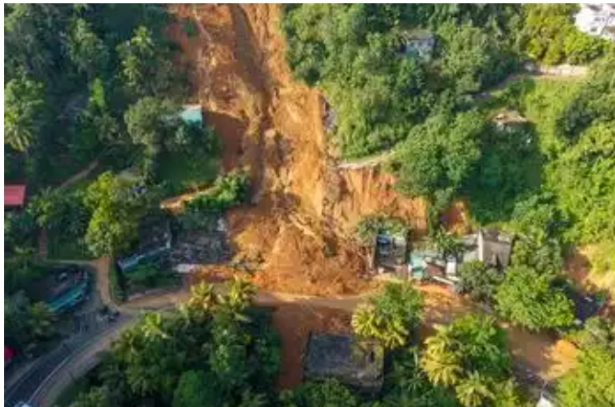
“With every hour of rain, the risk increases,” a senior DMC official said, stressing that the combination of monsoon storms and cyclone aftermath created unprecedented hazard levels.
Search teams continued reaching isolated mountain villages where communication lines failed early in the disaster, leaving thousands unable to call for help during the worst moments.
Residents described hearing “roars like thunder” before entire hillsides gave way, burying homes under mud metres deep, trapping families before they could flee for safety.
The central highlands experienced the heaviest destruction, with tea-growing districts absorbing deadly landslides that swept through plantations and neighbouring hamlets without warning late last week.
Government figures confirmed at least 464 deaths in the central provinces, underscoring the severity of disaster impacts in steep terrain already known for vulnerability to extreme rainfall.
As the Sri Lanka landslides crisis worsened, the Disaster Management Centre issued new red alerts for mountainous communities where additional slope failures had been detected overnight.
Helicopters and military transport aircraft were dispatched to reach stranded families, with air crews reporting washed-out roads, overturned vehicles and submerged farmland stretching for kilometres.
Sri Lanka’s Air Force confirmed receiving international assistance, including relief supplies from Myanmar, marking the latest batch of foreign aid flown into the country this week.
The government said at least 209 people remained missing, with officials warning the figure could rise as crews gain access to previously unreachable landslide-hit regions.
Temporary shelters housing displaced survivors saw numbers drop to around 100,000 as receding waters allowed some families to return home and assess the scale of destruction.
Authorities estimated more than 75,000 houses were damaged in the wider disaster zone, with close to 5,000 completely destroyed by mudflows, debris torrents and rising floodwaters.
Aerial images showed vast expanses of submerged villages, collapsed bridges and uprooted forests, capturing the extent of Sri Lanka’s worst natural disaster this century.
Early government assessments suggested reconstruction and recovery could cost up to $7bn, a burden officials acknowledged the recovering economy could not manage alone.
President Anura Kumara Dissanayake told parliament the catastrophe struck while Sri Lanka’s finances remained fragile, saying “the shock is immense, and the country cannot handle it unaided”.
The International Monetary Fund announced it was reviewing Colombo’s request for an additional $200m to support rebuilding, though officials stressed discussions were still ongoing.
Across the wider region, more than 1,800 people have died in storms, floods and landslides, with Indonesia, Thailand, Malaysia and Vietnam all reporting mounting casualties.
Indonesia’s Sumatra island suffered catastrophic damage, with authorities confirming over 900 deaths following landslides and flash floods triggered by conditions linked to Cyclone Ditwah.
Survivors in Aceh Tamiang described walking for hours through debris-filled terrain to reach aid stations, recounting scenes of overturned vehicles and shattered homes along riverbanks.
“We had nothing left except the clothes we were wearing,” trader Joko Sofyan said, explaining that villagers were forced to drink contaminated floodwater to survive.
Local health workers reported rising cases of waterborne illness among children, warning that prolonged isolation of remote villages posed serious public health risks.
The trauma revived memories of the 2004 tsunami that devastated Aceh, causing 160,000 local deaths and leaving long-lasting psychological scars among surviving communities.
Thailand reported at least 276 fatalities from flood-related incidents, with national monitoring agencies issuing fresh alerts for areas expecting intensified rainfall this week.
Malaysia confirmed two deaths amid widespread flooding in Kuala Lumpur, where images showed submerged streets, stranded commuters and emergency teams wading through chest-deep waters.
Meteorologists at MetMalaysia issued thunderstorm warnings for several states and the Federal Territory of Labuan, cautioning that river levels were continuing to rise.
In Vietnam, weeks of torrential rainfall caused severe flooding along the south-central coast, submerging hundreds of thousands of homes in major tourism regions.
Mountain communities in Vietnam reported deadly landslides, with emergency teams working through mud and debris to locate missing residents trapped under collapsed slopes.
Climate experts across Asia warned the region was experiencing intensified weather volatility, with Cyclone Ditwah serving as a stark example of climate-driven storm amplification.
Humanitarian organisations described a mounting pattern of regional climate emergencies, saying countries were now facing disaster cycles with shorter intervals and higher casualties.
“This is a signal event,” one climate analyst said, noting that the Sri Lanka landslides crisis was part of a broader climate-exacerbated chain of disasters across Asia.
Researchers urged urgent investment in slope stabilisation, early warning systems and resilient infrastructure to prevent further catastrophic losses in vulnerable mountain zones.
Local volunteers in Sri Lanka continued distributing food and medicine, with many trekking through unstable terrain to reach elderly residents unable to leave their homes.
Aid groups said field teams faced shortages of equipment, transport and shelter materials, complicating efforts to provide consistent support to isolated communities.
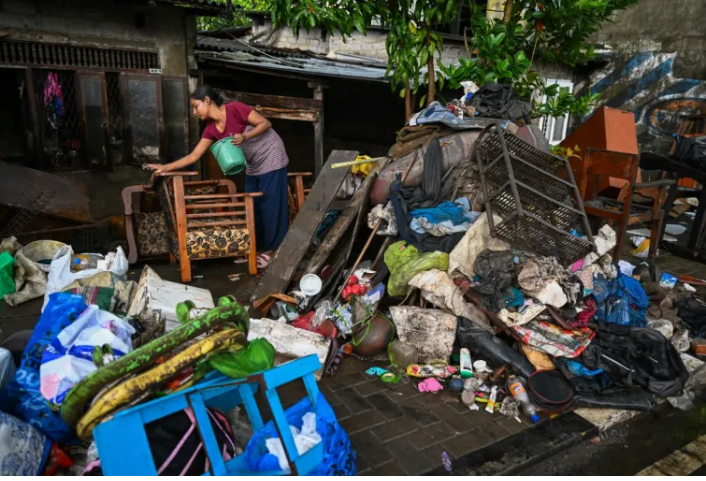
Evacuees in refugee centres described emotional devastation after losing their homes, farmlands and livelihoods, with many unable to return due to continuing landslide risks.
“Everything is gone. The hill moved like water,” a survivor from the central highlands said, describing how her village was swallowed in seconds by collapsing earth.
Officials reiterated warnings that saturated soils remained highly unstable, saying further rain could trigger new collapses even in areas not previously considered high-risk.
Engineers were deployed to assess structural damage to roads, irrigation systems and bridges, many of which suffered severe erosion during the cyclone-induced flooding.
Regional leaders expressed solidarity with affected countries, pledging coordinated support to manage the escalating humanitarian crisis across multiple Asian nations.
Environmental groups stressed that the cluster of disasters reflected deepening climate instability, urging governments to accelerate emission reduction commitments and climate-adaptation projects.
Sri Lankan authorities said they would launch a full investigation into the disaster’s impacts, aiming to produce a comprehensive resilience plan for future extreme-weather scenarios.
Despite improving conditions in some districts, emergency crews warned the situation remained critical, with the Sri Lanka landslides crisis still presenting imminent threats to vulnerable communities.
As Asia confronted widespread destruction, governments acknowledged that regional cooperation would be essential to manage mounting climate-driven disasters in the years ahead.
About The Author