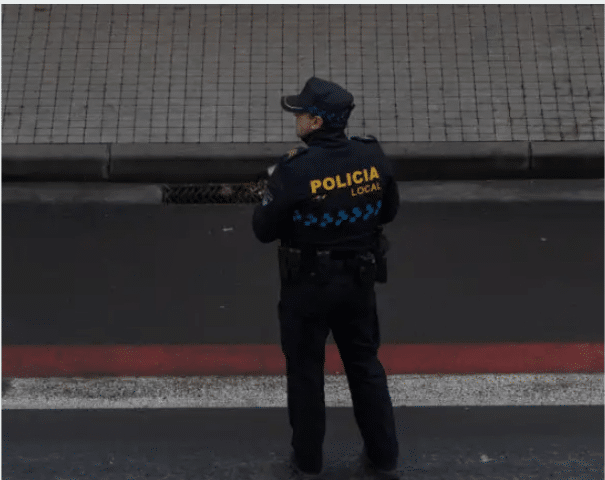
Spanish police have arrested 13 suspected members of a violent Venezuelan gang in coordinated raids across several cities, intensifying international efforts against cross-border organized crime.
The nationwide operation, carried out early Friday, marks a major breakthrough in Europe’s battle against the Venezuelan gang known for spreading fear through trafficking and extortion.
Authorities said the raids were conducted simultaneously in Madrid, Barcelona, Girona, A Coruna, and Valencia, following months of surveillance and intelligence sharing between national and regional police units.
According to law enforcement officials, the Venezuelan gang members are believed to belong to the Tren de Aragua, a transnational criminal network that originated inside Venezuelan prisons.
The Spanish police said they launched the operation after uncovering evidence of the gang’s attempts to expand its influence within Spain’s large Venezuelan immigrant community.
Officers seized firearms, cocaine, and synthetic drugs during the raids, along with materials used in producing a dangerous mixture called “tusi” — combining cocaine, MDMA, and ketamine.
Investigators also dismantled two clandestine laboratories used to process and distribute the narcotics, as authorities aim to cripple the Venezuelan gang’s logistics and European financial base.
Police reports indicate that the arrests form part of a broader probe initiated last year after the brother of Nino Guerrero, the Tren de Aragua’s feared leader, was captured in Barcelona.
Spain’s interior ministry stated that the detained individuals will face charges related to organized crime, drug trafficking, money laundering, and illegal possession of firearms.

The Tren de Aragua has evolved from a prison-based syndicate into one of Latin America’s most notorious cross-border networks, implicated in smuggling, human trafficking, and assassinations.
Authorities in Spain and other European nations worry that the group’s expansion could trigger turf wars with local gangs already operating in metropolitan areas.
In Venezuela, the gang emerged from the notorious Tocorón prison, where its hierarchy reportedly maintained access to mobile networks, luxury facilities, and links with corrupt officials.
The Venezuelan gang later spread its influence across South America, establishing footholds in Colombia, Peru, Ecuador, and Chile before extending operations to the Caribbean and Europe.
Experts say the gang’s reach now rivals older transnational criminal networks such as Mexico’s cartels, as globalization enables the trafficking of drugs, people, and weapons across continents.
This week’s Spanish operation follows the United States’ decision earlier this year to designate the Tren de Aragua as a global “terrorist organization,” citing its involvement in narco-terrorism.
The designation paved the way for US financial sanctions and gave Washington legal grounds to conduct military actions against what it calls “narco-terrorist networks.”
Since September, the US has carried out several strikes on vessels in the Caribbean and eastern Pacific, claiming they were operated by members of the Venezuelan gang.
At least 18 vessels have been targeted, with more than 60 people killed, according to Pentagon briefings released in late October and early November.
Defense Secretary Pete Hegseth confirmed that the latest strike in the Caribbean killed three men allegedly linked to drug smuggling routes used by the Tren de Aragua.
President Donald Trump has repeatedly defended these operations, asserting that they are necessary to dismantle drug syndicates that “threaten American lives and global security.”
However, human rights organizations and the United Nations have condemned the attacks, warning that they could constitute extrajudicial killings under international law.
UN Human Rights Chief Volker Türk described the ongoing strikes as “deeply troubling,” urging Washington to provide evidence that the boats were actually carrying narcotics.
Türk called for the immediate suspension of the operations, emphasizing that combating the Venezuelan gang cannot justify summary executions on the high seas.
Opposition lawmakers in the US have demanded accountability, pressing the Trump administration to clarify the legal basis for conducting lethal operations in international waters.
Some senior Republicans have joined calls for oversight, expressing concern that unchecked military strikes could set a dangerous precedent for future administrations.
Despite the criticism, Donald Trump insists that the strategy is working, citing the deportation of more than 200 alleged Tren de Aragua members to Latin America earlier this year.
He also linked the campaign to his broader immigration crackdown, arguing that dismantling the Venezuelan gang protects US borders from drug smuggling and violent infiltration.
Venezuelan President Nicolás Maduro, however, accuses Washington of using the “war on drugs” as a pretext to destabilize his government and justify military buildup in the region.
Maduro said the Trump administration’s rhetoric about terrorism masks “imperialist aggression,” intended to weaken Venezuela through sanctions, naval pressure, and targeted propaganda.
Regional analysts note that the Tren de Aragua’s growth has paralleled Venezuela’s economic collapse, exploiting mass migration to move members and illicit goods across borders.
Many of its operatives travel under false identities, embedding themselves in diaspora communities and using legitimate businesses to launder profits from trafficking operations.
In Spain, officials say the investigation has also uncovered possible links between the Venezuelan gang and local European criminal syndicates specializing in synthetic drugs.
The collaboration, if confirmed, could signify a dangerous convergence between Latin American and European underworlds, complicating efforts to curb organized crime across continents.
The Spanish police praised the coordination between national and international agencies, including Europol and Interpol, for the intelligence that led to the successful raids.
A spokesperson described the arrests as “a crucial step toward dismantling a violent transnational network that has inflicted suffering across the Americas and now threatens Europe.”
In Madrid, Interior Minister Fernando Grande-Marlaska applauded the work of investigators, warning that Spain “will not allow its territory to become a refuge for violent criminals.”
Spanish media outlets have reported that several of the detainees were planning to establish new drug distribution channels through coastal ports in Catalonia and Valencia.
Officers also suspect that gang funds were being funneled through cryptocurrency exchanges to conceal profits and finance arms purchases within Europe’s black market.
Security experts believe the Venezuelan gang’s activities could intensify competition among Spain’s fragmented criminal groups, potentially sparking a new wave of urban violence.
For many citizens, the arrests bring relief but also anxiety that the underlying networks of corruption and trafficking remain deeply entrenched.
Observers say that combating the Tren de Aragua will require cross-border coordination, not only between police forces but also through judicial and financial oversight systems.
The European Union has been urged to enhance cooperation with Latin American nations to track money flows, arms routes, and human trafficking connected to the gang.
Meanwhile, humanitarian organizations warn that indiscriminate deportations and military actions, such as the US strikes, risk fueling displacement and undermining international law.
They emphasize that focusing solely on punitive measures could perpetuate cycles of violence without addressing poverty and governance failures that sustain the Venezuelan gang.
As investigations continue, Spain’s operation stands as a test case for Europe’s capacity to confront transnational crime while upholding human rights and due process.
Analysts say future policy must balance security imperatives with social integration strategies to prevent criminal groups from exploiting marginalized migrant communities.
The arrests have drawn global attention, signaling that the fight against the Venezuelan gang now extends far beyond Latin America’s borders into the heart of Europe.
What remains uncertain is whether combined police pressure and US military actions will truly dismantle the Tren de Aragua network — or merely drive it further underground.
For now, the Spanish police maintain that their commitment to international cooperation will continue until the last remnants of the gang’s European operations are neutralized.
The case highlights how globalization has transformed crime into a borderless enterprise, demanding a united response from governments on both sides of the Atlantic.
Observers warn that if unchecked, the expansion of violent transnational groups like the Venezuelan gang could reshape global security challenges for decades to come.
About The Author