Licensed customs agents in Nigeria’s maritime sector are threatening protests against shipping companies following the announcement of fare hikes effective from January 1, 2026.
The move, which comes at the start of the new year, has drawn sharp criticism from stakeholders who describe the timing as premature, given that many businesses are still resuming operations after the festive period.
The Mediterranean Shipping Company (MSC) recently revised its tariffs, increasing import documentation fees for 20ft containers from N45,000 to N58,500, and for 40ft containers from N72,000 to N93,600. Additionally, port charges for 20ft containers rose from N50,000 to N80,000, while fees for 40ft containers jumped from N100,000 to N160,000.
Customs Agents Threaten Protests Amid Concerns Over Early 2026 Fare Hikes
Speaking to our correspondent, the National Protocols Officer of the Association of Nigerian Licensed Customs Agents (ANLCA), Mr. Riwane Amuni, expressed strong opposition to the fare increase.
He noted that it is too early in the year for shipping lines to adjust tariffs, given the slow pace of business resumption.
“It’s today (Monday) that we confirm the situation. The 1st was a public holiday, and on Friday, many did not return to work. We will see how operations commence fully today. But there will be protests if the fare increase is implemented without proper consultation,” Amuni said.
He further emphasized that any unilateral fare hike by MSC or other shipping companies would be met with picketing and other forms of protest, particularly if it is not applied consistently across operators in the port sector.
Shipping Fare Hikes Raise Economic Concerns
The Apapa Chapter Chairman of the National Council of Managing Directors of Licensed Customs Agents, Abayomi Duyile, highlighted ongoing discussions with the Nigerian Shippers Council (NSC), the port’s economic regulator, regarding the planned increase.
According to him, while the NSC has been informed of the adjustments, meaningful stakeholder engagement has yet to take place.
“They informed us about their plan to implement the increase early this year. We have agreed to meet and discuss it formally, but a meeting during the first week of January is impractical. Many of our members are still on holiday. A proper engagement should take place by the third week of January,” Duyile said.
Duyile warned that failure to justify the fare increase could trigger protests and the sealing of shipping offices. He also stressed that unwarranted increases could exacerbate inflationary pressures in the Nigerian economy.
“With the NSC as the economic regulator, shipping companies must carry us along before any increase. Any increment without notice is unacceptable and could have spillover effects on logistics costs and consumers,” he added.
Western Zone ANLCA Criticizes Arbitrary Fare Adjustments
The Western Zone Coordinator of ANLCA, Femi Anifowose, criticized the hike as arbitrary and unjustifiable, calling on President Bola Tinubu to intervene.
Anifowose urged the Minister of Marine and Blue Economy, Adegboyega Oyetola, and relevant regulatory agencies to halt the planned fare adjustments until proper consultation is completed.
“The shipping lines failed to provide adequate notice or justification for the increase. Key cost drivers like diesel, premium motor spirit, and foreign exchange have largely stabilised over the past 18 months, so there is no rationale for the abrupt adjustment,” Anifowose stated.
Impact on Businesses and Stakeholders
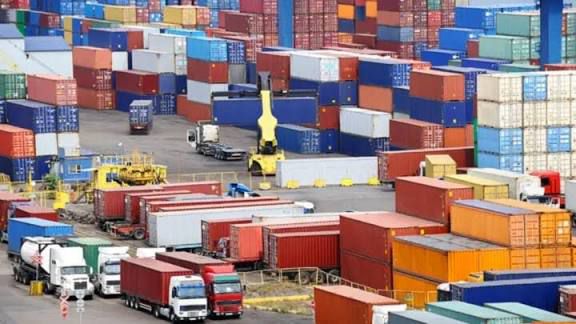
Industry experts have warned that shipping fare hikes without proper notice could adversely affect supply chains, increase operational costs for importers, and ultimately raise prices for end consumers.
Licensed customs agents serve as intermediaries between shipping companies and importers, and any disruption in their operations could create bottlenecks at ports.
Traders and importers in Lagos, Apapa, and other port cities expressed concerns that the hike would increase container clearing costs at a time when market activity is just picking up post-holiday. Many argued that a gradual adjustment with adequate notice would have been a more reasonable approach.
Calls for Dialogue and Resolution
ANLCA has formally requested that shipping companies engage stakeholders before implementing fare adjustments.
Meetings scheduled for later in January are expected to determine whether the proposed increments will proceed, be revised, or temporarily suspended.
“Dialogue is key. The shipping lines and regulators must ensure transparency and fairness in tariff adjustments to avoid unnecessary disputes and disruptions at the ports,” Amuni said.
Meanwhile, attempts to get an official response from MSC were unsuccessful, as phone calls and emails sent to the company had not been addressed at the time of filing this report.
As the maritime sector prepares for potential protests, all eyes remain on the NSC and shipping companies to resolve the dispute through dialogue.
The outcome will set a precedent for how fare adjustments are communicated and implemented in Nigeria’s ports and may influence overall shipping and logistics costs for 2026.
The situation underscores the delicate balance between operational sustainability for shipping lines and the need to protect the interests of customs agents and businesses relying on efficient port operations.