


More than a decade after the abduction of hundreds of schoolgirls from Chibok shocked the world and prompted sweeping promises of reform, school kidnappings remain one of Nigeria’s most persistent security and education challenges.
The latest attacks in Oyo and Borno states have once again pushed school safety to the forefront of national debate, raising difficult questions about whether billions of naira committed to protecting educational institutions are translating into real protection for students and teachers.
Since March 2024, at least 603 students and teachers have been abducted in major reported school attacks across several states, according to official reports and publicly documented incidents.
The figure has renewed scrutiny of the Federal Government’s Safe Schools Initiative, a programme backed by approximately ₦145 billion in planned funding between 2023 and 2026.

The growing concern extends beyond security. Education experts warn that repeated attacks threaten school attendance, teacher retention, learning outcomes and public confidence in the education system.
For many families, the issue is no longer simply about crime. It is about whether children can attend school without fear.
Why School Kidnappings Remain a National Crisis
School kidnappings occupy a unique place in Nigeria’s security landscape because they combine several crises at once.
A successful attack can disrupt education, traumatise families, undermine local economies, trigger school closures and create nationwide anxiety within hours.
Unlike attacks on isolated targets, school abductions often involve large numbers of victims, ensuring significant media attention and public pressure on authorities.
Security analysts say this combination makes schools particularly attractive targets for criminal groups seeking publicity, leverage or financial gain.
The consequences can be long-lasting.
Communities affected by school attacks frequently experience declining enrolment rates, increased dropout levels and growing reluctance among parents to send children to school, particularly in rural and high-risk areas.
In some cases, schools remain closed for extended periods following attacks, disrupting education for entire communities.
The Safe Schools Initiative: Ambitious Goals, Difficult Questions
The Safe Schools Initiative emerged from one of the darkest chapters in Nigeria’s educational history.
Following the 2014 Chibok abduction, policymakers pledged to strengthen protection around schools through infrastructure improvements, community engagement, emergency response systems and better coordination between education authorities and security agencies.
The initiative was later expanded through a financing framework valued at approximately ₦145 billion over a four-year period.
The programme aimed to improve security infrastructure in vulnerable schools, strengthen community resilience, support emergency preparedness and reduce risks faced by students and teachers.
Supporters argue that the initiative represents one of the most comprehensive attempts to address school insecurity in Nigeria.
Critics, however, point to continuing attacks as evidence that implementation has struggled to keep pace with evolving threats.
The debate is no longer about whether school protection policies exist. It is increasingly about whether they are reaching the schools most at risk.
Oyo School Abduction Intensifies Debate
Recent events in Oyo State have become a focal point of the national conversation.
The attack on communities in Oriire Local Government Area triggered widespread condemnation and renewed calls for stronger security measures around schools.
The incident prompted reactions from lawmakers, labour unions, community leaders and education stakeholders who argued that the safety of students and teachers must become a higher national priority.

The Oyo State House of Assembly subsequently called for intensified security operations and additional protective measures for vulnerable schools.
The attack also highlighted concerns about communities located near forests and remote corridors where criminal groups can operate with limited resistance.
For many observers, the incident demonstrated that school insecurity is no longer viewed solely as a northern Nigerian problem.
Instead, it has become a broader national challenge with implications for multiple regions.
Oyo Assembly Rejects Negotiations With Kidnappers
Amid growing pressure following the recent attacks, the Oyo State House of Assembly has rejected suggestions that authorities should negotiate with kidnappers holding students and teachers captive.
Lawmakers instead called for intensified rescue operations and stronger security interventions.
The Assembly urged the government to establish a permanent military presence in vulnerable communities and conduct comprehensive security audits of schools located near forests and border settlements.
Additional recommendations included the installation of solar-powered security lights, CCTV systems, perimeter fencing and emergency response protocols.
The Assembly’s position reflects broader concerns among security experts who argue that negotiations could encourage future attacks by signalling that mass kidnappings remain profitable.
Latest Developments
Authorities have intensified efforts to rescue victims abducted during recent school attacks, while investigations into the incidents continue across multiple states.
In Oyo State, security agencies have expanded operations in affected communities following the abduction of students and teachers in Oriire Local Government Area.
The attack triggered widespread public outrage and renewed concerns about the safety of schools located near forests and remote settlements.
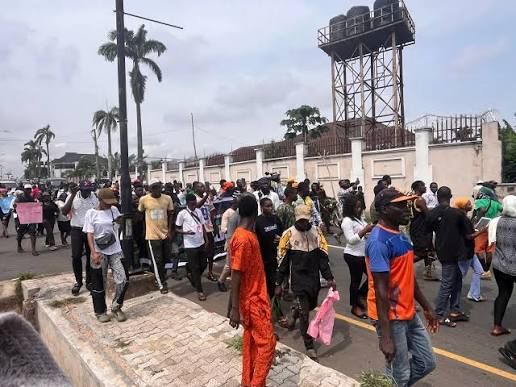
The incident has also sparked nationwide protests by teachers and education stakeholders, with labour unions demanding stronger protection for schools and faster action to rescue victims still in captivity.
Security analysts say recent developments underscore the urgency of improving intelligence gathering, emergency response systems and coordination among security agencies responsible for protecting educational institutions.
The latest attacks have renewed scrutiny of the effectiveness of existing school-security programmes and increased pressure on federal and state authorities to demonstrate measurable progress in safeguarding students and teachers.
Borno School Attack Revives Memories of Chibok
The attack in Borno State carried particular symbolic significance.
Borno remains closely associated with the Chibok abduction, which transformed international perceptions of Nigeria’s security and education challenges.
When students were reportedly abducted in Askira-Uba Local Government Area, many Nigerians immediately drew comparisons with previous incidents in the state.
Although circumstances differ from case to case, the recurring nature of school attacks continues to fuel concerns that lessons from earlier tragedies have not been fully translated into lasting security improvements.
For parents and educators, each new attack revives memories of previous incidents and reinforces fears that schools remain vulnerable.
Timeline of Major School Kidnappings Since 2024
March 2024 – Kaduna State
A major attack on schools in Kuriga resulted in the abduction of more than 100 pupils, drawing national attention and prompting rescue efforts.
March 2024 – Sokoto State
Another school attack led to the kidnapping of students from a religious learning centre.
November 2025 – Kebbi State
Schoolgirls were abducted in an attack that renewed concerns about the safety of female students.
November 2025 – Niger State
One of the largest reported incidents involved hundreds of students and teachers before authorities later announced rescue operations.
April 2026 – Kogi State
Pupils were abducted from an Islamic educational institution, adding to growing concerns about school security.
May 2026 – Oyo State
Students and teachers were kidnapped during attacks that triggered widespread public reaction.
May 2026 – Borno State
Another mass abduction reinforced concerns that schools remain vulnerable despite years of policy interventions.
NUT Protests and Growing Teacher Frustration
The security crisis has increasingly become a labour issue.
The Nigeria Union of Teachers has repeatedly warned that educators cannot be expected to work effectively in unsafe environments.
Following recent attacks, teachers organised protests and renewed calls for stronger protection measures.
Union leaders argue that discussions about education quality must begin with basic safety.
Teachers working in vulnerable communities often face difficult choices.
Many continue to teach despite concerns about personal safety, while others consider transfers or departures from high-risk areas.
The long-term implications could extend beyond security.
If teachers become unwilling to work in affected communities, already struggling education systems may face additional staffing shortages.
Why School Security in Nigeria Remains Difficult
Experts say school security involves more than deploying armed personnel.
Effective protection often requires a combination of physical infrastructure, intelligence gathering, community cooperation and emergency preparedness.
Many schools still face challenges such as inadequate fencing, poor lighting, limited surveillance capabilities and insufficient communication systems.
Geography also plays a role.
Schools located near forests, remote settlements or poorly monitored transportation corridors may face higher risks.
Security specialists argue that sustainable solutions require collaboration among governments, local communities, school administrators and security agencies.
No single intervention is likely to eliminate the threat entirely.
State Police Debate Gains Momentum
The recent school abductions have also reignited calls for the establishment of state police across Nigeria.
Supporters argue that governors and local authorities are often better positioned to understand the security challenges facing their communities and can respond more quickly to emerging threats.
Following the Oyo school abduction, lawmakers and stakeholders renewed calls for security reforms, including the creation of state-controlled police structures capable of complementing federal security agencies.
Advocates believe state police could improve intelligence gathering, strengthen community policing and provide faster responses to attacks on schools and rural communities.
Critics, however, warn that state police could face challenges related to funding, oversight and political interference.
While the debate remains unresolved, the issue has become increasingly linked to discussions about school security, with many stakeholders arguing that protecting students and teachers requires broader reforms to Nigeria’s security architecture.
As school kidnappings continue to generate national concern, the question of whether state police can improve school safety is likely to remain a prominent part of public discourse.
Frequently Asked Questions
What is the Safe Schools Initiative?
The Safe Schools Initiative is a programme designed to improve the safety and security of educational institutions through infrastructure upgrades, emergency preparedness, community engagement and risk reduction measures.
Why are schools being targeted in Nigeria?
Security analysts cite factors including weak protection measures, the potential for mass abductions and the publicity generated by attacks on educational institutions.
How much has Nigeria allocated to school safety?
Government plans associated with the Safe Schools Initiative have projected spending of approximately ₦145 billion between 2023 and 2026.
Which states have experienced major school kidnappings?
Recent incidents have been reported in states including Kaduna, Sokoto, Kebbi, Niger, Kogi, Oyo and Borno.
Why is Chibok still relevant today?
The Chibok abduction remains a defining event in discussions about school security because it prompted national and international efforts to strengthen protection for students.
Related: Oyo School Abduction Sparks Nationwide Protests as Senate Renews State Police Debate
2026 midterm elections: Democrats target key seats as crucial primary results shape November battles
The Road Ahead
The debate surrounding school security is unlikely to fade soon.
Recent attacks, teacher protests and growing public concern have placed renewed pressure on policymakers to demonstrate measurable results.
For supporters of the Safe Schools Initiative, the challenge is proving that investments are reaching vulnerable communities and reducing risks.
For critics, the continued occurrence of school kidnappings raises questions about implementation, accountability and long-term effectiveness.
What remains clear is that the issue extends beyond security statistics.
For millions of Nigerian families, school safety affects decisions about education, community stability and future opportunities.
More than ten years after Chibok, the central question remains unresolved: can Nigeria create learning environments where students and teachers feel genuinely secure?
Until that question is answered, every new school attack will continue to test public confidence in the country’s ability to protect one of its most important institutions—education.
Read more @ireport247news
About The Author
