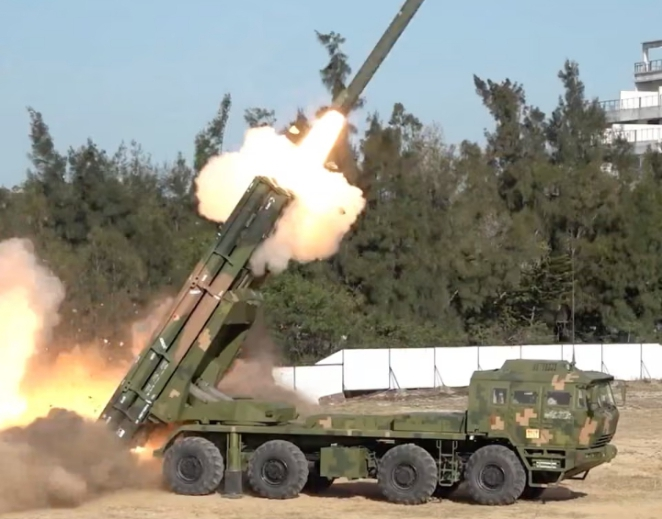
Russia moves Oreshnik missiles into Belarus as Moscow confirms nuclear-capable weapons have entered active combat service within its closest military ally’s territory, escalating regional and international security concerns.
The announcement was accompanied by a video released by Russian authorities showing mobile missile units reportedly deployed inside Belarus, a country bordering several NATO member states in Eastern Europe.
Belarus shares borders with Poland, Lithuania, and Latvia, all NATO countries, making the deployment of advanced Russian missile systems strategically significant for European defence planners.
According to the Russian defence ministry, the Oreshnik missile division has begun performing combat duty tasks in designated locations across Belarusian territory under joint operational coordination.
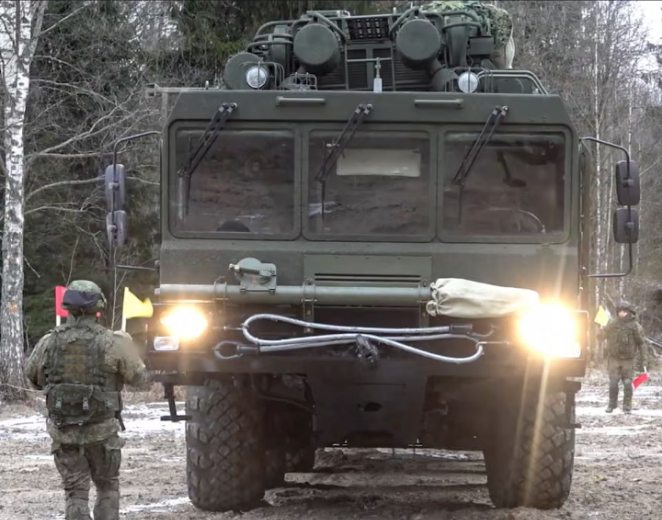
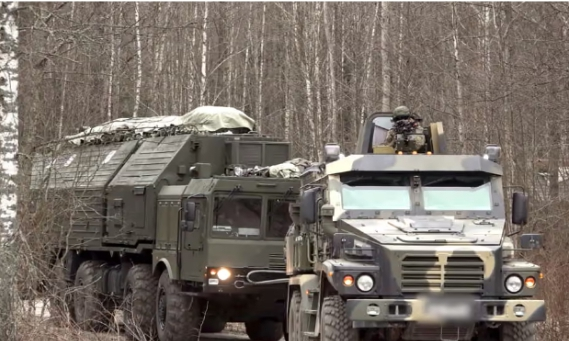
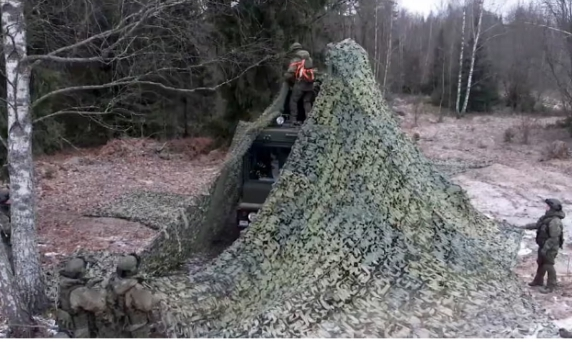
The video footage shows large mobile ground-based missile launchers being transported through forested areas, later concealed using camouflage netting to obscure their precise locations.
Neither Russian nor Belarusian officials disclosed the exact bases or regions where the Oreshnik missile systems are now stationed, citing operational security considerations.
Belarus’s defence ministry confirmed the deployment, stating that missile units had officially entered combat readiness following previously agreed bilateral military arrangements with Moscow.
Russia has increasingly relied on Belarus as a forward operating partner since the escalation of its conflict with Ukraine, deepening military integration between both countries.
President Vladimir Putin has repeatedly highlighted the Oreshnik missile system as a key element of Russia’s modern strategic deterrence capabilities.
Putin claimed the Oreshnik missiles are effectively impossible to intercept due to their reported speeds, which he says exceed ten times the speed of sound.
If accurate, such hypersonic capabilities would pose significant challenges for existing missile defence systems operated by NATO and allied European states.
Military analysts note that deploying these missiles in Belarus reduces flight times to potential targets across Europe, altering the strategic balance in the region.
Intermediate-range missile systems like Oreshnik are estimated to have ranges of up to 5,500 kilometres, enabling strikes across Europe and beyond.
From Belarusian territory, such missiles could theoretically reach major European capitals within minutes, intensifying concerns among NATO defence officials.
Western governments have repeatedly warned that Russian missile deployments near NATO borders increase the risk of miscalculation and rapid escalation.
The deployment also follows Russia’s earlier announcement that it would station tactical nuclear weapons in Belarus, further blurring regional security red lines.
Belarusian President Alexander Lukashenko has consistently defended close military cooperation with Russia, describing it as essential for national security.
Opposition figures and independent analysts, however, argue that Belarus is increasingly surrendering strategic autonomy to Moscow through such agreements.
Since 2022, Belarus has allowed Russian forces to use its territory for military operations, including missile launches and troop movements.
The Oreshnik missile deployment appears to represent another step in formalising Belarus as a permanent extension of Russia’s western military posture.
NATO officials have not immediately commented on the latest announcement but have previously stated they are closely monitoring developments in Belarus.
Alliance leaders have emphasised that any deployment of nuclear-capable systems near NATO borders will be met with enhanced defensive measures.
Poland and the Baltic states have already increased military readiness levels in response to growing Russian and Belarusian military cooperation.
Lithuania’s defence ministry previously warned that missile deployments in Belarus would directly affect regional stability and security planning.
Latvia and Estonia have also invested heavily in air defence systems amid fears of expanded Russian missile reach.
The Guardian reported that the released video did not clarify whether the missiles are permanently stationed or rotated periodically across Belarus.
The footage nonetheless shows significant logistical preparation, suggesting long-term operational planning rather than temporary exercises.
Camouflaging missile units within forested areas is a standard tactic aimed at reducing detection by satellites and reconnaissance aircraft.
Such concealment complicates intelligence assessments and increases uncertainty for opposing military planners.
Russia has increasingly emphasised mobility and survivability in its missile forces to ensure second-strike capability.
The Oreshnik system is believed to be road-mobile, allowing rapid relocation and reducing vulnerability to pre-emptive strikes.
Western analysts remain cautious about Russia’s claims regarding missile speed and interception resistance, noting limited independent verification.
Nevertheless, the political signalling of the deployment is widely viewed as deliberate and strategic.
By announcing the deployment publicly, Moscow appears intent on demonstrating resolve and deterrence to NATO and the United States.
The move also comes amid ongoing diplomatic tensions over Ukraine, sanctions, and broader European security arrangements.
Belarus’s role as host to Russian strategic assets places it firmly within Moscow’s confrontation with the West.
Critics argue this increases Belarus’s risk exposure in any future conflict involving Russia and NATO.
Supporters of the alliance, however, maintain that close integration with Russia provides Belarus with security guarantees against perceived Western threats.
The deployment has sparked renewed debate within Europe about missile defence investment and nuclear deterrence policies.
Some European leaders have called for renewed arms control discussions to prevent further escalation in missile deployments.
Others argue that Russia’s actions demonstrate a lack of commitment to arms control frameworks abandoned in recent years.
The collapse of the Intermediate-Range Nuclear Forces Treaty removed restrictions on such missile deployments in Europe.
Since then, both Russia and NATO members have accused each other of destabilising military actions.
Russia moves Oreshnik missiles into Belarus at a time when trust between Moscow and Western capitals remains severely strained.
The long-term implications of the deployment will depend on whether additional systems are stationed and how NATO chooses to respond.
For now, the announcement underscores the continuing militarisation of Eastern Europe amid unresolved geopolitical tensions.
As Russia and Belarus deepen military cooperation, regional security dynamics appear set to remain volatile.
The deployment marks another milestone in Russia’s evolving strategic posture along NATO’s eastern flank.
Whether intended as deterrence or intimidation, the presence of Oreshnik missiles in Belarus has unmistakably raised the stakes.
About The Author