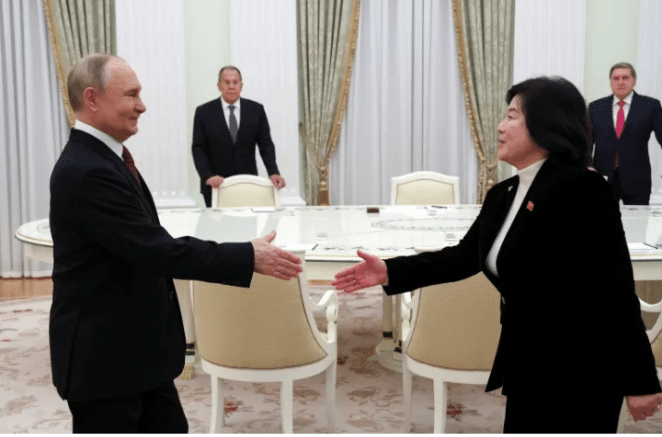
Russian President Vladimir Putin welcomed North Korean Foreign Minister Choe Son Hui to the Kremlin Monday, signaling a strategic intensification of Russia-North Korea ties amid global scrutiny.
The meeting arrives as both nations remain under extensive Western sanctions, reinforcing strategic alignment. Putin emphasized relations and development prospects are proceeding “according to plan,” showcasing Moscow’s unwavering agenda.
Choe Son Hui conveyed “warm wishes” from Kim Jong Un, praising the “spiritual closeness” of the nations, further solidifying Russia-North Korea ties and projecting unity to global audiences.
Since the 2024 defense pact, both countries pledged military support in case of aggression. The agreement marks a historic escalation in cooperation, reinforcing the alliance against external pressures.
North Korea deployed approximately 10,000 troops to assist Russia in Ukraine, with at least 600 casualties reported. Their combat role underscores Pyongyang’s readiness to escalate military commitments abroad.
Kim Jong Un recently inaugurated a museum honoring North Korean soldiers killed in Ukraine, calling their sacrifices a “historic peak” of militant solidarity with Russian forces and shared purpose.
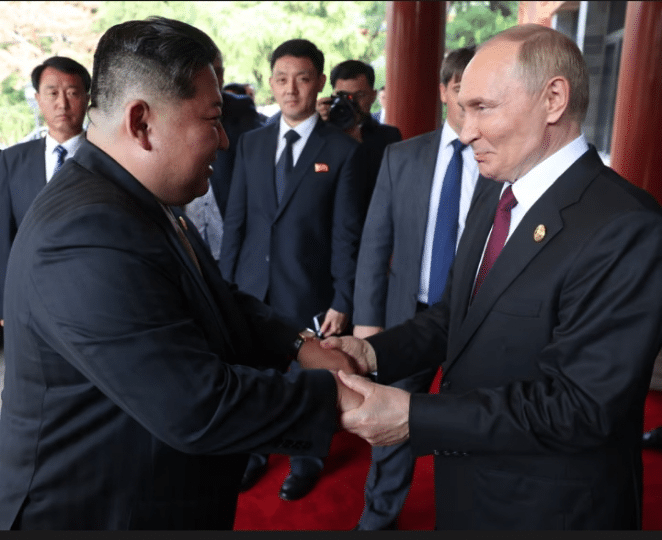
Putin last met Kim personally in Beijing on September 3, attending a military parade with Xi Jinping. Putin praised North Korean troops as “courageous and heroic” in Ukraine’s battlefields.
Russia-North Korea ties now extend beyond symbolic diplomacy. Analysts highlight technology transfers, satellite cooperation, and military coordination, increasing global concern over Washington’s strategic calculations.
US President Donald Trump previously accused Putin and Kim of conspiring against the United States. The Kremlin dismissed these claims, framing them as exaggerations of Russia-North Korea ties.
Observers note the nations share strategic interests, leveraging sanctions to expand military, economic, and technological collaboration in defiance of Western pressure and international isolation.
Choe Son Hui’s Moscow visit emphasizes North Korea’s diplomatic strategy. Officials highlighted the “invincible” alliance with Russia, reinforcing the narrative of resilience and mutual support in global affairs.
The Kremlin emphasized international pressures, sanctions, and political isolation will not deter Russia-North Korea ties or prevent continued military and technological coordination between Moscow and Pyongyang.
Analysts warn North Korea’s troop contribution shifts the Ukraine war’s dynamics, providing Moscow additional manpower and strategic leverage against Ukrainian resistance and Western-backed operations.
Pyongyang frames troop deployments as historic solidarity, with Kim stating North Korean sacrifices mark a new chapter of military alliance with Russia. The rhetoric emphasizes strength and legitimacy.
Russia’s use of North Korean soldiers reflects pragmatic responses to manpower shortages, indicating deeper reliance on allied states to sustain offensive operations against Ukrainian forces.
The defense pact and ongoing coordination influence regional stability in East Asia and Eastern Europe, alarming NATO allies and neighboring states observing Russia-North Korea ties and military integration.
Choe met Russia’s top diplomat Sergey Lavrov during the visit. Lavrov praised “strategic convergence,” reinforcing Moscow’s narrative of expanding influence and highlighting the multifaceted nature of Russia-North Korea ties.
Western analysts note that Russia-North Korea ties are substantive. Technology sharing, intelligence coordination, and joint military exercises indicate a long-term alliance extending beyond immediate conflict requirements.
The alliance may affect future nuclear and missile negotiations, as both countries possess nuclear arsenals and have demonstrated willingness to bypass international norms and agreements.
Putin reiterated Monday that cooperation is “according to plan,” signaling continuity despite criticism, global scrutiny, and mounting concern over the broader implications of Russia-North Korea ties.
Seoul and Kyiv monitor the alliance closely, noting North Korean troop casualties and fearing expanded Russian reliance on foreign soldiers or mercenaries, increasing the conflict’s unpredictability.
Moscow and Pyongyang use state media to project strength. Messaging emphasizes moral and spiritual alignment, portraying collaboration as historically significant and intended to legitimize Russia-North Korea ties domestically and internationally.
The museum in Pyongyang and public celebrations of fallen soldiers aim to galvanize domestic support, presenting the alliance as a moral and military triumph with international resonance.
The US and European nations express concern that the partnership enables Russia to circumvent sanctions, gain troops, and strengthen technical programs with North Korean assistance, escalating global security risks.
Reports suggest Russian support may include satellite guidance and weapons technology transfers. These developments deepen Russia-North Korea ties while heightening fears of destabilization in multiple regions.
Analysts caution that a deepening relationship could destabilize regional balance, embolden aggressive actions, and complicate diplomatic negotiations in Europe and East Asia, magnifying global uncertainty.
The Kremlin portrays resilience and continuity. Putin’s engagement with North Korean diplomats signals Moscow’s commitment to long-term alignment, emphasizing that Russia-North Korea ties are central to future strategic calculations.
Joint exercises, high-level meetings, and diplomatic communications have steadily increased. Patterns indicate an enduring strategic alliance with major implications for global security, technology proliferation, and military planning.
Putin’s interaction with Choe demonstrates Russia’s intent to maintain North Korea as a key partner, preparing for prolonged cooperation across military, technological, and political domains, solidifying Russia-North Korea ties.
As the Ukraine conflict persists, North Korea’s troop and technology contributions reflect full integration into Russia’s strategic objectives, further entrenching Russia-North Korea ties despite mounting global criticism.
Moscow’s messaging emphasizes continuity and resilience. Putin’s interactions with North Korean diplomats underscore long-term alignment, confirming that Russia-North Korea ties are a critical component of Russia’s global geopolitical strategy.
Both nations face sanctions and isolation. Their growing interdependence through military cooperation and diplomatic alignment underscores the strategic significance of Russia-North Korea ties in international geopolitics.
About The Author