
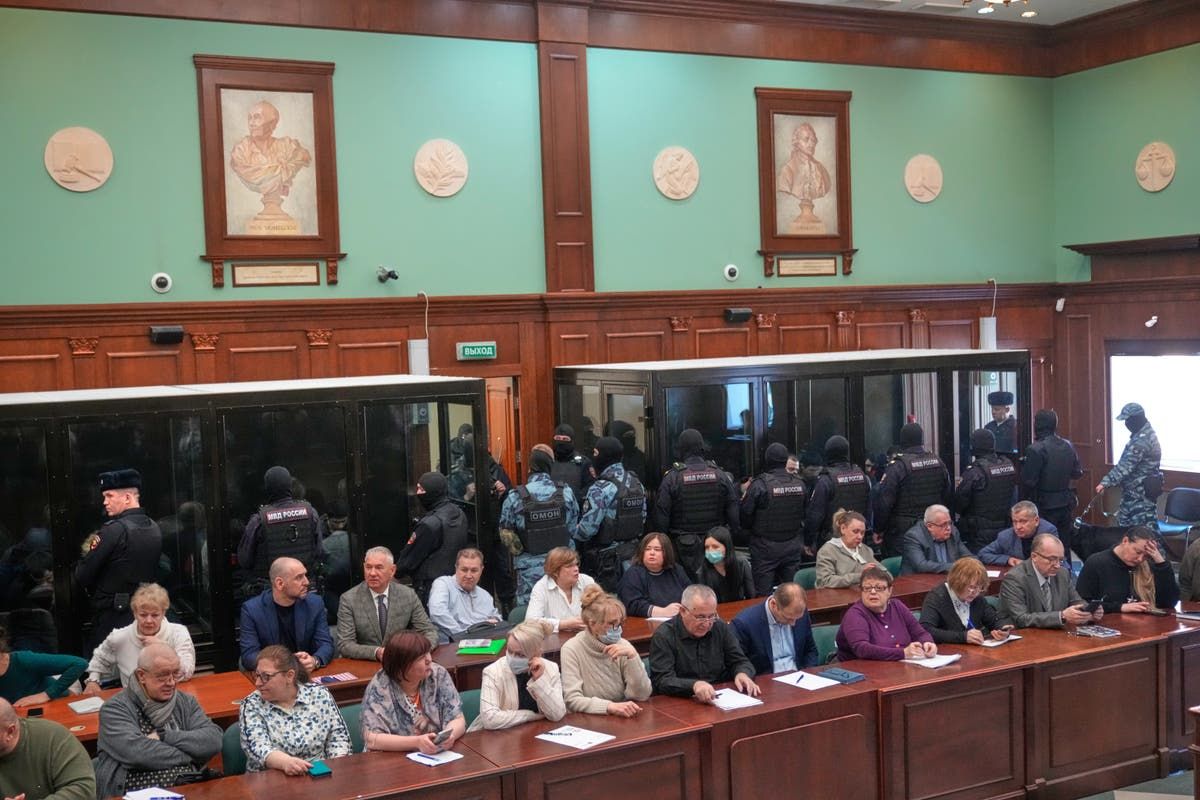
A court in Moscow has convicted 19 people for their involvement in the deadly Moscow concert hall attack that claimed the lives of 149 individuals and injured more than 600 others.
The attack took place on March 22 at Crocus City Hall, one of Moscow’s largest concert venues, when four armed gunmen opened fire on concert-goers before setting the building ablaze. A faction of the Islamic State claimed responsibility for the atrocity.
The convicted individuals received severe sentences reflecting the scale and brutality of the attack. Fifteen were handed life imprisonment, one received 22 and a half years, and three others were sentenced to 19 years and 11 months each.
Prosecutors described the defendants as part of a coordinated network that assisted in planning, logistics, communications, and other support roles for the perpetrators.

The court concluded that each defendant played a significant role in enabling one of the deadliest terrorist incidents in recent Russian history.
Investigators said the attack was meticulously planned over several months. Security footage and digital evidence showed that the four gunmen had coordinated their movements to enter the concert hall simultaneously.
They were heavily armed and strategically targeted crowded areas of the venue to maximise casualties. Panic and chaos ensued as concert-goers tried to flee while smoke and flames spread through the building. Emergency services rushed to the scene, working under dangerous conditions to evacuate survivors and extinguish the fires.
Medical teams treated hundreds of wounded individuals on-site and at nearby hospitals. Many victims suffered severe gunshot injuries, burns, and smoke inhalation. Survivors described harrowing scenes, with some trapped under debris as the fire engulfed parts of the venue.
Psychological trauma for the survivors and families of the victims continues to be profound, with many requiring long-term counselling and support.
Authorities stated that the network behind the attack had connections beyond Moscow, coordinating with extremist cells in other regions. Investigations revealed that some defendants had helped the attackers acquire weapons, plan escape routes, and communicate securely to evade law enforcement. Prosecutors argued that without this support, the attack could have been prevented.
The Islamic State claimed responsibility shortly after the attack, releasing statements praising the gunmen and framing the assault as part of their ongoing campaign against civilian targets in Russia. Security analysts noted that attacks of this kind are intended to spread fear, destabilize society, and generate international media attention.
In the aftermath, Russian authorities implemented immediate counter-terrorism measures, including heightened security at public venues, transport hubs, and major events. Nationwide intelligence operations were launched to dismantle remaining networks affiliated with extremist groups. The government also promised increased surveillance and preventive measures to stop future attacks.
Families of the victims attended the court proceedings, some testifying about the impact of the attack on their lives. Many spoke of the loss of loved ones and the permanent disruption to their families, highlighting the human cost behind the statistics. Authorities acknowledged the suffering caused and emphasised that the sentences were intended to deliver justice and deter future acts of terrorism.
Global reactions condemned the attack and expressed solidarity with the Russian people. Leaders from Europe, the United States, and other regions denounced the violence, describing the assault as an attack on innocent civilians.
International organisations emphasised the need for cross-border cooperation to combat extremist networks. Analysts said the attack demonstrates that even with years of global counter-terrorism efforts, extremist groups remain capable of carrying out highly coordinated assaults.
Security experts have pointed out that concerts and other large public gatherings are particularly vulnerable to such attacks, as they provide concentrated crowds and high visibility for media coverage. In response, many countries have reviewed safety protocols for public events, including stricter access controls, surveillance, and emergency response planning.
The trial of the 19 convicted individuals lasted several months, with prosecutors presenting extensive evidence, including intercepted communications, travel records, and forensic findings.
Witnesses, including survivors and law enforcement officers, testified about the preparation and execution of the attack. The court carefully examined the roles of each defendant to determine their level of involvement.
Officials stressed that the attack was not only an act of terrorism but also a direct assault on the social fabric of the city. The destruction of a public venue and the targeting of civilians attending a peaceful concert highlighted the attackers’ intent to sow terror and disrupt everyday life. The sentences delivered by the Moscow court are among the harshest for terrorism-related offences in Russia in recent decades.
As part of the ongoing response, authorities continue to investigate possible links between the convicted individuals and other extremist networks, both domestically and abroad.
Analysts warn that remaining cells may attempt further attacks, underscoring the need for vigilance and intelligence-led policing.
Read also: Hamas Iran restraint call urges Tehran to avoid targeting neighbouring countries after Khamenei killing
Memorials have been held to honor those killed in the attack at Crocus City Hall, with flowers, candles, and public vigils. The tragic events of March 22 remain a stark reminder of the threat posed by extremist violence and the importance of coordinated counter-terrorism measures.
About The Author





