

The Sudan war intensified again after artillery attacks killed civilians in South Kordofan, highlighting a widening humanitarian catastrophe as fighting spreads deeper into the country’s strategic centre.
At least sixteen civilians were killed after heavy artillery fire struck residential neighbourhoods in Dilling, a besieged city in Sudan’s embattled South Kordofan region, medical sources confirmed.
Local health workers reported that women, children and elderly residents were among the victims, underscoring growing concerns over deliberate civilian targeting during the protracted civil war.
The Sudan Doctors Network said the shelling lasted two days and involved forces from the Rapid Support Forces and allied fighters linked to the SPLM-North faction.
Dilling has remained under siege for more than two years, with residents facing extreme shortages of food, medicine and clean water amid near-constant bombardment.
The latest deaths add to an alarming civilian toll in Kordofan, where more than one hundred people have reportedly been killed since early December alone.
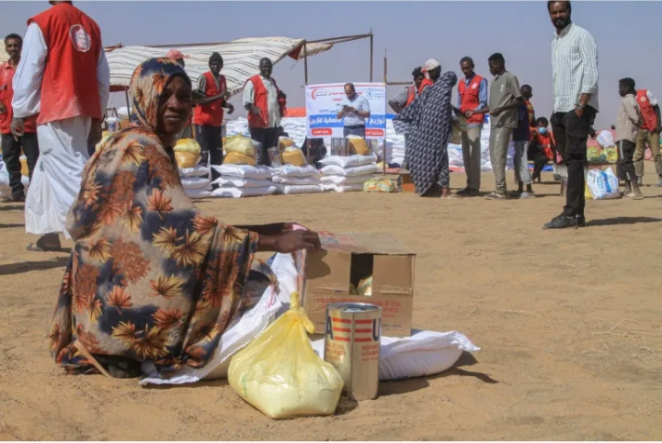
Fighting in Sudan has increasingly shifted from Darfur towards the country’s central heartland, an area analysts say could determine the overall direction of the war.
Armed confrontations across Kordofan have intensified following the Rapid Support Forces’ capture of a major Sudanese army base earlier this year.
Human rights monitors warn that both sides are escalating tactics that place civilians directly in harm’s way, violating international humanitarian law.
Medical facilities in Dilling are struggling to function after repeated strikes damaged clinics and overwhelmed remaining staff treating trauma victims.
Doctors also face outbreaks of cholera and dengue fever, worsening an already dire public health emergency in the besieged city.
The International Organization for Migration estimates more than fifty thousand people have fled violence across Kordofan’s three states since late October.
Many displaced families arrived in neighbouring towns with nothing, after fleeing under shellfire and witnessing what UN officials described as unspeakable atrocities.
More than seven hundred residents were displaced from Dilling alone during recent escalations, further straining host communities with limited resources.
United Nations human rights chief Volker Türk warned that patterns of violence in Kordofan mirror earlier mass atrocities committed in Darfur.
Türk said the international community must act urgently to prevent history from repeating itself, particularly following the devastation of el-Fasher.
The situation deteriorated further after drones struck a UN base in Kadugli, killing six Bangladeshi peacekeepers earlier this month.
UN Secretary-General António Guterres said the attack could constitute war crimes and forced the evacuation of a key UN logistics hub.
Security conditions have now rendered humanitarian operations extremely difficult across much of South Kordofan, aid agencies warned.
A recent UN report accused the Rapid Support Forces of systematic atrocities, including mass killings and sexual violence, during operations in Darfur.
Investigators documented more than one thousand civilian deaths during a three-day assault on Zamzam displacement camp earlier this year.
The report described sexual violence as a deliberate tool of terror, resulting in the near-total emptying of the camp’s population.
Sudan’s war began in April 2023 following a power struggle between army chief Abdel Fattah al-Burhan and former deputy Mohamed Hamdan Dagalo.
Since then, the conflict has killed an estimated one hundred thousand people and displaced more than fourteen million nationwide.
The United Nations now considers Sudan the world’s largest humanitarian crisis, with famine risks expanding rapidly across conflict zones.
Against this backdrop, Sudanese army chief al-Burhan travelled to Cairo for high-level talks with Egyptian President Abdel Fattah el-Sisi.
Egypt warned it would not allow “red lines” to be crossed, citing concerns over territorial integrity and the emergence of parallel governments.
Cairo invoked a joint defence pact with Sudan, signalling readiness to take measures protecting national and regional security.
The United States has renewed diplomatic efforts, with Secretary of State Marco Rubio pushing for an urgent humanitarian ceasefire.
Sudanese officials and UN experts accuse the United Arab Emirates of backing the RSF, allegations Abu Dhabi has repeatedly denied.
Read also: Palestine Action hunger strikers dying in UK prison as doctors warn of imminent risk
As fighting spreads into Sudan’s strategic centre, civilians remain trapped between rival forces with diminishing international protection.
Aid agencies warn that without immediate ceasefire measures, the civilian death toll in Kordofan will continue rising rapidly.
About The Author


