The Sudan conflict escalates in West Kordofan as the Sudanese army defends its last stronghold from the paramilitary Rapid Support Forces (RSF), who continue their eastward push.
The RSF has captured several towns in Darfur and is advancing toward Babnusa, seeking control over strategic areas. Army officials claim they repelled multiple RSF attacks.
Satellite imagery shows extensive damage to army facilities in Babnusa, with repeated shelling and drone strikes restricting troop movements. Thick smoke rises from the headquarters after successive assaults.
Online footage verified by a news media shows Sudanese army soldiers celebrating the capture of armored vehicles abandoned by retreating RSF fighters in Babnusa. Defensive positions are reportedly being strengthened.
Colonel Hatem Karim al-Falahi, a military analyst, said, “The army’s ability to secure cities like Babnusa will determine the balance of power in Sudan for the coming weeks.”
In North Kordofan, RSF forces aim to seize el-Obeid, a strategic city housing a major army airbase. Its capture could provide RSF a direct path toward Khartoum, the capital.
Government troops announced the recapture of Kazqil and Um Dam Haj Ahmed in North Kordofan on Saturday, signaling ongoing resistance despite RSF territorial gains in surrounding areas.
South Kordofan remains tense, with RSF forces targeting Kadugli, the state capital. Military experts warn that the outcome here could shape Sudan’s broader conflict trajectory and influence regional stability.
The fighting continues despite a U.S.-led ceasefire proposal. Both government and RSF forces have largely ignored international calls, with combat operations escalating and civilian casualties mounting.
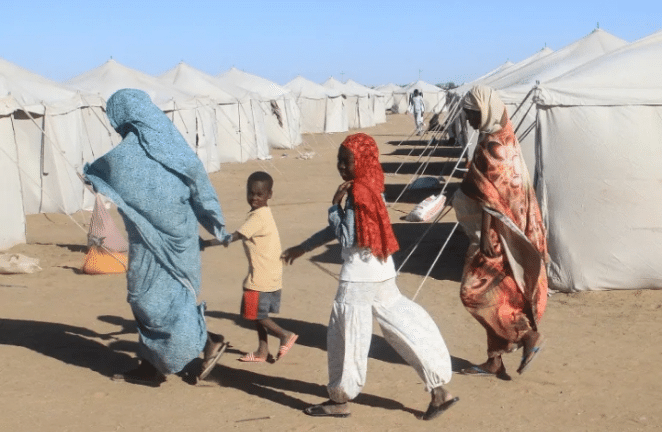
Humanitarian conditions deteriorate rapidly in RSF-controlled territories. Thousands of displaced Sudanese have fled to camps in northern Sudan, reporting dire shortages of food, water, and medical care.
Sudan Doctors Network confirmed 32 cases of rape among girls fleeing el-Fasher last week. Many reported assaults either during RSF occupation or while escaping toward Tawila town.
United Nations Under-Secretary-General for Humanitarian Affairs Tom Fletcher described the situation as “unimaginable suffering,” adding, “Darfur has become the world’s capital of human suffering. Aid remains insufficient.”
The fall of el-Fasher last month marked the collapse of the government’s last stronghold in Darfur after 18 months of siege. RSF control has been accompanied by widespread atrocities.
Reports indicate mass looting, burning of homes, and attacks on civilians by RSF fighters. Medics accuse the paramilitary group of burning and burying bodies to conceal evidence of war crimes.
The Sudan conflict has displaced over a million people, with thousands more fleeing daily. Camps such as al-Afad in al-Dabba host refugees who recount harrowing tales of RSF violence and starvation.
Analysts emphasize that the current military engagements in Kordofan will influence Sudan’s wider strategic landscape. Control over cities like Babnusa and el-Obeid is crucial for both sides.
RSF commanders released videos from Babnusa claiming imminent “liberation” of the town. Yet, verified reports show the army maintains defensive positions, creating a stalemate in several key areas.
Local residents describe intermittent gunfire, artillery shelling, and drone surveillance disrupting daily life. Schools remain closed, markets are empty, and basic services are severely hampered by ongoing hostilities.
International organizations have repeatedly called for humanitarian corridors, but access remains limited. Aid convoys face bureaucratic hurdles, checkpoints, and sporadic attacks, leaving civilians in dire need.
The conflict’s psychological toll is immense. Many displaced individuals exhibit trauma symptoms, with children especially vulnerable. Health facilities struggle to provide care amid shortages of supplies and medical personnel.
Military observers note that control over supply routes is critical. The Sudanese army has employed airlifts and defensive fortifications to counter RSF advances, attempting to stabilize its positions in contested zones.
“The coming weeks are pivotal,” Colonel al-Falahi said. “Whoever controls Babnusa and el-Obeid will gain a significant advantage in shaping Sudan’s military and political future.”
The international community has condemned ongoing atrocities but remains divided on intervention strategies. Regional powers have offered mediation, yet ceasefire negotiations have stalled repeatedly.
Efforts by the United Nations, African Union, and Arab League to broker peace face challenges. Both RSF and government forces continue prioritizing military objectives over civilian protection.
Humanitarian agencies stress that food, water, and medical aid must reach those trapped in RSF-dominated areas. Fletcher warned that delayed assistance could result in large-scale mortality and deepening social collapse.
Meanwhile, displaced populations attempt to survive in makeshift camps. Families rely on scarce humanitarian supplies while grappling with exposure to harsh weather, disease outbreaks, and ongoing insecurity.
Reports of sexual violence and arbitrary killings exacerbate the humanitarian crisis. International human rights groups have called for independent investigations into alleged war crimes and accountability for perpetrators.
Despite the devastation, Sudanese army forces continue counterattacks in North and South Kordofan, aiming to regain strategic towns and slow RSF territorial gains. Fighting remains intense in multiple locations.
Experts caution that prolonged conflict will further destabilize Sudan. Regional spillovers into Chad and South Sudan are possible, threatening cross-border security and potentially fueling broader humanitarian emergencies.
The Sudan conflict highlights the failure of political solutions to halt violence. Armed groups maintain momentum, while civilians bear the brunt of insecurity, displacement, and trauma across Kordofan and Darfur.
As winter approaches, humanitarian conditions are expected to worsen. Cold nights, food scarcity, and limited medical access pose severe risks to thousands of displaced and trapped civilians.
International observers continue monitoring the situation, emphasizing the urgency of coordinated aid and protection for vulnerable populations. The window to prevent further catastrophe remains narrow.
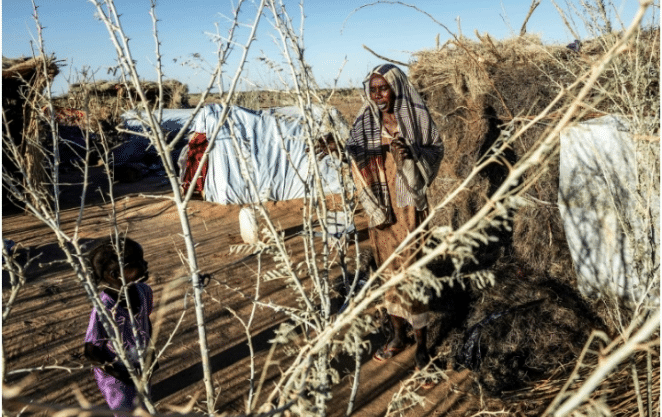
The coming weeks will be decisive. Both Sudanese army and RSF forces aim to consolidate control over strategic locations, while the fate of hundreds of thousands of civilians hangs precariously amid ongoing warfare.
About The Author