

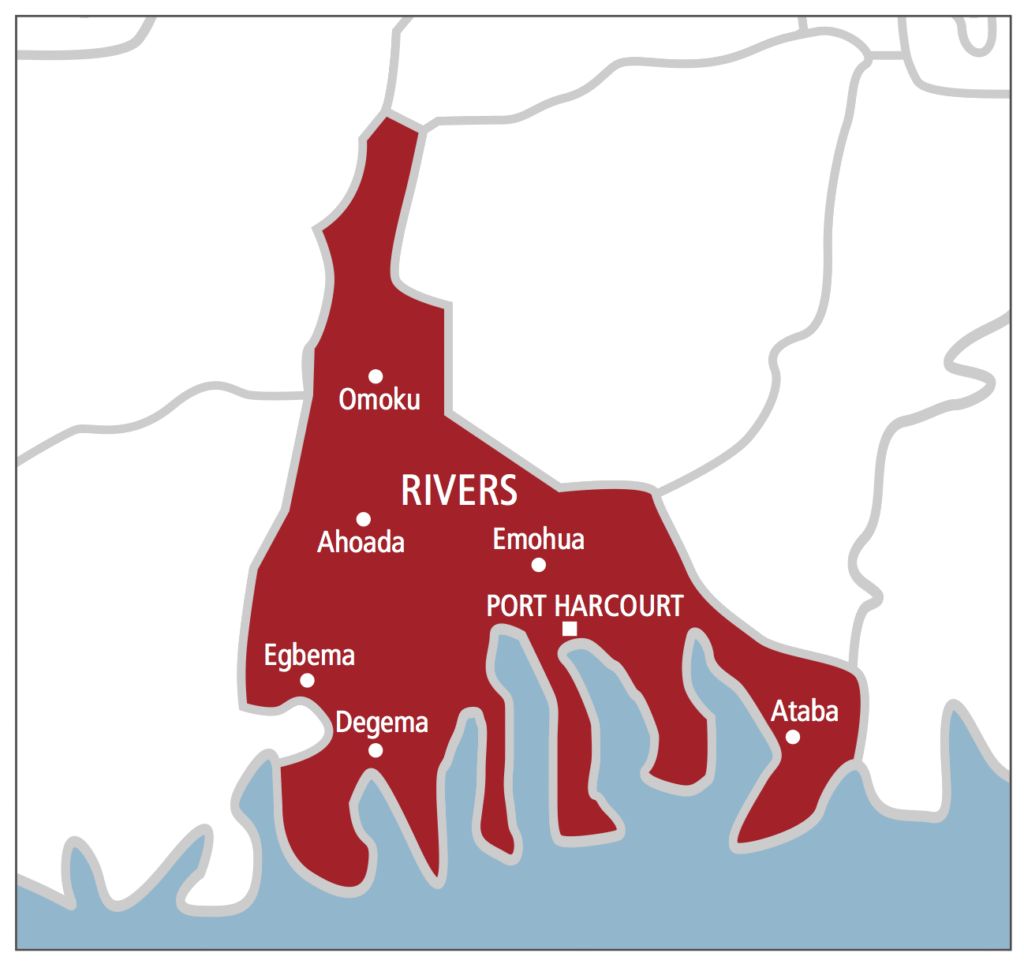
Community leaders and stakeholders in Nigeria’s Niger Delta have renewed calls for stronger political inclusion of the Ogoni people, urging political parties in Rivers State to consider zoning the 2027 governorship ticket to candidates of Ogoni origin.
They argue that such a step would help address historical grievances and promote lasting reconciliation.
According to representatives of Community Development Committees (CDC) in oil-producing areas, the Ogoni community has endured decades of environmental damage linked to oil exploration activities.
They believe that political representation at the highest level of state leadership would serve as a meaningful gesture of recognition and fairness.
The CDC leadership maintained that the demand is not driven by partisan interests but by the need for equity and restoration.
They explained that the Ogoni people have faced long-standing challenges, including environmental degradation, reduced agricultural productivity, economic hardship, and social disruption.
These difficulties, they noted, have significantly affected livelihoods across Ogoni land.
Stakeholders emphasized that while various government interventions have been introduced over the years, the situation in Ogoni remains largely unresolved.
They argued that sustained dialogue, political goodwill, and structured inclusion are necessary to rebuild trust between the community and state authorities.
The group further stated that the Ogoni issue should not be treated as a local concern alone, but rather as part of a broader Niger Delta question.
They pointed out that communities across the region share similar experiences related to environmental impact and economic underdevelopment.
However, they insist that the Ogoni case stands out due to its historical background and global attention.
In their view, supporting an Ogoni candidate for the 2027 governorship election would symbolize a new phase of cooperation and inclusiveness.
They described this proposal as a political incentive that could complement other efforts aimed at peacebuilding and economic revival.
Leaders advocating for the initiative also stressed the importance of engaging traditional institutions, youth organizations, women’s groups, and civil society actors within Ogoni land.
They believe that meaningful progress can only be achieved through broad consultation and community participation.
By strengthening internal dialogue, they hope to unify stakeholders around a common development agenda for Ogoni.
The call also includes appeals for increased federal engagement. Community representatives have urged national authorities to visit Ogoni communities directly and listen to concerns from different segments of society.
They believe that firsthand interaction would help clarify misconceptions and reduce tensions surrounding longstanding issues.
Furthermore, proponents of the proposal argue that political inclusion could support efforts toward restoring confidence in governance.
They contend that when communities feel represented and heard, stability improves, creating a more conducive environment for development projects and investment.
The Ogoni region, according to stakeholders, still holds significant untapped economic potential.
They believe that resolving disputes and fostering harmony could pave the way for responsible development, infrastructure growth, and improved social services.
However, they insist that such progress must be rooted in justice and fairness.
Advocates of the initiative also highlighted that discussions about resource development in Ogoni land should be accompanied by tangible benefits for local residents.
They maintain that development plans must prioritize education, healthcare, employment opportunities, and environmental restoration.
They argue that political representation would complement these goals by ensuring that community voices are reflected in policy decisions.
In their assessment, leadership drawn from Ogoni communities could better articulate local needs while collaborating with state and federal authorities.
Observers note that the renewed campaign reflects growing momentum among Niger Delta stakeholders seeking sustainable solutions.
The emphasis on inclusion demonstrates a shift toward dialogue-based approaches rather than confrontation.
Supporters believe this strategy could strengthen unity within Rivers State and across the region.
Despite differing opinions, the proposal has sparked conversations about equity, representation, and long-term peace.
For many residents of Ogoni land, the discussion represents hope for greater participation in governance and decision-making processes that affect their future.
Community leaders insist that the objective is not to exclude any group but to promote balance and shared responsibility.
They argue that equitable political arrangements can help reduce tensions and build stronger relationships among diverse communities within Rivers State.
As preparations gradually begin ahead of the 2027 general elections, attention is expected to focus increasingly on zoning arrangements, party negotiations, and stakeholder consultations.
The push for an Ogoni governorship candidate is likely to remain part of broader political discussions in the coming months.
Ultimately, supporters of the call believe that embracing inclusion will strengthen democracy and encourage unity.
They maintain that addressing the aspirations of the Ogoni people through political participation could contribute to healing, stability, and renewed development across the Niger Delta.
By placing Ogoni concerns at the center of dialogue, advocates hope to achieve a future defined not by conflict, but by cooperation, fairness, and progress.
About The Author
