
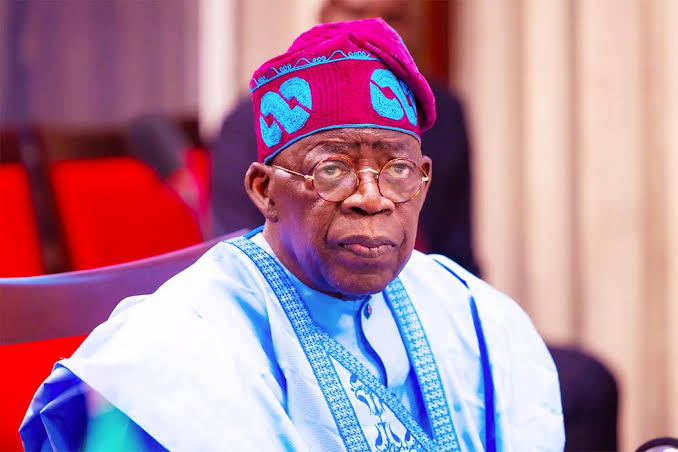

This administration does not ask for silence in the face of hardship. It only asks for fairness, truth, and a shared commitment to rebuilding Nigeria—without exaggerating its pain
The Presidency has issued a detailed rebuttal to a recent Daily Trust editorial that painted Nigeria as a nation overwhelmed by hunger, hardship, and helplessness.

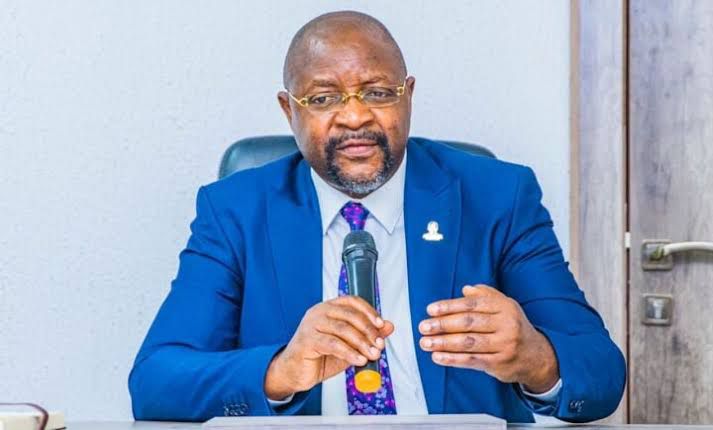
In a statement on Thursday, August 7, 2025, Sunday Dare, Special Adviser to the President on Media & Public Communications, described the editorial as exaggerated, unbalanced, and deliberately misleading.
“While the Tinubu administration welcomes constructive criticism from the media, it must be anchored on verifiable facts, not distortion or selective pessimism,” Dare said. “Daily Trust has, on several occasions, misrepresented government policies—a trend for which the paper has publicly apologised at least twice.”
The Presidency stressed that no one in the administration denies some Nigerians are experiencing economic challenges. However, it argued that Daily Trust’s portrayal ignored the government’s ongoing interventions, thereby promoting despair instead of informing citizens with the truth.
According to Dare, President Bola Ahmed Tinubu is not indifferent to the difficulties facing Nigerians. On the contrary, he is implementing targeted policies—many already yielding results—to restructure an economy inherited from years of consumption without productivity, opacity without accountability, and policies that favoured the powerful over the people.
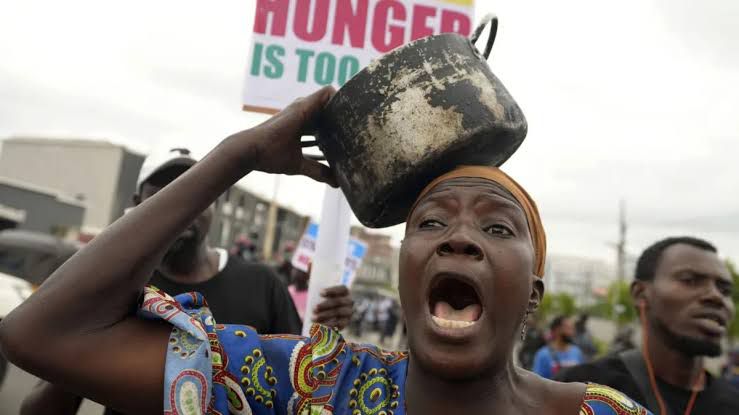
One major point of contention was Daily Trust’s reference to an April 2025 UNICEF “prediction” that 33 million Nigerians, including 16 million children, would face hunger in 2025.
The Presidency clarified that this figure came from the Cadre Harmonisé Food and Nutrition Insecurity Analysis—a joint effort by the Federal Government, FAO, WFP, and UNICEF—and represented a worst-case projection for the June–August lean season, assuming no government action.
Dare outlined measures taken to avoid such an outcome:
Release of 42,000 metric tons of grains from strategic reserves
Procurement of 117,000 metric tons more
Activation of the Food Security Council
Scaled-up emergency nutrition support in six states, including Borno, Yobe, and Katsina
The Presidency also emphasised that malnutrition is a global concern, worsened by COVID-19, the Russia–Ukraine war, and Middle East conflicts, with over 1.4 billion people worldwide under food stress (World Bank, April 2025).
The editorial’s description of the naira as “worthless” was called false and misleading. After hitting ₦1,800/$1 in March 2024, the currency has appreciated to around ₦1,525/$1 (as of August 1, 2025), thanks to:
Increased oil receipts and remittances
Restored investor confidence
Unification of the FX window
Clearance of over $4 billion in FX backlog
The Presidency argued the naira’s trajectory reflects a correction and stabilisation, not collapse.
Dare stated that the administration is open to practical recommendations, such as suspending VAT on food, reducing taxes on drugs and medical equipment, and easing burdens on MSMEs. From January 2026, new tax reforms will:
Streamline over 60 taxes into fewer, manageable channels
Abolish nuisance taxes
Create exemptions for essential goods
Encourage federal–state tax harmonisation
Rejecting claims that the school feeding programme has “fizzled out,” the Presidency said over 9.8 million children in 53,000 schools are still being served meals nationwide. Over 200,000 cooks and farmers are engaged, with digitisation ensuring transparency.
Other ongoing interventions include:
₦75,000 each to 3 million vulnerable households under the Renewed Hope Conditional Cash Transfer (target: 15 million households)
396,000 students benefiting from NELFUND tuition loans and stipends
250,000 MSMEs supported under the Presidential MSME Grant Scheme in 2025
Rollout of CNG buses and transport palliatives to cut commuting costs
The FAO Food Price Index (June 2025) shows global prices remain 22% above 2019 levels, affecting countries worldwide. In response, Nigeria has:
Declared a State of Emergency on Food Security
Invested ₦200 billion in dry-season and year-round farming
Targeted 500,000 farmers for input support in 2025
Established the National Commodity Board to regulate price volatility
Introduced transport subsidies to reduce
The Presidency emphasised that the fight against hunger is a national effort. Joint food distribution, direct cash support, and nutrition interventions are being coordinated with state governors, local governments, development partners, and civil society groups.
Recently approved by the National Economic Council, the Renewed Hope Ward Development Programme (RHWDP) targets all 8,809 wards in Nigeria. Its goals include:
Poverty alleviation and food security
Rural infrastructure and power supply
Job creation through identifying and supporting at least 1,000 economic actors per ward
Stimulating local manufacturing and business growth towards a $1 trillion economy by 2030
Dare concluded that while Nigerians are “belt-tightening,” the economy is healing. Green shoots of recovery include:
A stabilising naira
Millions lifted through cash transfers
Hundreds of thousands of students schooling without fear of fees
Half a million farmers planting into a reformed food system
“This administration does not ask for silence in the face of hardship,” Dare said. “It only asks for fairness, truth, and a shared commitment to rebuilding Nigeria—without exaggerating its pain.”
About The Author


