Repositioning Nigeria’s Fishing and Maritime Industries Through Legislative Action
The House of Representatives has unveiled a comprehensive legislative blueprint aimed at revitalising Nigeria’s fishing and maritime industries, expanding the nation’s technical capacity, and maximising the economic potential of its vast coastal and ocean resources.
The move marks one of the most ambitious attempts by the National Assembly in recent years to establish a long-term development pathway for the blue economy.
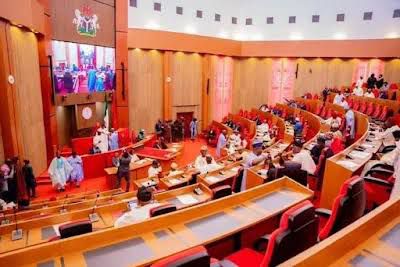
The initiative was formally presented on Thursday by the Chairman of the House Committee on Oceans and Fisheries, Akarachi Amadi, who laid before lawmakers three strategic reports.
Each document proposes a specialised institution designed to deepen research, enhance manpower, strengthen regulation, and stimulate investment across Nigeria’s fishing and maritime industries.
In a detailed statement issued by the committee’s media unit on Friday, Amadi explained that the bills were crafted to address long-standing structure gaps, improve professional standards, and strategically unlock the socioeconomic benefits embedded within the nation’s underwater and coastal assets.
Nigeria boasts more than 850 kilometres of coastline, one of the largest Exclusive Economic Zones in West Africa, and marine ecosystems capable of supporting commercial fisheries, onshore and offshore aquaculture, coastal logistics, and a full spectrum of blue-economy enterprises.
Yet, despite this potential, analysts say the sector remains significantly underdeveloped—something the new legislative proposals seek to remedy.
New Research Institute Targeted at Brackish Water Fisheries
The first bill seeks an amendment to the Agricultural Research Council of Nigeria Act to establish the Brackish Water Fisheries Research Institute in Ngo, Rivers State.
According to Amadi, the institute will focus on scientific studies tailored to Nigeria’s brackish water and coastal fisheries, which host some of the most commercially viable aquatic species in the country.
He noted that the research hub would anchor policy development, improve yield forecasting, support environmental sustainability, and provide data-driven solutions to challenges facing Nigeria’s fishing and maritime industries.
The institute is also expected to collaborate with universities, international organisations, and private sector operators to catalyse innovation.
Boosting Technical Capacity Through Fisheries and Marine Engineering College
The second report proposes the establishment of the Federal College of Fisheries Technology and Marine Engineering, also in Ngo.
The college is envisioned as a specialised centre for manpower development, addressing critical skills gaps that have slowed technological adoption in both fishing and maritime operations.
Amadi stated that the institution will produce technicians, engineers, marine operators, resource managers, and regulatory professionals—talent essential for modernising Nigeria’s fishing and maritime industries.
Its programmes are expected to support the integration of advanced equipment, digital monitoring systems, improved logistics, and sustainability frameworks in the sector.
Deep-Sea Skills Development Through Diving Technology Institute
The third report recommends creating the Federal Institute for Diving Technology in Ibeju-Lekki, Lagos State.
With Nigeria expanding its offshore activities in oil, gas, and marine infrastructure, skilled divers are increasingly in demand.
The institute will offer full-time training in deep-sea, offshore, and underwater engineering diving, strengthening local content participation and reducing dependence on foreign expertise.
Amadi noted that the centre aligns with the country’s push to develop a technically competitive workforce capable of driving the growth of Nigeria’s fishing and maritime industries and the wider blue-economy ecosystem.
Strengthening Competitiveness and Sustainable Exploitation
Amadi expressed optimism that once passed, the three bills would boost sustainable exploitation of marine resources, improve certification standards, and position Nigeria more competitively within the international maritime community.
He emphasised that with proper legislative backing, the maritime and fisheries sectors could be transformed into engines of economic expansion, job creation, revenue diversification, and long-term national stability.
“Nigeria has all it needs to dominate the blue-economy value chain in West and Central Africa. What we need now is the right institutional framework to strengthen research, advance technology, and empower Nigerian professionals,” he stated.
Blue Economy Experts Welcome the Initiative
Industry analysts have described the legislative proposals as timely, noting that weak research capacity and limited technical institutions have historically slowed the growth of Nigeria’s fishing and maritime industries.
They argue that global competitors—particularly in Asia—built their fisheries dominance through sustained investments in research institutes, maritime engineering colleges, and advanced diving schools.
The House’s initiative therefore brings Nigeria closer to international best practice.
The bills are expected to undergo further legislative scrutiny, including committee-level review, harmonisation with existing policies, and stakeholder consultations with fishing communities, private-sector operators, and regulatory agencies.
If passed into law and fully implemented, analysts say the reforms could mark a turning point for Nigeria’s fishing and maritime industries, unlocking value across aquaculture, deep-sea operations, ship services, logistics, and marine conservation.
About The Author