Thick columns of smoke once again darkened the skies above Khartoum early Tuesday, after a drone attack in Sudan shattered hopes for peace and reconstruction.
Residents described a night filled with explosions and panic, marking the third aerial assault in a single week. Terrified families rushed underground as drones circled overhead.
The attack struck near the long-awaited Khartoum airport reopening, less than twenty-four hours before officials were expected to resume domestic and limited international flights following two years of suspension.
Eyewitnesses across central Khartoum reported multiple detonations between four and six in the morning, shaking windows and reigniting fears that the fragile calm was slipping away.
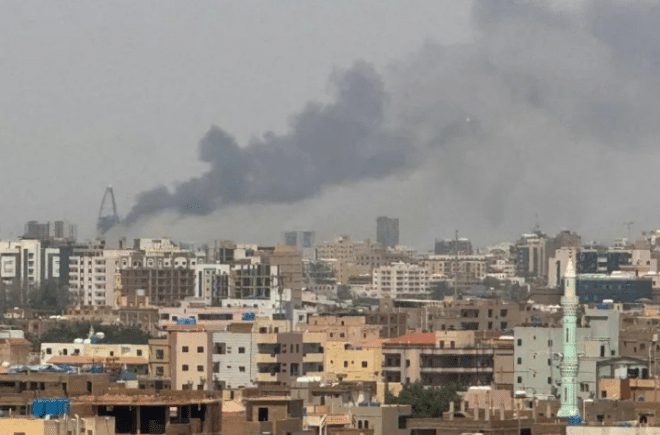
Security sources confirmed that several unmanned aircraft targeted facilities around the airport perimeter, forcing emergency crews and soldiers to scramble amid burning wreckage and scattered debris.
Local media outlets accused the Rapid Support Forces of orchestrating the drone attack in Sudan, deploying what were described as “suicide drones” in a coordinated offensive against army-controlled infrastructure.
The Sudanese army claimed to have intercepted several drones before impact, though witnesses said at least three explosions rocked Omdurman, the twin city north of Khartoum, shortly afterward.
No immediate statement of responsibility emerged, leaving both military and paramilitary factions trading accusations in an atmosphere already tense from months of mutual hostility.
Authorities did not release casualty figures, though hospitals in southern Khartoum reported receiving injured civilians, reigniting outrage over repeated strikes on non-military targets.
The Sudan conflict, now deep into its second year, has transformed once-bustling neighborhoods into desolate zones, where airstrikes and artillery fire routinely interrupt fragile attempts at reconstruction.
The Civil Aviation Authority had recently announced the gradual Khartoum airport reopening, hailing it as a milestone toward normalcy and a symbol of resilience after prolonged closure caused by fighting in 2023.
Engineers had repaired runways, cleared destroyed hangars, and reinstalled communication systems, raising hopes for a partial resumption of air traffic linking Sudan’s capital to Port Sudan and El Obeid.
But Tuesday’s drone attack in Sudan demolished those aspirations in minutes, setting ablaze weeks of effort and placing yet another obstacle before the nation’s crippled transport network.
The government immediately suspended the reopening plan, citing “security uncertainties and continuing aerial threats” that endangered technical personnel and humanitarian relief operations based at the airport.
While the army insists it has regained control of most urban areas, RSF strikes have continued to disrupt power lines, hospitals, and aid convoys, undermining reconstruction initiatives.
In neighborhoods once known for their lively markets, residents now live under constant fear of drone surveillance and random bombardments that could erupt at any hour of the day.
“Every night we hear engines overhead,” said one Khartoum shopkeeper. “You pray it isn’t your street next.” His voice trembled as explosions echoed in the distance.
Satellite imagery showed fresh scorch marks near the airport’s main runway and cargo facilities, suggesting deliberate targeting rather than random misfires during the drone attack in Sudan.
Military analysts warned that the strike demonstrated a dangerous escalation in drone warfare, indicating advanced remote capabilities developed by non-state actors within Sudan’s deteriorating power vacuum.
Observers fear the Sudan conflict could increasingly mirror proxy wars elsewhere, as foreign interests funnel weapons, technology, and mercenaries into a battlefield already scarred by decades of instability.
Over the past week alone, at least two similar strikes hit army installations northwest of Khartoum, though officials insisted most drones were intercepted before inflicting large-scale damage.
Humanitarian agencies voiced alarm that continued drone warfare could delay aid flights carrying food, medicine, and fuel to displaced populations stranded across the country’s central and western regions.
United Nations envoys urged restraint, describing the latest drone attack in Sudan as a violation of tentative ceasefire frameworks discussed during ongoing regional peace consultations.
The attack also raises questions about security protocols protecting civilian infrastructure, particularly as tens of thousands of refugees attempt to return home amid worsening shortages and blackouts.
The RSF leadership, which continues to control large sections of Darfur and the southern provinces, has denied involvement but has been repeatedly linked to earlier RSF strikes on cities.
The Sudanese army, headquartered in Khartoum since retaking the capital earlier this year, vowed “a decisive and measured response” while reiterating its commitment to international humanitarian law.
Diplomatic observers worry that retaliatory measures could trigger renewed urban warfare, jeopardizing fragile peace initiatives painstakingly negotiated through African Union mediators in Addis Ababa.
Meanwhile, displaced residents face unbearable conditions. “We have no water, no power, and nowhere to run,” said a mother of four sheltering near Omdurman’s ruins.
Each new drone attack in Sudan compounds the suffering of civilians trapped in the crossfire, forcing thousands to flee once more as smoke fills streets once bustling with taxis and traders.
Satellite footage revealed large parts of the capital lying in darkness after another blackout caused by damage to a main power grid allegedly struck during the latest assault.
Khartoum’s hospitals remain overcrowded. Doctors say they are treating victims of shrapnel injuries, burns, and trauma sustained from collapsed buildings, calling them “the hidden faces” of civilian casualties.
Aid groups emphasize that repeated drone bombardments are deepening humanitarian crises in neighborhoods where essential services were only recently being restored after months of siege.
International relief teams warn that unless the airspace stabilizes soon, vital food shipments and medical supplies may be rerouted again through Port Sudan, delaying nationwide recovery efforts.
The Khartoum airport reopening, once seen as a beacon of hope, now symbolizes the fragility of Sudan’s recovery and the unpredictability of its fragmented security landscape.
Some analysts view the repeated drone attack in Sudan as part of a larger campaign aimed at undermining the central government’s efforts to reassert legitimacy and reopen trade routes.
Western diplomats have expressed concern that Sudan’s internal instability could spill across borders, threatening neighboring Chad and South Sudan with further displacement and smuggling activity.

Military experts suggest both sides possess drones sourced from foreign markets, turning Sudan into a testing ground for low-cost aerial warfare technologies.
The international community continues to call for accountability. The African Union has proposed joint monitoring of drone usage to prevent further escalation and safeguard civilian casualties.
For many Sudanese, however, diplomatic statements offer little comfort. They endure sleepless nights, ration dwindling food, and await news of loved ones separated by months of fighting.
As dawn broke on Wednesday, smoke lingered over Khartoum’s skyline—a haunting reminder of another drone attack in Sudan, and of a peace still slipping beyond reach.
About The Author