The Federal High Court in Abuja has shifted the Ansaru leaders trial to November 19 after DSS counsel failed to appear in court for terrorism proceedings
The Ansaru leaders trial at the Federal High Court in Abuja has been rescheduled to November 19, after Justice Emeka Nwite granted an adjournment following the absence of the Department of State Services (DSS) counsel, Mohammed Abubakar.
The two defendants, Mahmud Usman and Abubakar Abba, alleged leaders of the Ansaru terrorist network, are facing 32-count charges relating to terrorism, illegal mining, and economic sabotage.
The hearing, originally set for October 21, could not proceed due to the DSS counsel’s absence. In a letter addressed to the court’s registrar, Mohammed Abubakar apologized for his inability to attend and requested a new date to ensure his physical presence.
His application was not opposed by the defence, prompting Justice Nwite to adjourn the matter and fix November 19 for the continuation of the Ansaru leaders trial.
During an earlier proceeding, one of the accused, Mahmud Muhammed Usman, also known as Abu Bara’a, pleaded guilty to Count 10 of the 32 charges, which involved illegal mining used to finance terrorist operations.
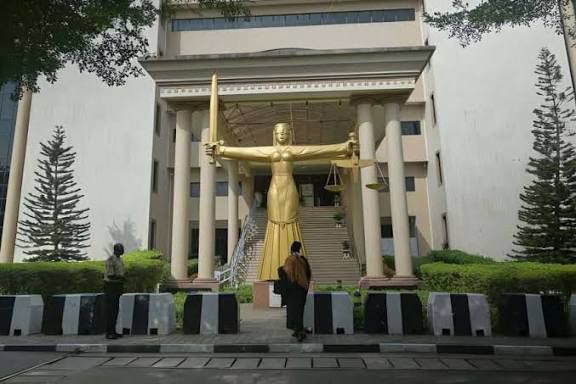
The court found him guilty and sentenced him to 15 years imprisonment. Justice Nwite, while delivering judgment, emphasized that economic crimes aiding terrorism would be punished severely to discourage the funding of insurgent activities.
Usman, who hails from Okene Local Government Area of Kogi State, was alleged to have used the proceeds from illegal mining to support Ansaru’s logistics and recruit new members.
His co-defendant, Abubakar Abba, also known as Isah Adam or Mahmud Al-Nigeri, from Daura, Katsina State, denied all charges and maintained his innocence.
According to the DSS, Abba served as an operational commander in the Ansaru network, coordinating resources and liaising with foreign terrorist affiliates.
The Ansaru leaders trial stems from a long list of offences reportedly committed between 2015 and 2024. The Director of Public Prosecution of the Federation (DPPF), Mohammed Babadoko Abubakar, told the court that both defendants were directly involved in several acts of terror, including the bombing of the Wawa Military Cantonment in Borgu, Niger State.
The prosecution alleged that the men received specialized training in weapons handling, fabrication of improvised explosive devices (IEDs), and guerilla tactics from a terrorist camp in Mali.
The DSS also accused them of terrorism financing, kidnapping, and collaboration with foreign extremist groups.
Among the charges, the DSS stated that the accused men kidnapped a Customs officer and an Immigration officer, with the latter reportedly killed while in their custody.
The agency alleged that millions of naira in ransom were collected from victims’ families and funneled into terrorism activities.
Mahmud Usman has been identified as a long-standing operative of Jama’atu Ansarul Muslimina fi Biladis Sudan (Ansaru), a splinter group from Boko Haram.
Known for his alias Abu Bara’a, he allegedly managed the group’s logistics and funding through illegal mineral exploitation.
His alleged accomplice, Abubakar Abba, described as one of Ansaru’s regional commanders, reportedly acted as a link between Nigerian cells and foreign extremist trainers in Mali and Niger Republic.
Intelligence reports indicate that both men coordinated Ansaru’s violent campaigns, targeting military installations and critical government infrastructure.
Security operatives arrested the duo after months of intelligence gathering, which exposed their movements across the North-West and North-Central regions. The DSS described their capture as a significant blow to the group’s command hierarchy.
During their arraignment, the DSS presented extensive evidence, including financial records, intercepted communications, and witness testimonies linking the accused to terrorist activities.
The charges were brought under the Terrorism (Prevention and Prohibition) Act, which prescribes life imprisonment for those convicted of terrorism offences.
While Usman admitted guilt only to the illegal mining charge, he denied the remaining 31 counts. Abba, on the other hand, pleaded not guilty to all 32 charges.
His counsel argued that there was no direct evidence connecting him to the specific attacks or acts of terrorism listed by the prosecution.
Justice Emeka Nwite advised all parties to ensure diligent prosecution and defence to prevent unnecessary delay in the Ansaru leaders trial. The judge emphasized the importance of fairness, especially in cases that involve national security and human lives.
The Ansaru leaders trial has drawn significant national attention, given the group’s violent history and affiliation with global terrorist movements.
Analysts say the trial reflects the Nigerian government’s renewed effort to dismantle remaining extremist cells and disrupt their financing networks.
The DSS, in a statement, reiterated its commitment to pursuing justice transparently. The agency assured Nigerians that further investigations are ongoing to track down other Ansaru operatives still operating within and outside the country. The prosecution also hinted that more charges might be filed as additional evidence surfaces.
Security experts believe that successful prosecution in the Ansaru leaders trial could strengthen Nigeria’s counterterrorism framework, particularly against emerging splinter groups. It could also serve as a deterrent to individuals considering participation in extremist organizations.
With the next hearing now fixed for November 19, the court will continue examining the evidence and cross-examining witnesses.
The prosecution is expected to call more witnesses to establish a direct link between the defendants and the acts of terror listed in the charge sheet.
Observers from civil society organizations, security agencies, and the international community are expected to attend the next session as the Federal High Court in Abuja continues one of Nigeria’s most significant terrorism trials in recent history.
The outcome of the Ansaru leaders trial will determine the fate of the two accused men and serve as a test case for Nigeria’s evolving legal response to terrorism and violent extremism.
More news at ireport247news
About The Author