Ramadan in Palestine began on Wednesday, with Palestinians across Gaza, East Jerusalem, and the West Bank starting the holy month amid food shortages, restricted aid, and ongoing security tensions. The observance comes as several Muslim countries, including Saudi Arabia, Qatar, and the UAE, also mark the start of Ramadan.
Families in Gaza struggle to organize daily fasting around limited aid distribution, as traditional Ramadan meals are hard to access. Soup kitchens and charity programs have become essential for residents due to strict restrictions on imports and limited availability of clean water. The ongoing blockade continues to affect daily life.
Under the October ceasefire with Israel, 600 aid trucks were expected daily, but far fewer have entered Gaza. Many Palestinians rely on these limited supplies to prepare for suhoor and iftar, the meals before dawn and after sunset, highlighting the severe humanitarian challenges during Ramadan in Palestine.
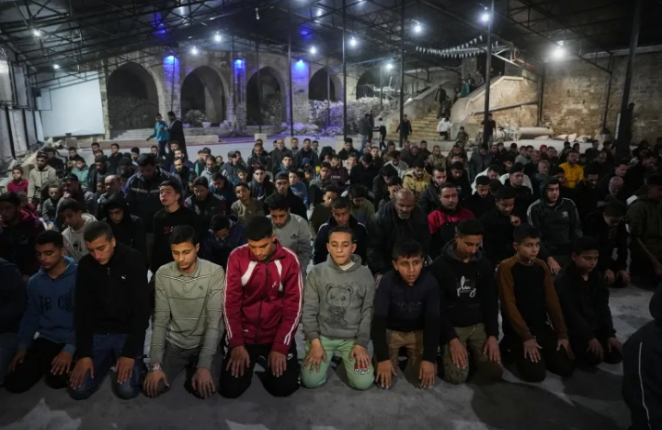
Violence and daily Israeli military operations continue despite the ceasefire, with over 600 Palestinians killed in Gaza since its implementation. Attacks and airstrikes have disrupted everyday life, making the holy month a period of endurance for those observing Ramadan in Palestine.
In East Jerusalem, thousands attended Taraweeh prayers at Al-Aqsa Mosque. Israeli police enforced strict security measures, including arrests and temporary bans on religious figures, amid heightened tensions around the Old City. Access restrictions to sacred sites have impacted worshippers during Ramadan in Palestine.
More than 250 orders barring Palestinians from entering Al-Aqsa Mosque were issued since the start of 2026, according to local authorities. Restrictions extend beyond religious sites, affecting movement, social gatherings, and access to food and medical services during the holy month.
Meanwhile, Israeli settler attacks in the occupied West Bank have escalated, often backed by the military. These attacks compound hardships for Palestinians and add to the challenges of observing Ramadan in Palestine under occupation.
Ramadan has also begun across several Muslim-majority countries. Saudi Arabia, Qatar, the UAE, Kuwait, Bahrain, Sudan, Somalia, and Djibouti started fasting on Wednesday, as did Iraqi Sunni and Shia communities and Lebanon’s Sunni population.
Other countries, including Egypt, Jordan, Syria, Indonesia, Pakistan, Iran, Tunisia, and Malaysia, will begin Thursday based on moon sightings.
Despite astronomical calculations being able to determine Ramadan’s start, many countries continue to rely on visual crescent moon sightings, maintaining traditional religious practices.
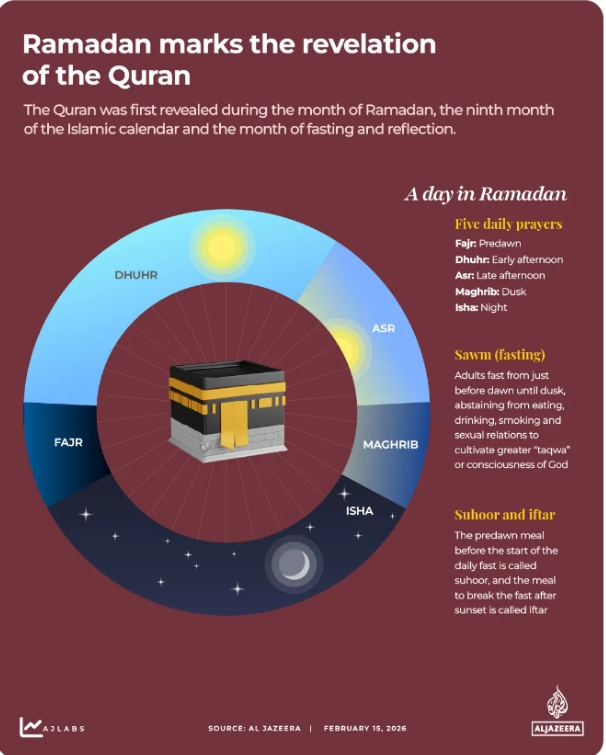
Muslims worldwide abstain from food, drink, and smoking from dawn to sunset, with iftar and communal prayers forming the spiritual heart of Ramadan.
The holy month commemorates the Quran’s first revelation to Prophet Muhammad, nearly 1,450 years ago. For Palestinians, Ramadan in Palestine represents not only religious devotion but also resilience in the face of food shortages, aid restrictions, and daily threats to life and property.
Aid organizations emphasize the critical need for humanitarian support in Gaza and the West Bank. Food scarcity, electricity cuts, and limited medical supplies make fasting particularly challenging, underscoring the urgent need for unrestricted aid during Ramadan in Palestine.
Palestinians have shown remarkable resilience, using creative solutions to maintain Ramadan traditions. Despite shortages, residents decorate homes and streets, prepare communal meals, and continue prayers, reflecting the enduring spirit of Ramadan in Palestine.
International attention has focused on Gaza’s humanitarian situation, with calls to ease restrictions and increase aid. Ramadan in Palestine highlights both the physical and spiritual struggles faced by Palestinians, drawing attention to the broader impacts of occupation and conflict.
Religious observances in other countries provide a contrast, with Saudi Arabia, Qatar, UAE, and Bahrain hosting public prayers, charity events, and communal celebrations. The disparity between daily life in Gaza and other Muslim countries underscores the unique hardships of Palestinians during Ramadan.
Access to holy sites like Al-Aqsa Mosque remains a challenge for Palestinians in East Jerusalem. Heightened security measures and restrictions during Ramadan have limited participation in prayers, demonstrating the intersection of faith, politics, and occupation.
For Palestinians, Ramadan in Palestine remains a time of community, devotion, and reflection. Families share limited meals, attend prayers, and maintain traditions despite conflict, embodying resilience in a month marked by fasting, charity, and spirituality.
Efforts to reopen border crossings, including Rafah, are vital for delivering aid and sustaining Ramadan observances. Consistent humanitarian support is essential to ensure Palestinians can maintain religious practices safely during the holy month.
Psychological stress from ongoing violence also affects Ramadan in Palestine, as trauma and uncertainty challenge worshippers’ ability to focus on spiritual rituals. Still, nightly Taraweeh prayers and family gatherings continue wherever possible, reflecting faith and endurance.
Communities emphasize charity, cooperation, and shared support to navigate food shortages and movement restrictions. Ramadan in Palestine demonstrates how religious observance persists even under humanitarian crises, with resilience and devotion central to the month’s meaning.
International agencies continue to advocate for unrestricted aid and protection of religious sites. Ensuring safe access to food, water, and prayer spaces is crucial to allow Palestinians to observe Ramadan in Palestine fully, preserving dignity and spiritual practice amid conflict.
Despite severe hardship, Ramadan in Palestine is marked by faith, community solidarity, and perseverance. Observing fasting, prayers, and cultural traditions remains a source of hope for Palestinians across Gaza, East Jerusalem, and the West Bank.
About The Author