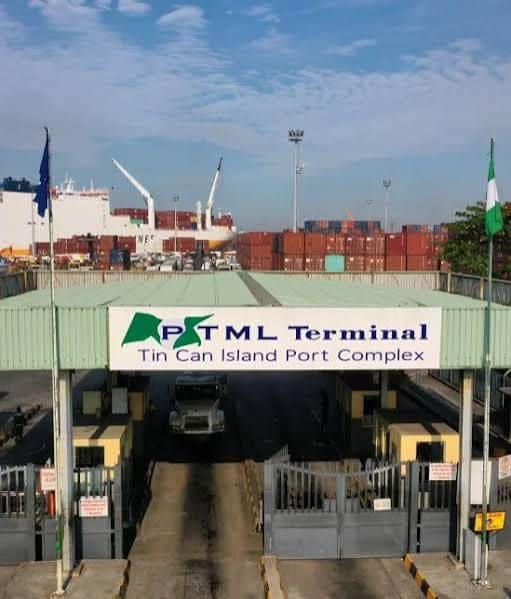
The Ports Terminal Multiservices Limited (PTML) Command of the Nigeria Customs Service (NCS) has maintained a robust revenue trajectory, posting an impressive ₦350 billion in revenue between January and September 2025, despite the initial operational challenges associated with the newly introduced B’Odogwu platform.
The PTML Customs Command’s sustained performance signals resilience and adaptability in the face of digital transformation across Nigeria’s maritime trade ecosystem.
According to the Customs Area Controller (CAC), Comptroller Joe Anani, the amount generated within the nine-month period is nearly equivalent to the ₦362 billion collected for the entire 2024 fiscal year—an indication of the Command’s strengthened efficiency and commitment to national revenue growth.
B’Odogwu Platform Challenges and Progress
The B’Odogwu platform, which serves as the Unified Customs Management System, was launched under a 20-year concession agreement between the NCS and the Trade Modernisation Project Limited (TMPL).
The system represents one of the most ambitious digitisation projects in Nigeria’s customs and trade operations.
Derived from the term “Odogwu”—an indigenous Igbo word meaning strong, great, or powerful—the platform aims to embody strength, efficiency, and technological advancement in customs management.
Designed to replace the Nigerian Integrated Customs Information System (NICIS II), B’Odogwu seeks to automate and streamline trade procedures, reduce cargo clearance delays, and improve transparency.
However, the transition has not been without challenges. Customs officers, freight forwarders, and terminal operators have had to adjust to the platform’s new interface and operational dynamics.
Despite these teething issues, Anani disclosed that the PTML Command has made significant progress in overcoming the early difficulties, maintaining operational stability, and boosting revenue generation.
“Our Command collected ₦350 billion between January and September 2025, despite the B’Odogwu platform challenges.
This figure represents a steady improvement compared to the ₦362 billion we generated throughout 2024,” Anani stated.
Revenue Growth and Comparative Performance
A breakdown of PTML’s revenue performance shows remarkable year-on-year growth. In the third quarter of 2025, the Command recorded ₦116 billion in revenue—representing a 34.3 percent increase compared to ₦86.5 billion generated during the same period in 2024.
This growth underscores the Command’s capacity to adapt to innovation while sustaining its core mandate of facilitating legitimate trade and combating smuggling.
Comptroller Anani attributed the improvement to increased compliance among port users, efficient enforcement, and closer collaboration with terminal operators and clearing agents.
He emphasised that the introduction of digital platforms like B’Odogwu is reshaping customs operations by enabling faster cargo documentation, enhancing transparency, and curbing revenue leakages.
Anti-Smuggling Successes Under PTML Command
Beyond revenue collection, PTML Customs has intensified its anti-smuggling operations, leading to multiple high-profile seizures within the review period.
Anani revealed that a 20-foot container with registration number GCNU1275880, falsely declared as supermarket goods, was intercepted and found to contain unregistered pharmaceutical products after 100 percent examination.
In another instance, a 40-foot container with number ACLU9806850, declared as “magnetic resonance imaging apparatus,” was discovered to contain 6,262 cartons of antibiotics of various brands.
These consignments, he said, were in violation of NAFDAC’s import regulations and posed serious health risks to Nigerians.
In line with inter-agency collaboration, the seized containers were handed over to the National Agency for Food and Drug Administration and Control (NAFDAC) for further investigation and possible prosecution.
B’Odogwu Platform: A Tool for Modernising Customs Operations
Despite the temporary disruptions associated with the new system, the B’Odogwu platform is expected to be a game changer for the NCS.
It integrates all stakeholders—Customs officers, importers, terminal operators, shipping companies, and other regulatory agencies—into a unified digital framework for efficient trade management.
Industry analysts have lauded PTML’s ability to maintain strong revenue performance amid the ongoing system transition, describing it as evidence of leadership and strategic adaptation under Comptroller Anani.
“The teething challenges are expected in any new system. What’s impressive is how PTML continues to deliver high revenue numbers while supporting the broader trade-modernisation goals of the Customs Service,” said a maritime economist based in Lagos.
The Command’s proactive engagement with stakeholders, training sessions, and internal technical support teams have reportedly eased the operational strain of the new platform, allowing for smoother processing times and enhanced accountability.
Inter-Agency Cooperation Strengthens Enforcement
Comptroller Anani reiterated the Command’s unwavering stance on enforcement and national security.
He noted that while PTML remains committed to facilitating legitimate trade, it would never compromise on issues affecting public safety.
“Our anti-smuggling drive remains uncompromising. National security and public safety take precedence over trade facilitation. The synergy with agencies like NAFDAC continues to yield positive results,” he affirmed.
In response, Dr. Olakunle Olaniran, Director of Port Inspectorate Division at NAFDAC, commended the Customs Service for its sustained enforcement collaboration.
He emphasised that such partnerships are critical in preventing unregulated pharmaceuticals and counterfeit drugs from entering the Nigerian market.
Looking Ahead: Sustaining the Gains
As Nigeria deepens its trade digitalisation agenda, the performance of the PTML Command under the B’Odogwu platform provides valuable lessons for other Customs formations.
The Command’s resilience amid system adaptation demonstrates that with effective leadership, stakeholder engagement, and technology-driven transparency, Nigeria’s customs administration can achieve both reform and revenue growth simultaneously.
With three months remaining in 2025, the PTML Command appears poised to surpass its previous annual revenue record—further reinforcing its reputation as a high-performing, reform-driven Customs formation contributing significantly to Nigeria’s economic stability.
About The Author