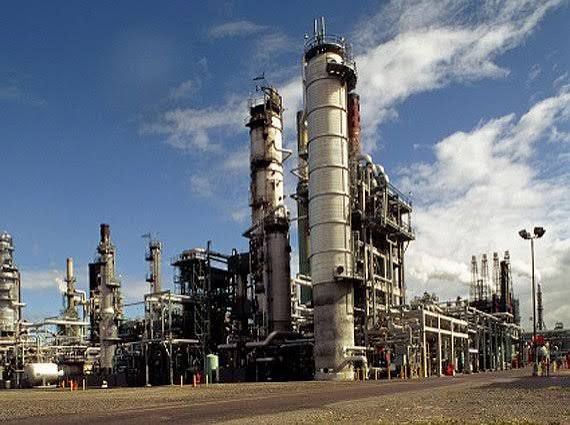
The Petroleum Training Institute (PTI) has announced a groundbreaking initiative to develop a flexible modular refinery as part of its strategic efforts to enhance Nigeria’s refining capacity, promote indigenous technology, and drive the country’s energy self-sufficiency agenda.
This major stride was revealed by PTI’s Principal and Chief Executive Officer, Dr. Samuel Onoji, during a world press conference held on Monday in Abuja ahead of the 4th Biennial International Conference on Hydrocarbon Science and Technology (ICHST 2025).
The conference, scheduled for October 22–23 at the PTDF Towers, Central Business District, Abuja, is expected to attract global experts, industry regulators, researchers, and policymakers to discuss innovations shaping Africa’s energy transformation.
PTI Modular Refinery to Strengthen Local Refining and Technology Development
Dr. Onoji disclosed that the PTI modular refinery project is designed to address Nigeria’s long-standing dependency on imported petroleum products by providing a sustainable model for refining crude oil locally.
According to him, the refinery represents PTI’s broader mission to bridge the technological gap in Africa’s hydrocarbon industry through homegrown innovations.
The institute, he said, has been working with industry partners to design adaptable refining technologies that align with global standards while meeting Nigeria’s specific energy needs.
“The Petroleum Training Institute is collaborating with other organizations to develop local technology that expands crude production and refining capacity,” Onoji stated.
“We are not waiting for 2060 to achieve our energy goals. Our goal is to develop a flexible modular refinery that allows us to process our crude oil efficiently and sustainably.”
He added that PTI has, over its 53-year history, contributed immensely to manpower development and technological innovation in Nigeria’s oil and gas sector.
The new modular refinery, he explained, builds on this legacy and aligns with national objectives to improve downstream infrastructure.
Driving Indigenous Expertise in Oil Exploration and Production
Highlighting the institute’s technical capabilities, Onoji noted that PTI operates an advanced drilling rig and simulation equipment known as Drill 6,000, which is used for training experts in oil exploration and production.
These facilities, he said, form the backbone of Nigeria’s quest for self-sufficiency in petroleum technology.
“In the next few years, we will have mastered the complete value chain — from exploration to refining.
The PTI modular refinery is just one of many innovations that position Nigeria as a continental leader in hydrocarbon research and development,” he emphasized.
Onoji underscored that Africa must take advantage of its abundant natural resources — estimated at 125 billion barrels of crude oil and 600 trillion cubic feet of natural gas — to drive industrialization and economic growth rather than prematurely abandoning fossil fuels.
Africa’s Energy Future: Balancing Growth and Sustainability
The PTI boss cautioned against the global narrative pushing for an abrupt end to fossil fuel use, stressing that Africa’s development realities differ from those of industrialized nations.
“Africa should not hasten to abandon fossil fuel,” he said.
“Instead, we must deepen research into cleaner and more efficient technologies that allow us to utilize our oil and gas resources responsibly. The PTI modular refinery is part of that commitment.”
According to Onoji, only a few African countries currently possess the technical know-how to manufacture critical oil and gas equipment, a situation that highlights the urgency of investing in research and human capital.
He noted that the upcoming ICHST 2025 will provide a strategic platform for dialogue on these challenges, focusing on the theme “Transforming Africa’s Hydrocarbon Sector: Balancing Growth, Environment and Governance.”
Conference to Shape Innovation in Hydrocarbon Science and Technology
Dr. Onoji revealed that the conference would feature keynote addresses from top government officials, including the Minister of State for Petroleum Resources, as well as chief executives from regulatory agencies and major energy corporations.
Technical sessions will explore a wide range of subjects, including artificial intelligence, robotics, carbon capture, renewable energy integration, and local content development.
The event will also spotlight research contributions from students and young professionals, helping to nurture the next generation of oil and gas innovators across Africa.
Commitment to Research, Innovation, and Sustainable Growth
Also speaking at the event, Dr. Tina Isichei, PTI’s Director of Research and Development, dismissed the notion that fossil fuels will be entirely phased out by 2050 or 2060, describing it as “unrealistic.”
She emphasized that hydrocarbons remain essential to various industries beyond transportation, including pharmaceuticals and manufacturing.
“What we must do,” she said, “is focus on reducing emissions through innovation. At PTI, we are developing technologies in carbon capture, utilization, and storage to ensure sustainable energy growth while preparing for a balanced energy future.”
Established by Act No. 37 of 1972, PTI remains Nigeria’s foremost institution for oil and gas training, offering technical and consultancy services that support both local and international operators.
Over five decades, it has trained thousands of professionals who now occupy key positions in the global petroleum industry.
Dr. Onoji reaffirmed PTI’s vision of becoming Africa’s premier energy technology institute, anchored on innovation, research excellence, and strategic partnerships that drive industrial growth.
As Nigeria works toward achieving full domestic refining capacity, the PTI modular refinery represents a bold step toward technological independence and economic sustainability.
With renewed focus on local content, research, and skill development, PTI’s initiative could redefine Africa’s role in the global energy landscape—transforming the continent from a resource supplier to a technology-driven energy powerhouse.
About The Author