Currency collapse, Tehran- Demonstrations and business shutdowns have spread across parts of Tehran as Iran’s worsening economy continues to place severe pressure on ordinary citizens nationwide.
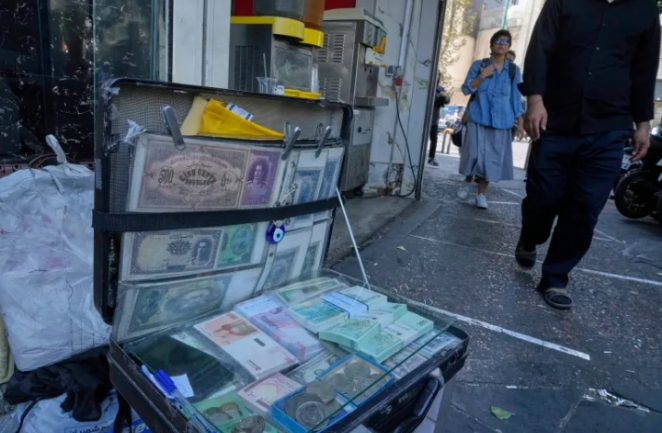
Shopkeepers in central Tehran closed stores near major electronics markets after the national currency plunged again, eroding purchasing power and worsening uncertainty among traders.
Witnesses reported chants echoing through the Jomhouri district as business owners protested losses caused by the rial’s rapid depreciation against the US dollar.
Videos circulating online showed crowds urging solidarity, while anti-riot police deployed heavily, using tear gas to disperse demonstrators across several downtown neighbourhoods.
Authorities confirmed protests but framed them as economic grievances, stressing that demonstrators were not challenging Iran’s political system or religious leadership.
The Iranian rial briefly crossed 1.42 million to the dollar, marking another historic low before recovering slightly amid heightened market volatility.
Currency traders say instability has crippled import-dependent sectors, particularly technology and mobile phone businesses relying on foreign exchange availability.
Beyond currency woes, Iran faces overlapping crises, including chronic energy shortages that frequently force authorities to burn low-quality fuel.
This practice has worsened air pollution levels, particularly in Tehran, where smog regularly shuts schools and contributes to thousands of premature deaths annually.
Iran is also battling an escalating water crisis, with reservoirs supplying major cities at critically low levels following years of drought and mismanagement.
Experts warn that “water bankruptcy” now threatens agriculture, food prices, and urban sustainability across large swathes of the country.
Internet restrictions compound public frustration, limiting access to information and disrupting online commerce during periods of economic stress.
The economic downturn comes amid rising international pressure linked to Iran’s nuclear programme and its deteriorating relations with Western governments.
In June, Israel and the United States launched coordinated strikes during a brief but intense conflict that killed more than 1,000 people, including civilians.
The attacks damaged key nuclear facilities monitored by the International Atomic Energy Agency, further complicating diplomatic efforts and sanctions negotiations.
Iran has since denied IAEA inspectors access to bombed sites, insisting new inspection frameworks must reflect what officials describe as post-war conditions.
Sanctions and geopolitical isolation continue to restrict oil revenues, investment flows, and access to international financial systems.
For many Iranians, these pressures translate into shrinking incomes, rising food costs, and vanishing savings amid inflation hovering near 50 percent.
Nationwide protests last erupted on a massive scale in 2022 following the death of Mahsa Amini while in police custody.
Those demonstrations were met with deadly crackdowns, mass arrests, and executions, leaving deep scars on Iranian society.
Officials blamed foreign interference for unrest, a claim many protesters rejected as living standards steadily declined.
President Masoud Pezeshkian acknowledged the gravity of the situation while defending his administration’s controversial budget proposal in parliament.
The budget includes a 20 percent wage increase, far below inflation, alongside a planned 62 percent rise in tax revenues.
Lawmakers questioned how households already struggling to survive would absorb additional financial burdens.
Pezeshkian argued the government has limited options, asking legislators to identify alternative funding sources for wage growth.
Economists warn that contractionary fiscal policies risk intensifying unrest if public confidence continues to erode.
While protests remain localised for now, analysts say the convergence of economic, environmental, and political pressures increases the likelihood of wider unrest.
Much depends on whether authorities can stabilise the currency, ease shortages, and reopen diplomatic channels before frustrations boil over nationally.
Read also: Two killed as Torrential rain triggers horror floods across Spain’s Costa del Sol
If the Iranian authorities are unable to stabilize the economy in the face of mounting Israeli and international pressures, one wonders what it’s whether or not it would continue to enjoy the support of it’s citizens who are obviously already agitating for better life.
About The Author