Tension grows in Kano as NNPP leaders reject reports of Governor Abba Yusuf’s possible defection, warning of political consequences and urging party unity.
Political tension has intensified in Kano State following widespread reports suggesting that Governor Abba Kabir Yusuf may be considering a move from the New Nigeria Peoples Party (NNPP) to the ruling All Progressives Congress (APC).
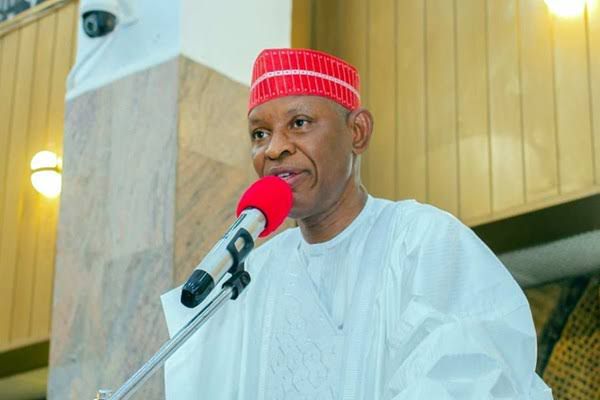
Although no official confirmation has been made by the governor, the speculation alone has triggered deep concern within the NNPP, exposing internal disagreements and prompting firm resistance from party leaders at both state and national levels.
The unfolding situation has drawn particular attention because Kano State is regarded as the political stronghold of the NNPP and the base of its national leader, Senator Rabiu Musa Kwankwaso.
Any potential defection involving the sitting governor is therefore viewed as a major political development with far-reaching implications for the party’s future in the state and beyond.
Media reports, including a recent broadcast by Channels Television, indicate that the alleged plan has heightened internal divisions within the NNPP.
The disagreement is said to be most pronounced between supporters of Governor Yusuf and loyalists of the Kwankwasiyya political movement, a grassroots structure founded and led by Kwankwaso.
These tensions have reportedly fueled debates within party circles, with concerns growing over unity and loyalty ahead of future electoral contests.
In response, the NNPP leadership moved swiftly to clarify its position. A press statement released on behalf of the party at both the Kano State and national levels made it clear that the NNPP does not support any form of defection to the APC.
The statement emphasized that the party remains committed to its principles and rejected what it described as destabilizing political maneuvers.
Speaking on the matter, the Kano State Chairman of the NNPP, Hashim Suleiman Dungurawa, said the party was fully aware of the political undercurrents and activities of some individuals allegedly planning to leave the party.
He stressed that neither the state chapter nor the national leadership of the NNPP, including Senator Kwankwaso, had endorsed such actions.
Dungurawa explained that the party had engaged in several rounds of dialogue with those involved in an effort to prevent further escalation.
According to him, these efforts were motivated by a sense of responsibility to the people of Kano State, who overwhelmingly supported the NNPP in the last election and entrusted the party with governance.
He further appealed directly to Governor Yusuf and others said to be contemplating defection, urging them to reflect on the journey that brought the party to power.
He noted that the NNPP was built through years of sacrifice, grassroots mobilization, and public trust, warning that abandoning the platform could undermine the mandate given by voters.
The NNPP chairman also addressed claims circulating in some quarters that party officials were attempting to create a rift between Governor Yusuf and Senator Kwankwaso.
He dismissed such allegations as baseless, insisting that the party has never promoted internal conflict or encouraged opposition against its national leader.
He challenged anyone making such claims to present credible evidence.
Beyond internal party matters, Dungurawa called on residents of Kano State to remain calm and law-abiding despite the political uncertainty.
He cautioned party members and supporters against associating themselves with documents or statements allegedly being circulated by individuals he described as “mischief makers” seeking to exploit the situation for personal or political gain.
The Kano State Government has also reacted cautiously to the reports. The Director General of Media and Publicity, Sanusi Bature, acknowledged that disagreements exist within the NNPP but declined to comment directly on the defection speculation.
He said the issues were being handled internally by party leaders and advised the public to avoid drawing conclusions based on unverified information.
According to Bature, political parties often experience internal debates, particularly as new alignments and strategies are considered ahead of future elections.
He emphasized that no official decision regarding defection had been communicated and urged patience while discussions continue.
Political observers note that the situation reflects the broader dynamics of Nigeria’s evolving political landscape, where shifting alliances and party realignments have become increasingly common.
However, analysts also point out that Kano State remains a symbolic and strategic center for the NNPP, making any potential defection especially sensitive.
As the debate continues, the NNPP leadership has reiterated its commitment to unity, party discipline, and loyalty to its founding ideals.
Dungurawa concluded by urging Kano residents and Nigerians nationwide to continue supporting the party, noting that the strength of the NNPP lies in its grassroots base and collective resolve amid political uncertainty.
Ireport247news
About The Author