

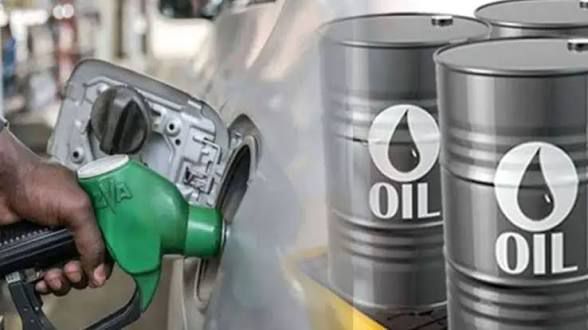
Nigerian motorists may soon experience relief at filling stations as declining global crude oil prices and expanding domestic refining capacity create conditions for a potential reduction in petrol prices.
Industry operators say petrol could fall below N1,000 per litre in the coming weeks if a proposed peace agreement between the United States and Iran leads to sustained stability in global oil markets and a full reopening of the Strait of Hormuz, one of the world’s most critical oil shipping routes.
The development comes as the Dangote Petroleum Refinery continues to increase output, reducing Nigeria’s dependence on imported fuel and transforming regional petroleum trade patterns across West Africa.

The combination of lower international crude prices and stronger domestic refining capacity has raised expectations that Nigerians could finally see some relief after months of elevated fuel costs that have intensified inflationary pressures across the economy.
Oil Prices Retreat After Middle East Tensions Ease
Global crude prices have fallen sharply in recent weeks following reports of a possible diplomatic breakthrough between Washington and Tehran.
Oil markets had experienced months of volatility after tensions between the United States and Iran escalated earlier this year, prompting fears of supply disruptions through the Strait of Hormuz, a maritime corridor responsible for transporting roughly one-fifth of global oil supplies.
At the height of the crisis, crude oil prices surged above $120 per barrel, triggering higher fuel costs worldwide and placing additional pressure on import-dependent economies.
However, signs of de-escalation have reversed much of those gains.
Brent crude has retreated significantly from its peak levels, prompting energy analysts to reassess fuel pricing forecasts across major consuming nations, including Nigeria.
The decline is particularly important for Nigeria because crude oil remains the primary feedstock used in refining petrol, diesel and aviation fuel.
As global crude prices fall, refiners generally enjoy lower production costs, creating room for eventual reductions in fuel prices.
Why the Strait of Hormuz Matters to Nigeria
The Strait of Hormuz remains one of the most strategically important waterways in global energy markets.
Any disruption in the channel immediately affects crude oil prices because it serves as a key export route for major oil-producing countries in the Middle East.
During periods of heightened geopolitical tension, traders typically price in supply risks, leading to higher oil prices and increased fuel costs around the world.
For Nigeria, the consequences are direct.
Although domestic refining capacity has improved significantly, the country remains exposed to global oil market movements because crude pricing continues to influence local petroleum product costs.
Industry operators argue that a lasting peace agreement between the United States and Iran could remove a major risk premium currently embedded in global oil prices.
That could accelerate downward pressure on fuel costs.
Petrol Could Drop Below N1,000 Per Litre
Fuel marketers believe the current market environment creates room for another downward adjustment in petrol prices.
Officials within the downstream sector say pump prices could gradually move toward the N900-N1,000 range if crude oil remains below recent highs and exchange-rate conditions remain stable.
The projection reflects a substantial improvement from levels seen earlier in the year when petrol prices climbed above N1,200 per litre in several locations.
The Petroleum Retail Outlet Owners Association of Nigeria (PETROAN) said declining crude prices and improving global supply conditions could create room for further reductions in domestic fuel prices.
PETROAN National Public Relations Officer, Joseph Obele, said a sustained reopening of the Strait of Hormuz and continued moderation in crude prices would likely support lower landing costs for petroleum products.
“The market is responding to easing geopolitical tensions. If current trends continue and crude prices remain under pressure, consumers should expect further adjustments in pump prices,” he said.
An industry source familiar with refinery operations noted that while lower crude prices support cheaper fuel, the pace of any reduction may be moderated by inventories acquired at higher prices.
Refiners typically purchase crude oil weeks or months before processing it. As a result, existing inventories bought during periods of elevated oil prices can delay the full transmission of lower crude costs to consumers.
Nevertheless, analysts say the direction of prices now appears increasingly downward.
Economist Explains Why Lower Oil Prices May Not Immediately Translate Into Cheaper Fuel
Independent economist and energy policy analyst Kelvin Emmanuel said lower crude prices are a positive signal for consumers but cautioned that several domestic variables still matter.
“Oil prices are only one component of fuel pricing. Exchange-rate stability, transportation costs, financing expenses and inventory replacement cycles will determine how quickly lower crude prices are reflected at retail stations,” he said.
According to Emmanuel, the long-term outlook remains favourable if global oil markets stabilize and domestic refining capacity continues to expand.
He noted that increased local production gives Nigeria greater flexibility in managing fuel supply compared with previous years when imports dominated the market.
Dangote Refinery Emerges as a Regional Fuel Export Hub
Beyond the discussion around local fuel prices, another major transformation is taking place in Nigeria’s energy sector.
The Dangote Petroleum Refinery has rapidly become one of Africa’s most significant refining assets.
Since reaching full operational capacity earlier this year, the facility has increasingly displaced imported fuel volumes not only within Nigeria but across West Africa.
Industry data indicate that imports of refined petroleum products into West Africa have fallen sharply as Dangote expands output.
The refinery’s growing influence is altering long-established trade routes that previously supplied the region from Europe and other international markets.
What was once a major import corridor into West Africa is gradually becoming a regional export network centred around Nigeria.
Will Dangote Refinery End Nigeria’s Dependence on Fuel Imports?
The commissioning and expansion of the 650,000-barrel-per-day Dangote Petroleum Refinery has fundamentally altered Nigeria’s fuel market.
For decades, Nigeria depended heavily on imported petroleum products despite being Africa’s largest crude oil producer. The resulting exposure to global shipping disruptions, foreign exchange shortages and refinery outages contributed to recurring fuel crises.
Industry data now suggest that the refinery is supplying the majority of Nigeria’s domestic petrol demand while simultaneously exporting refined products to neighbouring African countries.
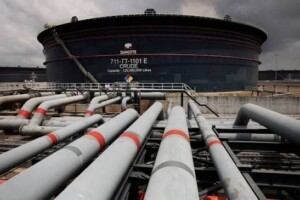
According to S&P Global Commodities at Sea, West African imports of clean petroleum products fell by 23 per cent in May as Dangote expanded output and displaced imported volumes across the region.
The shift has reduced dependence on traditional import routes from Europe and the Middle East while positioning Nigeria as an emerging fuel export hub.
However, analysts caution that complete import independence remains a work in progress.
Nigeria still imports some petroleum products, while refinery operations remain vulnerable to crude supply challenges, logistics bottlenecks, maintenance shutdowns and foreign exchange pressures.
Energy analyst Kelvin Emmanuel said the refinery has significantly improved domestic energy security but noted that sustained crude supply and infrastructure upgrades remain critical for long-term self-sufficiency.
“If current production levels are maintained and crude availability improves, Nigeria could substantially reduce fuel imports over the coming years,” he said.
For investors, the refinery’s expansion represents one of the most significant structural changes in Nigeria’s energy market in decades, with implications for shipping, logistics, foreign exchange demand and inflation.
West African Fuel Imports Decline
Recent shipping and commodities data reveal a significant drop in clean petroleum product imports into West Africa.
Imports reportedly declined by more than 20 per cent within a month as the refinery increased production and supplied a larger share of regional demand.
The reduction has affected tanker traffic, shipping routes and storage hubs that historically served as major distribution points for imported fuel.
Analysts say Nigeria’s growing role as a fuel exporter marks one of the most significant structural shifts in the region’s energy market in decades.
Instead of relying heavily on imported products, neighbouring countries are increasingly sourcing fuel from Nigeria.
This transition is expected to strengthen regional energy security while reducing transportation costs associated with long-haul imports.
How Lower Petrol Prices Could Affect Inflation
Fuel prices play a central role in Nigeria’s inflation dynamics.
Economist and Chief Executive Officer of Financial Derivatives Company, Bismarck Rewane, said lower fuel prices could provide modest relief for households and businesses struggling with elevated living costs.
According to him, transportation remains one of the biggest channels through which inflation spreads across the economy.
“Any sustained reduction in fuel prices can help ease logistics costs, improve business margins and gradually reduce inflationary pressures. The impact may not be immediate, but it would be positive for consumers,” Rewane said.
Transportation costs influence virtually every segment of the economy, from agriculture and manufacturing to retail trade and logistics.
As fuel prices rise, businesses often pass higher operating costs on to consumers through increased prices for goods and services.
Conversely, lower petrol prices can help slow inflationary pressures.
Economists note that transportation costs remain a major contributor to food inflation because agricultural products must travel long distances from farms to urban markets.
A sustained decline in petrol prices could therefore reduce distribution expenses and help moderate food prices over time.
While the impact may not be immediate, lower energy costs generally support broader economic stability.
Key Market Indicators
| Indicator | Latest Estimate |
| Brent Crude Petrol Pump Price Dangote Refinery Capacity West Africa Fuel Imports Dangote Share of Local Supply Potential Petrol Price Target Strait of Hormuz Share of Global Oil Trade | ~$87 per barrel ~N1,250/litre 650,000 bpd Down 23% in May ~80% N900–N1,000/litre ~20% |
Impact on the Naira and Foreign Exchange Market
The relationship between fuel prices and Nigeria’s foreign exchange market is complex.
On one hand, lower global oil prices can reduce export earnings because crude oil remains Nigeria’s largest source of foreign exchange.
On the other hand, increased domestic refining can significantly reduce the country’s fuel import bill.
For decades, Nigeria spent billions of dollars importing refined petroleum products despite being one of Africa’s largest crude producers.
The expansion of domestic refining changes that equation.
By reducing fuel imports, Nigeria can conserve foreign exchange reserves and lower demand for dollars within the economy.
Analysts believe the overall impact on the naira will depend on which effect proves stronger: lower crude export revenues or reduced import-related foreign exchange demand.
Many expect the growing role of local refining to provide increasing support for external balances over the medium term.
Risks That Could Prevent Petrol Prices From Falling
Despite growing optimism, analysts caution that several risks could delay or limit reductions in fuel prices.
First, any breakdown in negotiations between the United States and Iran could quickly push oil prices higher again.
Second, exchange-rate volatility remains a major concern. Since parts of Nigeria’s petroleum supply chain still rely on imported inputs, a weaker naira could offset gains from lower crude prices.
Third, existing inventories purchased at higher crude prices may delay immediate reductions at retail stations.
Finally, logistics costs, financing expenses and domestic distribution challenges continue to influence pump prices independently of global oil market movements.
As a result, analysts say the prospect of N900 petrol remains conditional rather than guaranteed.
Read Also:CBN liquidity tightening drives N1.06tn fixed-income surge as investors flock to short-term debt
Related: Iran-US peace Deal 2026: Tehran rejects Sunday signing as Trump warns of ‘ultimate alternative’

What Lower Fuel Prices Mean for Households
For Nigerian households, the potential benefits extend beyond the cost of filling a vehicle.
Fuel prices influence transportation fares, electricity generation costs, food distribution and household consumption patterns.
Many businesses rely on generators because of inconsistent grid power, making fuel a critical operational expense.
Lower petrol prices could therefore reduce costs for small businesses, transport operators and households.
The result may be improved purchasing power, particularly for lower-income consumers who have been disproportionately affected by recent inflation.
However, economists caution that meaningful improvements will depend on whether price reductions are sustained rather than temporary.
What This Means for Nigerians
For ordinary Nigerians, the implications extend beyond cheaper fuel purchases.
Lower petrol prices could reduce transport fares, ease pressure on food prices and lower operating costs for millions of small businesses that rely heavily on generators and road transportation.
Manufacturers may benefit from reduced logistics expenses, while households could see modest improvements in disposable income if energy costs decline.
For the government, a stronger domestic refining sector could help reduce fuel import dependence and conserve scarce foreign exchange reserves.
For investors, the emergence of Dangote Refinery as a regional export hub signals a major structural shift in Nigeria’s energy landscape that could reshape trade flows and investment opportunities across West Africa.
How CBN Exchange Rate Policy Could Influence Petrol Prices
Nigeria’s fuel pricing is no longer determined solely by global crude oil prices. Exchange rate movements have become an equally important factor.
Since the deregulation of the downstream sector, importers, refiners and marketers increasingly rely on foreign exchange to purchase crude oil, refined products, equipment and shipping services.
Even if global crude prices decline, a weaker naira can offset potential savings and keep domestic petrol prices elevated.
For example, a fall in Brent crude from $100 to $85 per barrel may not translate into cheaper petrol if the naira simultaneously loses value against the dollar.
Conversely, a stronger naira could amplify the benefits of lower crude prices by reducing import costs and lowering refinery operating expenses.
Analysts say the Central Bank of Nigeria’s efforts to improve FX liquidity, attract foreign portfolio inflows and stabilise exchange rates could become a major determinant of fuel pricing over the second half of 2026.
“The exchange rate is now almost as important as crude oil prices in determining the final pump price Nigerians pay,” said economist Muda Yusuf, chief executive officer of the Centre for the Promotion of Private Enterprise.
A more stable naira would reduce pricing uncertainty across the energy value chain and support lower transportation and logistics costs throughout the economy.
Risks That Could Keep Petrol Prices Elevated
Despite growing optimism, several risks remain.
The proposed US-Iran peace deal has yet to eliminate all geopolitical uncertainty in the Middle East.
Any renewed tensions could quickly reverse recent gains in oil markets.
Exchange-rate volatility also remains a key concern.
A significant depreciation of the naira could offset some of the benefits of lower global crude prices.
Domestic logistics costs, financing expenses and regulatory developments within the downstream sector may also influence future pricing decisions.
As a result, analysts advise consumers and businesses to view projections of N900-per-litre petrol as a possibility rather than a certainty.
Nigeria’s Energy Market Is Entering a New Phase
The convergence of lower global oil prices and stronger domestic refining capacity represents a potentially important turning point for Nigeria’s energy sector.
For years, fuel pricing was largely shaped by international supply chains and import costs.
Today, local refining is beginning to play a much larger role.
The emergence of Dangote Refinery as both a domestic supplier and regional exporter signals a structural transformation that could redefine fuel markets across West Africa.
While uncertainties remain, industry observers say Nigeria is now better positioned to benefit from favourable global market conditions than at any point in recent history.
If oil prices remain stable, domestic production continues to expand and foreign exchange pressures ease, the prospect of sub-N1,000 petrol may move from speculation to reality.
For consumers, businesses and policymakers alike, the coming months could provide an important test of whether Nigeria’s long-awaited refining revolution can finally deliver measurable economic benefits.
Read more @ireport247news
⁷