The PDP Secretariat Crisis escalated as police sealed Wadata Plaza after violent factional clashes, expulsions, suspensions, and parallel meetings intensified turmoil nationwide.
The PDP Secretariat Crisis intensified on Wednesday, November 19, as the Nigeria Police Force sealed the Peoples Democratic Party (PDP) National Secretariat at Wadata Plaza, Abuja.
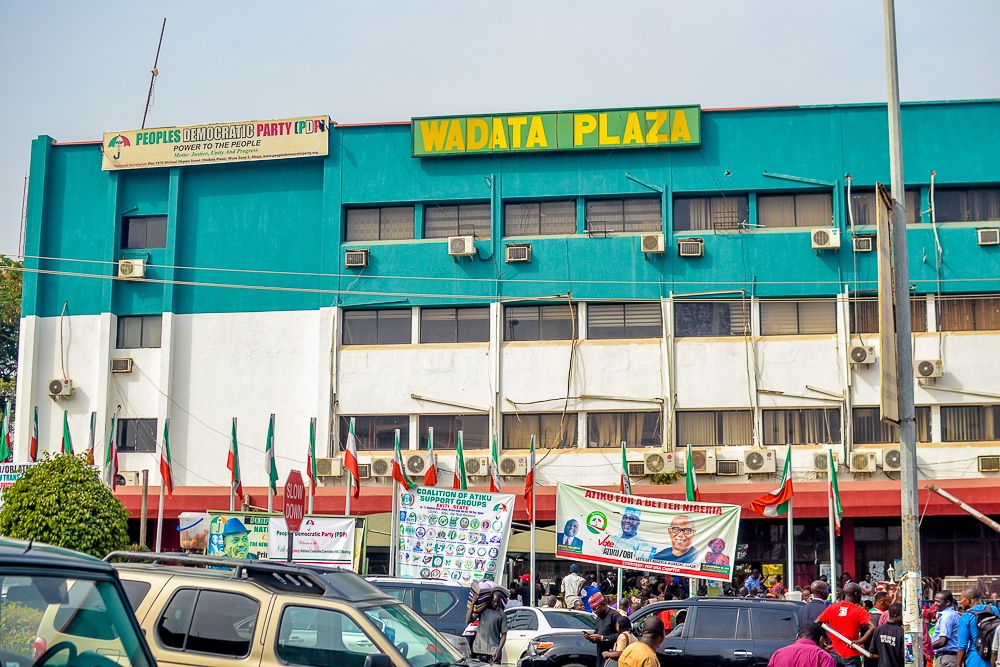
The lockdown came a day after a violent confrontation between two rival factions, plunging the party headquarters into chaos and highlighting a deepening leadership struggle within Nigeria’s main opposition party.
The crisis began on Tuesday, November 18, when the Saminu Turaki-led faction and loyalists of Minister Nyesom Wike both converged at the secretariat for parallel meetings.
Their simultaneous presence sparked a tense standoff, as neither group recognized the legitimacy of the other’s authority.
Heated verbal exchanges soon escalated into pushing, shoving, and general commotion, forcing security operatives to fire teargas to disperse supporters.
During the confrontation, Oyo State Governor Seyi Makinde and Bauchi State Governor Bala Mohammed were reportedly affected by the teargas, highlighting the severity of the clash.
Witnesses said the governors were caught off guard as smoke spread across the entrance of the complex, forcing both officials and staff to retreat for safety.
The incident drew national attention, underscoring the high stakes of the PDP Secretariat Crisis.
Following the violent standoff, the factional National Executive Committee loyal to Wike ratified the expulsion of several top leaders.
The list included Governors Makinde, Mohammed, Zamfara State Governor Dauda Lawal, former PDP Board of Trustees Chairman Senator Adolphus Wabara, former National Vice Chairman Chief Bode George, and Turaki himself, the newly elected National Chairman
This decision marked a significant escalation in the PDP Secretariat Crisis, signaling a no-holds-barred struggle for control of the party.
The expulsion and suspension decisions trace back to last weekend’s national convention in Ibadan, Oyo State.
Convened by the anti-Wike faction, the convention suspended Wike and ten other influential members—including former governors, sitting lawmakers, and senior party officials—on allegations of anti-party activities.
Organizers accused Wike’s bloc of trying to “destabilize the party structure” ahead of a planned nationwide reorganization, deepening the divide within the PDP.
On Tuesday, both factions returned to Wadata Plaza to hold parallel NEC and Board of Trustees meetings.
The simultaneous gatherings triggered the violent face-off, which quickly degenerated into chaos.
Security operatives struggled to separate supporters, resulting in a tense standoff and multiple confrontations that necessitated police intervention.
The PDP Secretariat Crisis has drawn concern from political analysts who view the public clashes and counter-expulsions as symptoms of a larger struggle for influence ahead of the next electoral cycle.
Analysts argue that the dispute is less about party ideology and more about positioning for future leadership roles, making reconciliation increasingly difficult.
Elder statesmen and former party leaders have urged calm, emphasizing that the public nature of the confrontation is damaging the PDP’s credibility.
Some have called for neutral mediators, including former national chairmen and governors, to step in and facilitate dialogue between the factions.
However, both camps continue to assert their authority, leaving the party in a precarious situation.
The police closure of Wadata Plaza temporarily halted the immediate threat of further violence, but it did not resolve the underlying leadership dispute.
Party insiders warn that unless dialogue is pursued, the PDP Secretariat Crisis could lead to lasting divisions, weakening the party’s structure and national influence.
Observers note that the ongoing turmoil, marked by expulsions, suspensions, and factional clashes, is unprecedented in the PDP since its 2015 electoral defeat.
Many believe that the party risks losing grassroots support and credibility unless a unified resolution is achieved.
The PDP Secretariat Crisis therefore represents not just a struggle for control of the party headquarters but also a potential turning point in the party’s national political trajectory.
The events at Wadata Plaza have sparked nationwide debate on the future of the PDP.
Political commentators suggest that if both factions fail to reconcile, the crisis could escalate beyond the capital, affecting state chapters and grassroots operations.
With the party’s internal cohesion at stake, urgent interventions from senior leaders, mediators, and neutral committees appear critical to prevent further deterioration.
More news at ireport247news
About The Author