Patrick Herminie has claimed a decisive victory in the Patrick Herminie Seychelles election, defeating incumbent President Wavel Ramkalawan in a fiercely contested Seychelles presidential run-off that has reshaped the nation’s political map.
The Electoral Commission announced early Sunday that Herminie, leader of the United Seychelles party, secured 52.7 percent of the vote, denying Ramkalawan a second consecutive term in office.
“The people have spoken,” Herminie declared at the commission’s headquarters, moments after being confirmed as the next president of the island nation of 120,000 people in the Indian Ocean politics arena.
“I am deeply humbled for the trust that the people have placed in me. I will be the president of all Seychellois,” he vowed firmly.
Herminie promised to “end divisions by ceasing preferences” and pledged a government of inclusion, focused on equality, justice, and rebuilding essential services neglected under Ramkalawan’s administration.

The win caps a dramatic turnaround for Herminie, once written off politically after a 2023 arrest on witchcraft-related charges that were later dismissed for lack of evidence.
At 62, Herminie brings decades of experience, having served as parliament speaker between 2007 and 2016 and previously heading the government’s anti-drug agency.
His United Seychelles party, long associated with the nation’s post-independence socialist legacy, now returns to power after Ramkalawan’s 2020 victory ended decades of its political dominance.
Herminie’s victory also consolidates his party’s control of both the executive and legislative branches, after United Seychelles reclaimed a parliamentary majority in last month’s general election.
Crowds erupted outside the electoral commission headquarters in Victoria, waving national flags and party banners as fireworks lit the night sky to celebrate the Patrick Herminie Seychelles election win.
Social media videos showed supporters chanting Herminie’s name and singing the national anthem as he addressed them from a balcony overlooking the jubilant scene.
“The people have reclaimed their destiny,” one supporter shouted, capturing the sentiment of a population frustrated by rising living costs and widespread allegations of corruption.
Outgoing president Wavel Ramkalawan attended the results announcement and publicly congratulated Herminie, marking a rare display of political civility in a region often scarred by disputed elections.
“I leave with a legacy that makes many presidents blush,” Ramkalawan said, adding, “I hope President Herminie continues to maintain such a level.”
Photos published by the Seychelles Nation newspaper showed the two rivals shaking hands, signaling a symbolic transition at the top of the country’s fragile democracy.
The Seychelles presidential run-off followed an inconclusive first round on September 27, where neither candidate secured the required 50 percent threshold for an outright victory.
Early voting began Thursday, but the decisive turnout came Saturday, when voters braved heat and long queues across the archipelago’s 115 islands to cast their ballots.
Both candidates ran aggressive campaigns centered on cost-of-living pressures, environmental preservation, and the drug addiction crisis that has haunted the island’s social fabric.
Ramkalawan campaigned on his record of steering Seychelles through post-pandemic recovery, emphasizing tourism revival, job creation, and expansion of social protections.
But Herminie’s message resonated deeper — a mix of populist urgency and nationalist rhetoric — accusing Ramkalawan of enabling corruption and failing to curb elite privilege.
He pledged to cancel a controversial hotel project approved under Ramkalawan’s administration that environmentalists say threatens Aldabra Atoll, a UNESCO World Heritage coral reserve.
Environmental integrity, Herminie said, would become “a pillar of national identity” under his presidency, aligning Seychelles’ prosperity with sustainable tourism and ocean conservation.
He also promised to lower the retirement age from 65 to 63 and implement recommendations from the Truth, Reconciliation and National Unity Commission.
That body investigated abuses stemming from the 1977 coup led by France-Albert René, the founding leader of United Seychelles party, whose rule defined modern Seychellois politics.
“This is about healing historical wounds,” Herminie said during his campaign, “and ensuring that justice and reconciliation are not mere slogans but living commitments.”
As a physician by training, Herminie has also vowed to tackle the island’s heroin addiction crisis, which has earned Seychelles the reputation of Africa’s highest addiction rate.
According to the Agency for Prevention of Drug Abuse and Rehabilitation, 5,000 to 6,000 citizens are dependent on heroin — nearly one in every twenty residents.
Independent experts estimate the figure could be closer to 10,000, highlighting an urgent public health and security challenge on the busy drug route between Africa and Asia.
“Our youth must not be sacrificed to addiction,” Herminie told supporters. “We will fight this scourge with compassion, science, and unrelenting resolve.”
Herminie’s medical background and prior leadership of the anti-drug agency have lent credibility to his vow to combat addiction with both enforcement and rehabilitation.
The Patrick Herminie Seychelles election also drew regional interest, with leaders from the African Union and Indian Ocean Commission monitoring developments in the island nation.
Observers praised the vote’s transparency, noting improvements in polling access and result verification compared to previous electoral cycles.
Seychelles, spanning 1.2 million square kilometers of ocean territory, is Africa’s wealthiest country per capita and a key node in Indian Ocean politics.
Its strategic location makes it a focal point for investment and security cooperation with China, India, and Gulf nations seeking to expand influence in maritime trade.
Diplomats in Victoria say Herminie’s presidency will test Seychelles’ ability to balance rival powers while maintaining its sovereignty and environmental priorities.
During the campaign, Herminie promised to “restore dignity to foreign policy,” vowing that Seychelles “will not be a pawn in anyone’s geopolitical chess game.”
His nationalistic undertone appealed to voters who perceive Ramkalawan as too closely aligned with Western donors and tourism investors.
Political analysts say Herminie’s victory marks “a new nationalist chapter” for Seychelles, combining populism with socialist nostalgia under the banner of United Seychelles party.
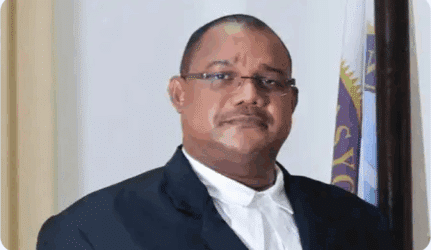
“The result signals a yearning for stronger leadership, more state involvement in the economy, and a rejection of neoliberal complacency,” said analyst Marcel Servina.
Still, challenges loom large: high debt, youth unemployment, and a fragile tourism sector vulnerable to global shocks continue to threaten long-term stability.
The International Monetary Fund projects modest growth but warns that fiscal reforms are essential if Seychelles is to sustain its reputation as a regional success story.
For now, however, Herminie’s supporters are relishing their comeback — a political redemption and a symbolic rejection of the status quo entrenched since 2020.
“This is history repeating itself — but with renewal,” said Veronique Herminie, the president-elect’s wife, as she stood beside him at their victory rally.
As dawn broke over Victoria, Herminie addressed the crowd again, pledging, “Our journey begins anew. We will work for every Seychellois, not just the privileged few.”
His words echoed across the harbor, where fishing boats and ferries honked in celebration, signaling the arrival of a new political tide in the archipelago.
The Patrick Herminie Seychelles election has therefore become more than a vote — it represents a recalibration of power, pride, and people’s demand for accountable governance.
With his mandate secured and his opponents conceding defeat, Herminie now faces the arduous task of turning campaign promises into tangible progress for all citizens.
About The Author