Policy Flip-Flop Threatens Palm Oil Backward Integration Investments
Nigeria’s ambition to rebuild its oil palm value chain through local capacity development is facing renewed strain as shifting trade policies unsettle investors and producers. Industry operators warn that inconsistent import measures are undermining more than a decade of capital deployment anchored on the backward integration framework in the palm oil sector.
The backward integration programme, introduced by the Federal Government in 2011, was designed to reduce reliance on imported crude palm oil (CPO) by incentivising large-scale plantation development, processing, and refining.
Over the years, major agribusiness players such as Wilmar International and Dufil Prima Foods expanded plantation footprints, while listed producers including Presco Plc and Okomu Oil Palm Company Plc scaled up milling and refining capacity.
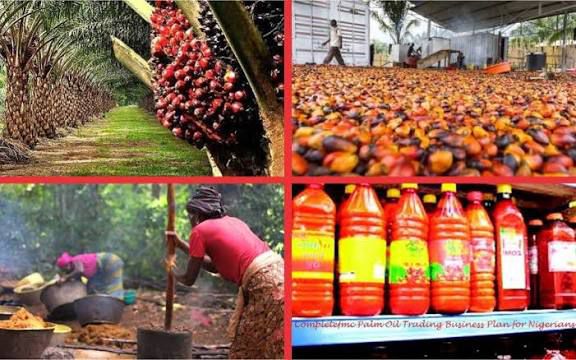
That investment cycle yielded measurable gains. Industry data show that Nigeria’s oil palm fruit output has climbed steadily over the past decade, supported by expanded hectarage and improved yields.
In 2025, producers also benefited from stronger global CPO prices, with benchmark rates crossing $1,000 per metric tonne, bolstering top-line growth and margins for integrated operators. Combined earnings by leading plantation firms nearly doubled last year, reflecting higher realised prices and improved operating leverage.
However, stakeholders argue that recent import waivers and lax border enforcement are eroding those gains. A surge in cheaper imported palm and vegetable oils has pressured domestic prices, compressing margins and dampening fresh investment appetite.
Industry executives describe the development as a structural risk to Nigeria’s backward integration trajectory.
Emmanuel Ibru, chairman of the Plantation Owners Forum of Nigeria (POFON), characterised the situation as an existential challenge for an industry that has spent two decades rebuilding from fragmentation and low productivity.
According to him, imports—rather than functioning as a calibrated buffer to address shortfalls—have become a persistent market feature.
Nigeria remains structurally short of domestic demand, but operators insist that imports must be strictly aligned with verified supply gaps. Data from the United Nations Comtrade database indicate that the country spent over $150 million on crude palm oil imports in 2024.
For producers, the concern is less about temporary supplementation and more about volume surges that distort pricing dynamics during peak harvest seasons.
The economics are unforgiving. Local producers contend with high input costs, including fertiliser, energy, logistics, and packaging. When cheaper imports land at ports—sometimes benefiting from waivers or under-invoicing—domestic refiners and smallholders struggle to compete.
The result has been a sharp correction in fresh fruit bunch prices. Industry estimates suggest that average prices have fallen by more than 40 percent in recent months, significantly reducing farm-gate incomes.
For small and medium-scale growers, this translates into tighter cash flows and rising debt exposure. Mohammed Tahir, who chairs the vegetable oil subsector of the Manufacturers Association of Nigeria, noted that many processing plants are operating below optimal capacity.
Underutilisation, he said, reflects weakened demand for locally processed crude palm oil as refiners pivot to cheaper alternatives.
Food security analysts caution that the debate extends beyond price competition.
Backward integration is intended to deepen value addition, create rural employment, and conserve foreign exchange. Nigeria’s population continues to expand at over two percent annually, raising long-term edible oil demand. If local investment slows due to policy unpredictability, supply deficits could widen, perpetuating import dependence.
Production trends illustrate both progress and fragility. Since 2013, Nigeria’s oil palm fruit output has increased by roughly 45 percent, climbing from about 8 million metric tonnes to over 11 million metric tonnes in 2024.
Yet yield improvements have not kept pace with consumption growth, leaving a persistent structural gap. Analysts warn that if new plantations are deferred and replanting cycles delayed, output growth could stall within the next five years.
Compounding the challenge are allegations of smuggling through porous coastal corridors. Industry associations claim that unrecorded inflows further depress domestic prices and deprive government of tariff revenues.
While official data capture formal imports, stakeholders argue that informal channels distort true market supply.
Christopher Uwala, president of the Soyabean Association of Nigeria, said the ripple effects extend to other oilseed segments. As palm oil prices soften, substitution patterns shift, affecting soybean crushers and vegetable oil blenders.
He warned that sustained price volatility could weaken investor confidence across Nigeria’s broader edible oil complex.

Economists emphasise the need for policy coherence. Trade measures, they argue, must be synchronised with agricultural development strategies. A transparent import quota system tied to verifiable production data could provide predictability while preventing supply shocks.
At the same time, structural reforms—improved rural roads, power reliability, mechanisation support, and research-driven seedling distribution—are essential to lowering domestic production costs.
For now, producers are urging government to recalibrate import policies to safeguard backward integration investments. The stakes are high: billions of dollars in sunk capital, thousands of direct jobs in plantations and mills, and extensive rural livelihoods tied to outgrower schemes.
If Nigeria sustains consistent policy signals and tightens border controls, industry leaders believe the palm oil backward integration model can still deliver scale, competitiveness, and food security.
But continued policy flip-flop, they warn, risks reversing hard-won gains and entrenching import dependence in a sector once positioned as a pillar of agro-industrial transformation.