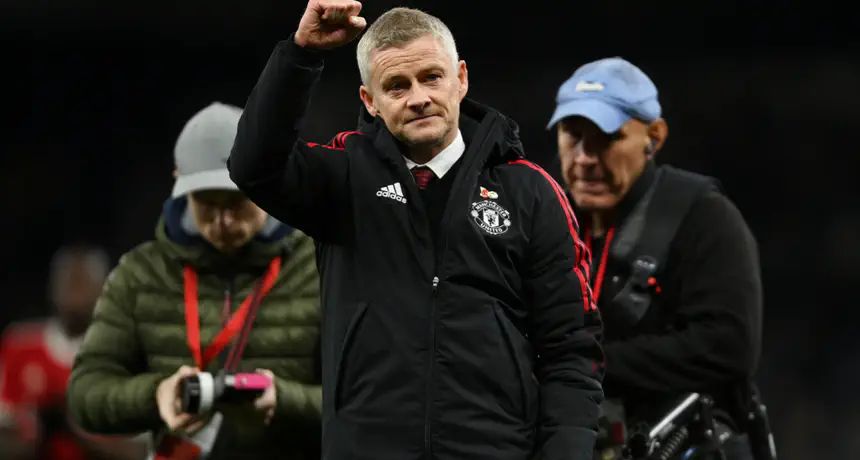
Ole Gunnar Solskjaer Manchester United comeback speculation rises after the former manager admits he would welcome a return to Old Trafford.
The possibility of an Ole Gunnar Solskjaer Manchester United comeback has become a major talking point once again after the former Red Devils boss openly stated that he would be willing to return to Old Trafford if given the chance. While there are no ongoing negotiations, Solskjaer’s admission has reignited debate about Manchester United’s direction during another period of managerial uncertainty.
Having been away from management since his dismissal in 2021, Solskjaer has remained closely connected to the game and to the club where he built his legacy both as a player and a coach. His comments arrive at a time when Manchester United are once again searching for stability following recent upheaval in the dugout.
For Solskjaer, Manchester United is not just another club. His history at Old Trafford stretches back decades, from his unforgettable Champions League-winning goal in 1999 to his efforts to rebuild the team’s identity as manager. That emotional connection was evident when he spoke about the idea of returning, making it clear that his interest is rooted in loyalty rather than opportunism.
Importantly, the Norwegian stressed that his desire for an Ole Gunnar Solskjaer Manchester United comeback is not based on any contact from the club. Instead, it reflects his belief that unfinished business remains and that lessons learned from his first spell could be applied more effectively if he were given another opportunity.
Manchester United at Another Crossroads
Manchester United’s recent history has been defined by transition. Following the exit of Ruben Amorim, the club has once again turned to an interim solution, with Darren Fletcher overseeing first-team matters while the board assesses long-term options. This familiar scenario has reopened discussions about whether the club should prioritize continuity or pursue a completely fresh approach.
Supporters of Solskjaer argue that he represents a rare blend of cultural understanding and tactical pragmatism. During his previous tenure, United showed clear progress in league form and consistently qualified for the Champions League. Critics, however, point to the absence of trophies and question whether returning to a former manager aligns with the club’s ambition to rejoin Europe’s elite.
A Look Back at Solskjaer’s First Reign
Solskjaer initially took charge as interim manager in December 2018, following a toxic end to José Mourinho’s reign. What followed was a dramatic upturn in results, with United playing freer, more attacking football and rediscovering confidence. That run convinced the club to hand to hand Solskjaer a permanent contract.
Across 162 matches, he recorded 92 wins, 32 draws, and 41 defeats, guiding United to back-to-back top-four finishes and a Europa League final. He also placed trust in younger players and attempted to re-establish a positive dressing-room culture.
Despite those achievements, the lack of silverware proved decisive. Heavy defeats and defensive instability during the 2021 season led to his dismissal, bringing an abrupt end to a project that promised much but failed to deliver tangible success.
Time away from management appears to have given Solskjaer perspective. He has spoken previously about reflection and personal development, suggesting that he now has a clearer understanding of what went wrong and how he might address similar challenges in the future.
Those close to the club believe an Ole Gunnar Solskjaer Manchester United comeback would be very different second time around. The structure above the manager has changed, recruitment processes have evolved, and expectations around tactical identity are clearer than during his first spell.
Still, doubts remain. The Premier League has grown increasingly competitive, and Manchester United’s fanbase is divided over whether sentiment should play any role in a decision of this magnitude.
Solskjaer is far from the only candidate linked with the job. Former United midfielder Michael Carrick has been mentioned due to his growing reputation in management, while several high-profile European coaches are also believed to be under consideration.
The club’s leadership must now decide whether experience within the club outweighs the appeal of a new philosophy. In that context, the Ole Gunnar Solskjaer Manchester United comeback narrative continues to gain traction, particularly among supporters craving stability and identity.
Reaction among fans has been mixed but passionate. Some view Solskjaer as a symbol of Manchester United values, someone who understands the club’s traditions and expectations. Others fear that revisiting the past could delay necessary evolution and reinforce the cycle of short-term fixes.
For now, Solskjaer remains on the sidelines, watching developments unfold. His openness to returning has ensured his name will remain part of the conversation, whether or not the club ultimately acts on it.
What is undeniable is that the discussion surrounding an Ole Gunnar Solskjaer Manchester United comeback reflects deeper questions about Manchester United’s identity, ambition, and willingness to learn from recent history. As the club charts its next move, the balance between nostalgia and progress will once again shape its future.
Read more news at: ireport247news.com
About the Author