US and Russian officials have publicly denied any imminent plans for a Trump-Putin summit, signaling that deep divisions over a ceasefire in Ukraine continue to block progress.
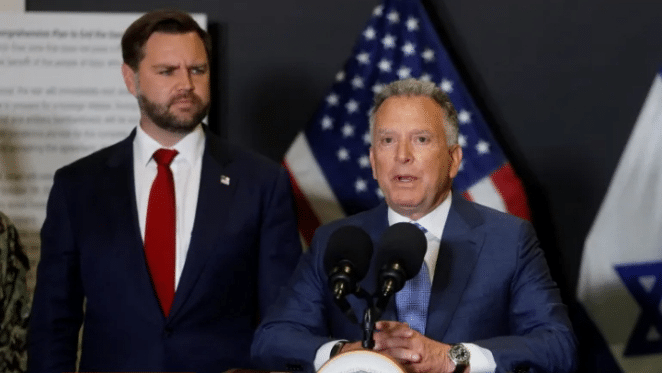
“There are no plans for President Trump to meet with President Putin in the immediate future,” a senior White House official told newsmen, underscoring diplomatic tensions.
Moscow also rejected the possibility of a near-term Trump-Putin summit, emphasizing that detailed planning is required before leaders can convene to discuss a ceasefire in Ukraine.
“No precise timeframe was initially set here,” Kremlin spokesperson Dmitry Peskov said, highlighting that serious preparation is needed to coordinate a meeting amid the ongoing Russia war.
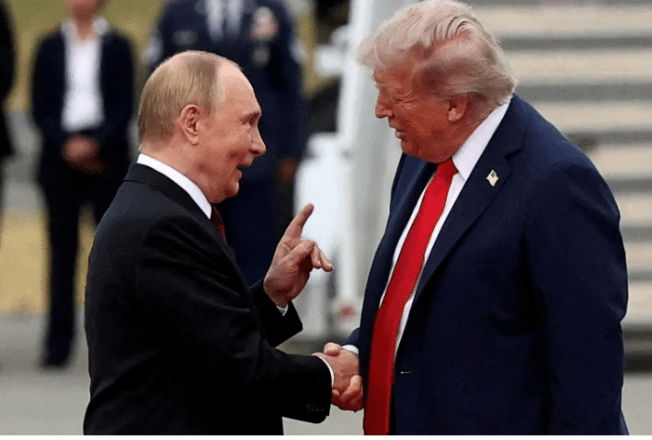
Hopes for a prompt Trump-Putin summit have dimmed as Washington and Moscow diverge sharply on the conditions for ending the Russia war and stabilizing Ukraine.
Over the weekend, Russian officials reportedly demanded complete control over Ukraine’s Donbas region, a position that conflicts directly with Trump’s proposal to freeze current battle lines.
On Monday, Russian Foreign Minister Sergey Lavrov spoke with US Secretary of State Marco Rubio ahead of a planned preparatory Trump-Putin summit, signaling ongoing but stalled diplomatic communication.
The White House later confirmed the in-person preparatory meeting would not occur, citing a “productive call” between Rubio and Lavrov as sufficient groundwork for any future Trump-Putin summit.
CNN reported that US officials are concerned Moscow is maintaining a “maximalist stance” on ceasefire terms, making the possibility of a near-term summit to end the Russia war unlikely.
Lavrov dismissed the report as “unscrupulous” but insisted that Moscow’s position has remained consistent since the Trump-Putin Alaska summit two months ago, reinforcing a hardline posture.
“Russia has not changed its position compared to the understandings reached during the Alaska summit,” Lavrov told reporters, signaling Moscow’s unwillingness to compromise on core demands.
The timing and location of the next Trump-Putin summit, initially suggested after an October 16 phone call, matter less than fulfilling agreements reached during the Alaska summit on Russia war negotiations.
At the August Alaska summit, Putin reiterated Russia’s commitment to ending the conflict, but argued that addressing the conflict’s “primary causes” was essential for a sustainable ceasefire in Ukraine.
Moscow’s list of demands has included Ukrainian neutrality, dismantling its military capabilities, and retaining occupied territories, positions that conflict sharply with Kyiv’s and Western expectations.
Ukrainian President Volodymyr Zelenskyy and European leaders accused Moscow of dragging its feet while continuing “violence and destruction,” insisting that the Russia war persists despite diplomatic efforts.
“Russia’s stalling tactics have shown time and time again that Ukraine is the only party serious about peace,” a joint statement by Zelenskyy and eight European leaders read, condemning Moscow’s hardline approach.
The delay in a Trump-Putin summit represents another setback for the US, as President Trump has repeatedly promised a rapid resolution to the Russia war without securing significant concessions.
Trump recently called for freezing the current battle lines in Ukraine, a position supported by Zelenskyy and several European leaders, yet Moscow has rejected this approach as insufficient for a ceasefire.
Putin has refused multiple calls for a ceasefire, insisting on major territorial concessions and hardline demands that Kyiv views as unacceptable, further complicating prospects for a Trump-Putin summit.
Ukraine insists that a direct meeting between Putin and Zelenskyy is necessary to advance negotiations, but the Kremlin has ruled out talks until an agreement is practically achieved.
Analysts warn that Moscow’s intransigence over Russia war demands, including retaining occupied territories, undermines the potential effectiveness of any near-term Trump-Putin summit and stalls peace efforts.
The Trump-Putin summit initially proposed in Budapest was meant to demonstrate US leadership in resolving the Russia war, but differing interpretations of ceasefire terms have made such a meeting politically sensitive.
US officials are reportedly frustrated with Moscow’s repeated insistence on maximalist conditions for a ceasefire in Ukraine, seeing this as a stalling tactic rather than a genuine effort to end the Russia war.
Meanwhile, Zelenskyy and European allies have pushed for a pragmatic approach, emphasizing that freezing battle lines and establishing humanitarian corridors are immediate priorities in ending ongoing hostilities.
Moscow’s demands go beyond battlefield considerations, encompassing political and territorial objectives that Kyiv and Washington view as unacceptable prerequisites for a Trump-Putin summit.
Experts note that the Alaska summit produced understandings on Russia war principles, but without concrete agreements on territorial control or ceasefire mechanics, leaving a vacuum that impedes further negotiations.
“The US and Russia remain at odds over fundamental issues in Ukraine,” said a senior European diplomat. “Until Moscow adjusts its maximalist demands, a Trump-Putin summit is unlikely to yield results.”
The White House has stressed that any Trump-Putin summit must deliver measurable progress on the Russia war, including steps toward a ceasefire in Ukraine and stabilization of the battle lines.
Trump’s proposals to freeze current battle lines aim to preserve Ukraine’s territorial integrity while creating a platform for broader negotiations, yet Moscow continues to insist on Moscow demands for full concessions.
European leaders have echoed the US approach, warning that any concessions to Russian maximalism could embolden further aggression and complicate postwar recovery in Ukraine, underlining the stakes of a Trump-Putin summit.
Kremlin officials, however, argue that sustainable peace cannot be achieved without satisfying Russia’s strategic interests, including neutralizing Ukraine’s military potential and securing long-term territorial claims.
Diplomatic observers suggest that the upcoming winter months may intensify Russia war pressures, highlighting the urgency of a Trump-Putin summit and the need to reconcile conflicting demands from Moscow and Kyiv.
Despite the absence of an immediate summit, communication channels remain active, with Lavrov and Rubio signaling willingness to continue dialogue, though progress on ceasefire in Ukraine remains stalled.
The failure to convene a near-term Trump-Putin summit reflects deeper geopolitical frictions, where Moscow’s insistence on maximalist demands clashes with Washington’s approach to stabilize battle lines and protect Ukraine’s sovereignty.
Analysts caution that the current stalemate may persist unless both sides compromise on Moscow demands while ensuring that Ukraine’s core territorial and military interests are safeguarded.
Zelenskyy has emphasized that Ukraine remains committed to peace negotiations, but cannot acquiesce to Moscow’s demands for territorial concessions, leaving a Trump-Putin summit dependent on concrete compromise.
Western leaders continue to press for a ceasefire in Ukraine, arguing that freezing battle lines is a necessary first step, and urging both Washington and Moscow to prioritize humanitarian and security concerns.
The Trump-Putin summit remains a critical, yet uncertain, diplomatic instrument in resolving the Russia war, illustrating the gap between rhetoric and tangible progress in Ukraine.
With Moscow’s hardline stance unchanged since the Alaska summit, the next potential Trump-Putin summit will require unprecedented diplomatic efforts and flexibility from both sides.
Observers note that, without concessions on Moscow demands, the summit may be symbolic rather than substantive, risking further criticism of US efforts to influence the course of the Russia war.
For now, US officials maintain that dialogue with Moscow is ongoing but that a formal Trump-Putin summit is unlikely until positions on ceasefire in Ukraine and battle lines align more closely.
About The Author