

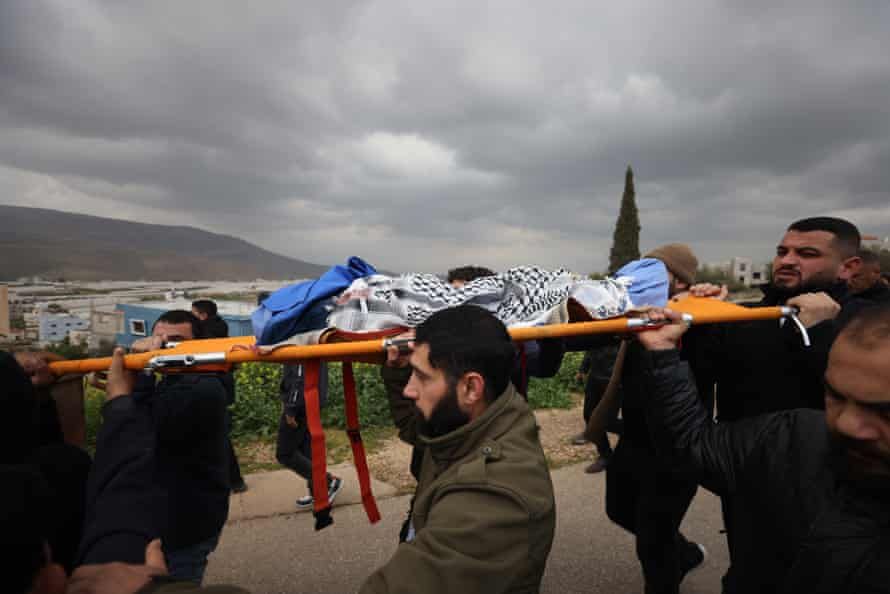
No Israel prosecutions for killing Palestinian civilians in occupied West Bank since start of decade raises concerns over accountability, as legal records and investigations point to widespread impunity and a lack of justice mechanisms.
A detailed analysis of legal data and public records shows that Israel has not prosecuted its citizens for such killings since the beginning of the decade, highlighting a significant gap in enforcement and accountability systems.
The situation has prompted criticism from former Israeli officials, including former prime minister Ehud Olmert, who urged intervention by the International Criminal Court to address escalating violence.
Olmert warned that international legal action may be necessary “to save the Palestinians and us” from what he described as state-linked settler violence and ongoing security failures.
In written remarks, he stated, “I have decided not only to not remain silent, but to draw the attention of the ICC in The Hague so that it may take enforcement measures and issue arrest warrants.”
Former Israeli military and intelligence leaders have also raised alarm, describing the situation as “organised Jewish terrorism” and calling for urgent intervention to halt repeated attacks.

In a public letter, senior commanders warned that failure to address “almost daily” violence against Palestinians poses a serious threat to Israel’s own stability and moral standing.
This month alone, Israeli settlers and police reportedly killed multiple Palestinian civilians, including a family where parents and young children were shot during a return from a Ramadan shopping trip.
Critics say such incidents illustrate a pattern of violence that goes unpunished, reinforcing claims of systemic failure within law enforcement and judicial institutions.
The letter from former officials described the situation as more than isolated incidents, stating, “We are no longer talking about a handful of lawbreaking hooligans.”
“This is organised activity,” the statement continued, alleging that some perpetrators act with the involvement or support of individuals in uniform.
According to data from the United Nations, at least 1,100 Palestinian civilians have been killed in the occupied West Bank since 2020, with a significant portion being children.
Despite the scale of casualties, no prosecutions have been brought in connection with these deaths, raising concerns among human rights groups and international observers.
Legal records indicate that the last indictment related to an Israeli security force killing in the West Bank occurred in 2019, while civilian-related indictments date back even further.
Israeli courts have handled very few cases, with most investigations into settler violence ending without charges being filed.
Reports show that over 96% of police investigations into settler-related incidents between 2020 and 2025 were closed without indictments, pointing to systemic investigative failures.
Legal experts argue that such outcomes create a perception that the system prioritizes protecting perpetrators rather than delivering justice.
Yesh Din director Ziv Stahl said, “The Israeli law-enforcement systems… function less as mechanisms for justice and more as shields for perpetrators.”
He added that repeated closures of cases and stalled investigations effectively “prioritise immunity over the rule of law.”
Human rights lawyer Michael Sfard also criticized the system, stating, “The system is programmed to manufacture impunity, not accountability.”
He further noted that occasional prosecutions were used as examples to suggest functionality, but these were rare and insufficient to address broader concerns.
Meanwhile, critics argue that political and institutional pressures have discouraged legal action against perpetrators in recent years.
A number of former justice officials have also spoken out, accusing the government of enabling or failing to stop what they described as widespread violence.
In a recent letter, senior legal figures said the “ultimate legal and moral responsibility” to stop the violence lies with the Israeli government.
They warned that inaction amounts to complicity, especially when attacks are “assisted, supported and inspired by government circles.”
Some analysts note that settler violence has escalated in recent years, particularly following major regional conflicts and political shifts.
International observers say the absence of prosecutions undermines trust in legal systems and complicates efforts to resolve the broader conflict.
Others argue that the situation reflects deeper structural and political challenges that extend beyond individual cases or incidents.
The issue has also drawn attention from international legal institutions, with calls for potential intervention growing louder.
Calls for accountability have intensified as violence continues to affect civilians, including vulnerable populations such as children and families.
Despite mounting criticism, Israeli authorities have not responded to recent reports regarding the lack of prosecutions.
The ongoing situation underscores the complexity of enforcing international law in conflict zones where political, military, and legal factors intersect.
For many observers, the lack of accountability remains one of the most pressing and unresolved issues in the region today.
Read also: Mohammad Bagher Zolghadr appointed Iran’s Supreme National Security Council Secretary
About The Author
