The Nigeria Labour Congress (NLC) has renewed its call on the Federal Government to urgently review wages tax policies, and labour-related economic reforms, warning that sustained delays and uneven policy implementation are worsening the hardship faced by Nigerian workers and low-income households.
The labour union said Nigeria is approaching a dangerous tipping point where stagnant wages, rising inflation, and regressive taxation could deepen poverty, weaken productivity, and erode public trust in governance if immediate corrective measures are not taken.
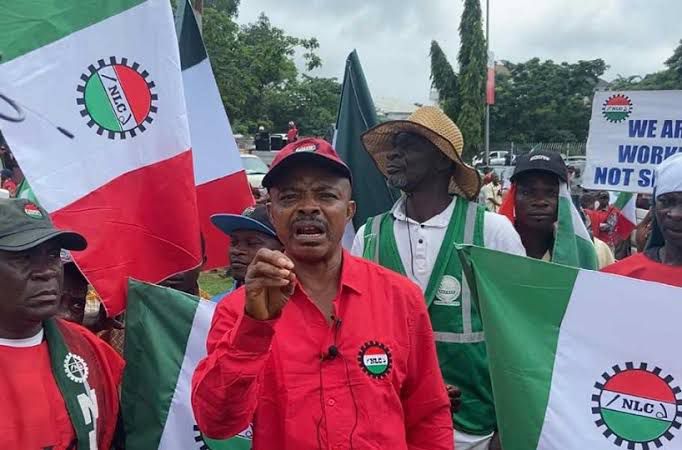
The call was made in Abuja on Wednesday by the President of the NLC, Joe Ajaero, during the 85th birthday celebration and public presentation of the memoir of the Congress’ founding president, Hassan Sunmonu, at the Shehu Musa Yar’Adua Centre.
Speaking before an audience comprising labour leaders, government officials, civil society actors, and journalists, Ajaero said the current economic realities demand urgent policy reassessment that prioritises workers’ welfare over fiscal experimentation.
Why Government Must Review Wages Tax Policies Now
According to Ajaero, the need to review wages tax policies has become more critical as the cost of living continues to rise sharply, outpacing income growth across both the public and private sectors.
He noted that although President Bola Tinubu signed the new National Minimum Wage Act into law in July 2024, increasing the minimum wage from ₦30,000 to ₦70,000, implementation remains inconsistent nationwide.
“The law is clear, but compliance is weak,” Ajaero said.
“Many workers are still earning far below the legally approved minimum wage, even as inflation continues to erode purchasing power. Workers cannot continue to shoulder the burden of economic reforms without protection.”
He warned that failure to fully implement the new wage structure before the next statutory wage negotiation cycle could trigger renewed labour unrest.
The NLC president stressed that wages must reflect prevailing economic realities, arguing that a minimum wage that cannot guarantee basic survival defeats its purpose.
He added that labour unions are closely monitoring compliance levels and will not hesitate to deploy legal and industrial actions where necessary.
Tax Reforms Under Fire
Beyond wages, Ajaero criticised recent fiscal and tax reforms, describing them as regressive and disproportionately harmful to workers, small businesses, and vulnerable populations.
He argued that workers and low-income Nigerians, who form the bulk of the country’s taxpayers, were excluded from the policy formulation process.
“The tax laws went through a process that clearly excluded Nigerian workers and the masses,” he said.
“Our warnings were ignored, and what we now have are tax policies that make workers poorer while doing little to expand productive capacity.”
According to him, instead of broadening the tax base by improving productivity and formal sector inclusion, current policies risk shrinking disposable income and worsening inequality.
Ajaero insisted that any meaningful effort to review wages tax policies must involve structured engagement with organised labour to ensure fairness, sustainability, and social stability.
Legacy of Labour Leadership
The NLC president used the occasion to honour Hassan Sunmonu, describing him as a towering figure whose leadership laid the foundation for organised labour in Nigeria.
He said Sunmonu’s memoir, Organise, Don’t Agonise, captures the enduring philosophy of the labour movement—collective action as the antidote to exploitation and poor governance.
“This is not just a book title; it is a creed,” Ajaero said.
“From the shop floor to national policy debates, Comrade Sunmonu taught us that when workers organise, they can challenge injustice and shape history.”
He recalled the inauguration of the Hassan Sunmonu Centre for Leadership and Governance in Lagos last year, noting that it symbolises the labour movement’s commitment to principled leadership and democratic engagement.
Pension Governance Concerns
Ajaero also raised concerns over delays in the constitution of the board of the National Pension Commission (PENCOM), warning that prolonged vacancies weaken oversight and undermine confidence in pension administration.
He criticised what he described as “public grandstanding” around governance issues, stressing that institutional stability is critical to safeguarding workers’ retirement savings.
“Delays in constituting statutory boards weaken democracy and the rule of law,” he said.
“Workers deserve transparency and competence in institutions that manage their future.
Call for Inclusive Policymaking
The NLC president urged the Federal Government to abandon what he termed exclusionary policymaking and instead embrace dialogue with labour unions and civil society.
He argued that policies on fuel pricing, taxation, wages, and social services cannot succeed if they are designed without the input of those most affected.
“Sideline organised labour, and you design policies destined to generate crisis,” Ajaero warned.
“Nigeria needs policies that stabilise households, protect productivity, and restore confidence.”
Labour’s Next Steps
While reaffirming labour’s commitment to dialogue, Ajaero made it clear that patience is not limitless.
He said the NLC would continue to mobilise, organise, and advocate until workers’ interests are adequately protected.
“As we celebrate Comrade Sunmonu’s life, we renew our pledge,” he said.
“We will continue to organise. We will continue to challenge power. We will continue to fight for a Nigeria where no worker agonises over poverty, excessive taxation, or economic exclusion.”
He concluded by calling on government leaders to draw lessons from labour history and choose collaboration over confrontation.
“Let the government move from agonising the people to organising with them,” Ajaero said. “That is how to build a democracy that delivers not only political freedom but economic dignity.”
About The Author