

Nigeria’s ambition to strengthen its agricultural sector and reduce dependence on foreign food supplies is facing renewed scrutiny as data reveal a significant increase in the importation of livestock products.
Industry stakeholders warn that the continued reliance on imported dairy and livestock commodities could undermine the country’s efforts to build a resilient agricultural value chain, even as the sector remains an important contributor to national economic output.
Recent statistics from the National Bureau of Statistics indicate that Nigeria’s livestock imports surged sharply in 2025, highlighting persistent structural gaps in domestic production capacity.
Livestock imports rise 14.5% amid Nigeria’s widening dairy gap
The latest figures show that livestock imports rise 14.5% to about N1.71 trillion in 2025, compared to N1.49 trillion recorded in 2024. Analysts say the increase reflects the country’s growing dependence on imported animal products, particularly dairy commodities.
The livestock imports rise 14.5% trend comes despite ongoing policy discussions around diversifying the Nigerian economy and strengthening agricultural productivity.
Experts say the major driver behind the surge is the widening gap between local production and consumer demand for dairy and livestock products.
Investigations indicate that Nigeria currently spends more than $1.5 billion annually on dairy imports, according to data from the Food and Agriculture Organization.
Nigeria’s livestock population and production challenges
Despite the heavy import bill, Nigeria possesses one of the largest livestock populations in Africa.
Industry data estimate that the country hosts approximately 273 million animals across various categories. Goats dominate the population with about 138.95 million animals, followed by sheep at 64.93 million and cattle at roughly 54.81 million.
The poultry sector also remains substantial, with around 250 million birds across commercial and backyard operations.
However, experts argue that these numbers mask deeper productivity challenges within the industry.
The livestock imports rise 14.5% development underscores the stark reality that Nigeria’s domestic livestock production remains insufficient to meet growing national demand.
One of the most pressing concerns is the country’s dairy deficit. Estimates suggest Nigeria faces a dairy gap of nearly 60 per cent between local production and consumption needs.
While domestic dairy production stands at roughly 0.5 million tonnes annually, national demand is estimated at about 1.3 million tonnes.
Low productivity remains a major concern
Agricultural specialists attribute the dairy deficit primarily to low productivity levels among cattle breeds commonly raised in Nigeria.
According to the Food and Agriculture Organization, the average milk yield per cow in Nigeria is approximately 213 litres per year.
This output is less than one-tenth of the global average, highlighting the urgent need for improved breeding, better feeding systems and modern livestock management practices.
Industry stakeholders say the livestock imports rise 14.5% trend could persist unless Nigeria addresses fundamental weaknesses in the livestock value chain.
Livestock sector’s economic contribution
Despite its productivity challenges, the livestock sector remains economically significant for Nigeria.
Data from the National Bureau of Statistics show that the sector contributed about N11.9 trillion to the nation’s Gross Domestic Product in 2024, representing roughly 5.6 per cent of total GDP.
However, analysts caution that a strong GDP contribution does not necessarily indicate competitiveness in global livestock markets.
Countries such as Brazil, for instance, have developed highly productive livestock industries capable of generating substantial export revenues.
Brazil’s livestock sector reportedly contributed more than $185 billion to its economy in 2024, positioning the country as a major global supplier of beef and other animal products.
By comparison, Nigeria’s livestock industry remains largely informal and characterised by low productivity levels.
Structural challenges slow sector growth
Experts say several deep-rooted structural challenges continue to hinder the development of Nigeria’s livestock industry.
One of the most frequently cited issues is the persistence of traditional nomadic grazing systems widely practiced by pastoral communities.
While the system has historically sustained cattle production in the region, analysts say it limits the adoption of modern ranching systems that could significantly improve productivity.
Ranching enables controlled feeding, improved veterinary supervision and scientific breeding — all essential for raising yields and improving livestock quality.
However, insecurity and farmer-herder conflicts have complicated efforts to transition toward more structured livestock management models.
The livestock imports rise 14.5% trend also reflects the impact of rising feed costs and currency depreciation.
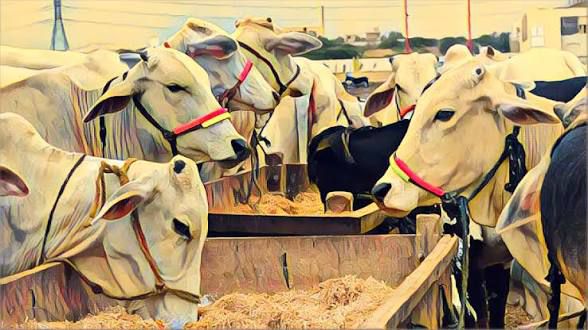
Livestock producers say many animal feed ingredients are imported, making production more expensive when the naira weakens.
Calls for major investment in livestock reform
Industry leaders are therefore urging the Federal Government to accelerate investment in modern livestock infrastructure.
Agribusiness stakeholders believe that expanding ranching systems, improving cattle breeds and developing sustainable feed supply chains are critical steps toward reducing Nigeria’s dependence on imported livestock products.
They also stress the need for stronger veterinary services, improved disease surveillance systems and expanded financing options for livestock farmers.
Furthermore, experts say the government must address insecurity in rural areas, which continues to discourage private investment in livestock production.
Opportunities for transformation
Despite the challenges, analysts believe the sector still holds enormous potential for economic growth and job creation.
Nigeria’s rapidly growing population and rising demand for animal protein present significant opportunities for the livestock industry.
If productivity challenges are addressed and the right policy frameworks are implemented, experts say the sector could evolve into a major contributor to food security and export earnings.
However, without sustained reforms and investment, the livestock imports rise 14.5% trend may continue, placing additional pressure on the country’s foreign exchange reserves and widening the gap between domestic production and consumption.
About The Author


