


Nigeria recorded a N2.79 trillion shortfall in oil revenue during the third quarter of 2025 despite a steady rise in foreign exchange reserves that has pushed the country’s external buffers above $50 billion for the first time in three months, highlighting the complex challenges facing Africa’s largest economy.
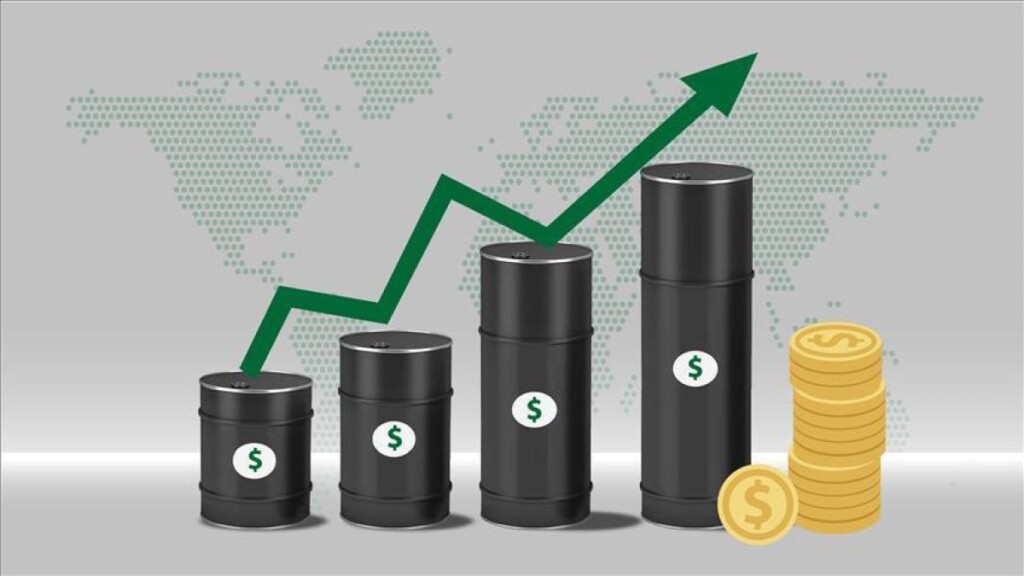
Data from the Federal Government’s Q3 2025 Budget Implementation Report showed oil revenue amounted to N2.45 trillion during the quarter, representing only 31.87 per cent of the government’s target.
The underperformance came even as non-oil revenue exceeded expectations, helping to cushion the impact of weaker earnings from crude exports.

Key Takeaways
Nigeria missed its oil revenue target by N2.79 trillion.
Oil revenue achieved only 31.87% of projections.
Foreign reserves rose above $50 billion for the first time since March.
The naira strengthened against the US dollar.
Investors remain focused on fiscal sustainability and debt servicing.
Non-oil revenue outperformed expectations.
The figures underscore a growing disconnect between Nigeria’s improving external position and persistent fiscal pressures, with analysts warning that stronger foreign reserves alone may not be sufficient to address structural weaknesses in government finances.
For Nigeria, rising foreign reserves may signal stronger financial defences, but weak oil revenues continue to test the government’s ability to fund growth, manage debt and sustain economic reforms.
According to the report, total Federal Government revenue stood at N7.70 trillion during the quarter, while expenditure reached N8.03 trillion, resulting in a fiscal deficit of N328.57 billion.
Minister of Budget and Economic Planning Abubakar Bagudu said the deficit was financed through domestic borrowing and privatisation proceeds.
“Total FG revenue stood at N7.70 trillion, and expenditure reached N8.03 trillion, resulting in a fiscal deficit of N328.57 billion, financed through privatisation proceeds and domestic borrowing,” Bagudu stated in the report.
Oil Revenue Misses Target
The report attributed the weak performance to volatility in global oil markets, production constraints and pricing uncertainties.
Nigeria’s dependence on oil revenue continues to expose public finances to fluctuations in international crude prices and domestic production challenges.
While oil receipts generated N2.45 trillion, non-oil revenue reached N5.25 trillion, representing 68.18 per cent of projected collections for the period.
Revenue from Value Added Tax, Electronic Money Transfer Levy, Education Tax and independent government revenues contributed significantly to the stronger-than-expected non-oil performance.
The trend reflects ongoing efforts by authorities to broaden the country’s revenue base and reduce dependence on crude oil earnings.
However, economists note that oil revenue remains a critical source of government funding and foreign exchange earnings.
Foreign Reserves Cross $50 Billion
In contrast to the fiscal challenges, Nigeria’s external reserves strengthened significantly during the period.
Latest data from the Central Bank of Nigeria showed foreign reserves rose to $50.04 billion as of June 4, 2026, marking the first time reserves have exceeded the $50 billion threshold since March.
The reserves increased by approximately $1.70 billion from $48.34 billion recorded during the same period in May.
The growth extends a steady upward trend that began in early May when reserves stood at about $48.36 billion.
Market analysts said higher reserves improve the country’s ability to defend the naira, meet external obligations and reassure investors about Nigeria’s capacity to withstand external shocks.
The increase also reflects stronger foreign exchange inflows and tighter monetary management by the Central Bank of Nigeria.
Foreign Reserves Reach Highest Level in Nearly Three Months
Nigeria’s external reserves rose to $50.04 billion as of June 4, according to Central Bank of Nigeria data, marking the highest level since March and extending a steady recovery that began in early May.
The reserve increase comes amid tighter monetary conditions and sustained efforts by the CBN to support exchange-rate stability.
The apex bank recently intensified liquidity sterilisation through Open Market Operations, helping attract foreign portfolio inflows into fixed-income assets.
Nigeria’s reserve position now provides a stronger external buffer against potential oil-price volatility, capital outflows and global financial market shocks.
Economists note that reserve accumulation is closely watched by investors because it influences confidence in the naira and the country’s ability to meet external obligations.
Naira Stability Improves
The rise in reserves comes as the naira shows signs of stabilisation in the official foreign exchange market.
The local currency closed at N1,362.21 per dollar on June 5, representing an appreciation compared with levels recorded a month earlier.
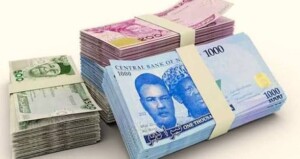
Although exchange rate volatility has eased, analysts caution that maintaining stability will depend on sustaining foreign exchange inflows and improving export earnings.
Investors continue to monitor developments in Nigeria’s foreign exchange market closely, particularly as authorities pursue reforms aimed at attracting capital and improving liquidity.
Official and Parallel Market Gap Narrows
Another sign of improving market confidence has been the narrowing spread between official and parallel-market exchange rates.
Foreign exchange reforms implemented over the past two years have reduced opportunities for arbitrage that previously distorted currency pricing and encouraged speculative demand.
Market participants say closer alignment between the official and unofficial markets has improved transparency and boosted confidence among both local and foreign investors.
“The reduction in exchange-rate fragmentation is one of the most significant developments in Nigeria’s FX market over the last year,” said a Lagos-based currency trader who requested anonymity because he was not authorised to speak publicly.
Fiscal Pressures Persist
Despite improving reserve levels, concerns remain about Nigeria’s fiscal position.
The Budget Implementation Report highlighted an elevated debt-service burden that continues to consume a substantial portion of government revenue.
Debt servicing reached N3.41 trillion during the quarter, accounting for a significant share of expenditure.
Non-debt recurrent spending stood at N2.66 trillion.
Analysts say the combination of weak oil revenue and high debt obligations continues to constrain fiscal flexibility.
The report also warned that delays in cash planning and project implementation could increase costs and reduce the effectiveness of government spending.
Global Institutions Warn Fiscal Risks Remain
While reserve accumulation has been welcomed by investors, international institutions continue to flag fiscal vulnerabilities.
The International Monetary Fund has repeatedly emphasised the importance of broadening Nigeria’s tax base and improving non-oil revenue mobilisation to reduce dependence on crude exports.
The World Bank has similarly warned that weak revenue generation remains one of Nigeria’s key structural economic challenges despite recent reforms.
Analysts at investment banks including Standard Chartered and Renaissance Capital have noted that reserve growth alone may not eliminate fiscal risks if government revenues continue to lag expenditure requirements.
Nigeria Mirrors Emerging-Market Currency Reforms
Nigeria’s efforts to stabilise its currency and rebuild reserves reflect broader trends across emerging markets facing pressure from a strong US dollar and elevated global interest rates.
Countries including Egypt, Pakistan, Ghana and Kenya have implemented exchange-rate reforms and monetary tightening measures aimed at restoring investor confidence and rebuilding external buffers.
While some countries have succeeded in attracting foreign capital through higher yields and reform programmes, analysts caution that sustainable stability ultimately depends on stronger export earnings and fiscal discipline.
Why the Divergence Matters
The coexistence of rising foreign reserves and weaker oil revenue highlights two different dimensions of economic performance.
Foreign reserves measure the country’s external financial strength and capacity to manage foreign exchange needs.
Government revenue, by contrast, determines the state’s ability to finance infrastructure, social programmes and public services.
As a result, improvements in reserves do not automatically translate into stronger fiscal health.
This divergence has become increasingly important as Nigeria seeks to balance exchange-rate stability, inflation control and fiscal sustainability.
Economists note that a prolonged mismatch between external strength and fiscal weakness could complicate policymaking.
Read Also:NERC orders compensation for Band A customers after power outages: Who qualifies?
Oil Prices Today: Brent Crude Drops 3% as Middle East Ceasefire Eases Hormuz Fears

Investors Focus on Sustainability
For investors, the key issue is not simply whether reserves are rising but whether the improvement can be sustained.
Portfolio managers are closely monitoring crude-oil production levels, government revenue performance and foreign-exchange inflows to assess the durability of Nigeria’s recent gains.
Higher reserves and a more stable naira have helped improve sentiment toward Nigerian sovereign debt and local fixed-income markets.
However, investors remain cautious about elevated debt-servicing costs and the economy’s continued exposure to oil-market volatility.
What Markets Are Watching Next
Market participants say the next phase of Nigeria’s economic story will depend less on reserve accumulation and more on whether policymakers can convert temporary stability into lasting fiscal strength.
Several economists expect oil revenue performance, tax collection efficiency and foreign-investor participation to become the dominant indicators shaping sentiment during the second half of 2026.
“The reserve story is encouraging, but revenue remains the bigger challenge,” said a senior economist at a Lagos-based investment firm.
“Investors want evidence that fiscal reforms are generating durable results rather than relying on favourable market conditions.”
Frequently Asked Questions (FAQ)
Why did Nigeria miss its oil revenue target?
Nigeria generated N2.45 trillion in oil revenue during the third quarter of 2025, achieving only 31.87 per cent of its projected target. The shortfall was attributed to oil production challenges, price volatility in global crude markets, and broader operational constraints affecting export earnings.
How much oil revenue did Nigeria lose?
According to the Federal Government’s Q3 2025 Budget Implementation Report, Nigeria recorded a N2.79 trillion oil revenue shortfall compared with budget expectations during the quarter.
Why are Nigeria’s foreign reserves increasing?
Nigeria’s foreign reserves rose above $50 billion due to stronger foreign exchange inflows, tighter monetary policy, improved investor confidence, and efforts by the Central Bank of Nigeria to stabilise the naira and strengthen external buffers.
What do higher foreign reserves mean for the economy?
Higher foreign reserves improve a country’s ability to meet external obligations, support currency stability, manage external shocks, and reassure investors about the strength of the economy’s external position.
Why is the naira stabilising despite weak oil revenue?
The naira has benefited from stronger reserve levels, tighter liquidity management by the Central Bank of Nigeria, improved foreign exchange market reforms, and increased investor participation in fixed-income markets. These factors have helped offset concerns arising from weaker oil revenues.
How does oil revenue affect Nigeria’s budget?
Oil revenue remains a major source of government income and foreign exchange earnings. Lower oil revenues can widen fiscal deficits, increase borrowing requirements, and reduce the government’s ability to fund infrastructure, healthcare, education, and other public services.
What are investors watching in Nigeria’s economy?
Investors are closely monitoring oil production levels, foreign reserve growth, fiscal deficits, debt-servicing costs, exchange-rate stability, inflation trends, and the government’s ability to sustain economic reforms.
What are the biggest risks to Nigeria’s fiscal outlook?
Key risks include lower-than-expected crude oil production, oil price volatility, rising debt-servicing obligations, inflation pressures, exchange-rate instability, and slower-than-expected growth in non-oil revenues.
Can higher reserves offset weak government revenues?
Not entirely. While higher reserves strengthen Nigeria’s external position and support currency stability, they do not automatically improve government finances. Sustainable fiscal health requires stronger revenue collection, diversified income sources, and disciplined public spending.
What is the outlook for Nigeria’s economy?
Economists expect Nigeria’s outlook to depend on three key factors: higher oil production, continued foreign exchange reforms, and stronger non-oil revenue mobilisation. Sustained progress in these areas could improve fiscal stability, support the naira, and strengthen investor confidence.
Outlook
Looking ahead, the Federal Government said improving fiscal sustainability remains a priority.
The Budget Implementation Report recommended more realistic oil production assumptions, stronger tax compliance measures, accelerated implementation of e-Customs reforms, improved remittances from government agencies and stricter value-for-money audits.
Authorities also emphasised the need to prioritise projects capable of delivering measurable economic returns.
For investors, the key question is whether Nigeria can translate improving reserve buffers into stronger revenue generation and broader economic resilience.
While rising reserves provide a positive signal for currency stability, the latest figures suggest that fiscal reform and revenue diversification remain critical challenges for Africa’s largest economy.Read
Read more @ireport247news
About The Author
