Nigeria intensifies efforts against migrant smuggling, rescuing victims, blocking illegal migration, and raising nationwide awareness on human trafficking risks.
The Nigeria Immigration Service (NIS) has intensified efforts to combat migrant smuggling, reinforcing its commitment to protecting Nigerians from exploitation and human trafficking.
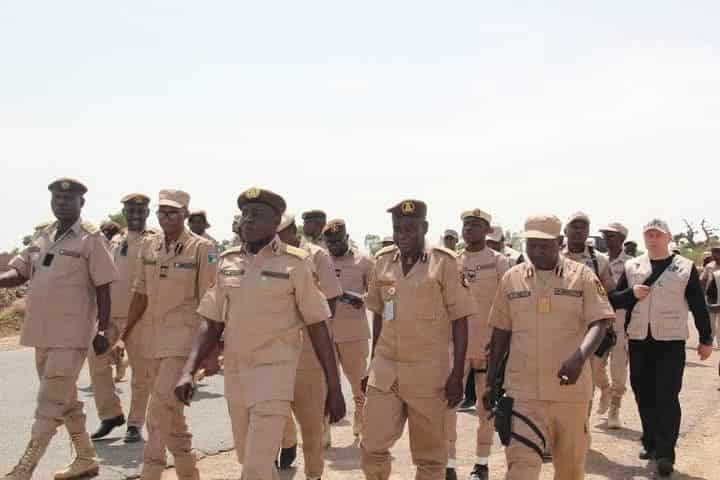
Comptroller General of NIS, Kemi Nanna Nandap, highlighted these efforts during a one-day Stakeholders Sensitisation Seminar in Abuja, titled “Evolving Patterns in Smuggling of Migrants: Towards a Coordinated National Response.”
According to Nandap, tackling migrant smuggling is not just a matter of national security, but also a moral obligation.
“Every smuggled migrant represents a life at risk, a family disrupted, and a community deprived of its potential,” she said.
“Our fight is guided by protection, accountability, and human dignity.”
Recent operations by NIS demonstrate significant progress. The agency successfully blocked 332 irregular migrants from entering Nigeria and prevented 294 Nigerians from leaving through illegal channels.
These results, Nandap explained, form part of a renewed war against migrant smuggling and other forms of irregular migration.
The NIS has also rescued 36 victims of human trafficking and child labour at the Seme Border, thanks to enhanced surveillance supported by CCTV installations and improved border patrols.
“Modern technology and vigilant personnel are critical in detecting and preventing migrant smuggling,” the CGI said.
Recognising the transnational nature of migrant smuggling, Nigeria has strengthened regional collaboration through platforms such as the Khartoum, Rabat, and Niamey Processes.
These forums, recently hosted in Lagos, facilitate intelligence sharing and cooperation among countries of origin, transit, and destination. “No single country can fight this crime alone. Coordination is essential,” Nandap emphasised.
In addition to operational measures, the NIS continues to enhance its institutional capacity. Legal frameworks are under review, operational procedures are being strengthened, and personnel training programs are expanded to improve readiness against emerging trends in human trafficking and migrant smuggling.
Public sensitisation campaigns are another key element of Nigeria’s strategy. Over 577,200 National Youth Service Corps (NYSC) members have been educated on the dangers of irregular migration and migrant smuggling.
Awareness programs target schools, markets, places of worship, and transport hubs to ensure widespread community understanding of the risks.
Nandap also urged sustained collaboration from all stakeholders, including government agencies, international organisations, faith-based groups, and community leaders.
“The fight against migrant smuggling requires a united national front. No single institution can succeed alone,” she said.
The CGI underscored the moral responsibility of tackling human trafficking and migrant smuggling, noting that criminal networks profit from exploiting vulnerable individuals.
She added, “Our operations not only enforce the law but also aim to dismantle the criminal economy that feeds on human vulnerability.”
Technology has played a critical role in improving border security. Advanced CCTV systems, biometric verification, and increased patrols have strengthened the ability of NIS officers to detect and intercept irregular migration attempts.
These tools, combined with intelligence-led operations, have contributed significantly to recent rescues and arrests of traffickers.
Finally, Nandap reiterated the NIS’s commitment to a comprehensive, coordinated approach, combining enforcement, public awareness, regional collaboration, and institutional capacity-building.
“Together, we can eliminate migrant smuggling, safeguard lives, and uphold human dignity across Nigeria,” she concluded.
Through these multifaceted strategies, the Nigeria Immigration Service is demonstrating that a proactive and collaborative approach is essential to combating migrant smuggling, human trafficking, and irregular migration, protecting the nation’s citizens, and ensuring regional security.
More news at ireport247news