Nigeria and Ghana have taken a significant step toward improving regional aviation safety following the signing of a bilateral agreement focused on coordinated search and rescue operations for aircraft in distress.
The new aviation safety partnership between the two West African nations is designed to strengthen emergency response systems, enhance operational collaboration, and ensure quicker rescue missions in cases involving aircraft emergencies across shared airspace and maritime territories.
The agreement was signed between the Nigerian Civil Aviation Authority (NCAA) and the Ghana Civil Aviation Authority (GCAA).
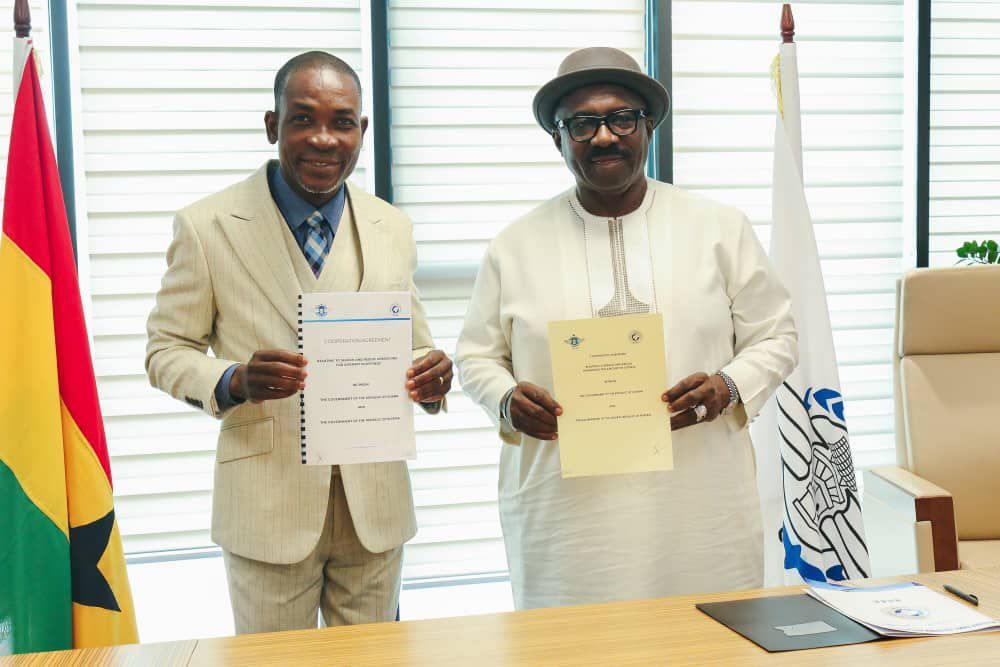
Officials from both countries say the initiative marks a major milestone in strengthening aviation safety structures within the region.
Representing Nigeria at the ceremony was the Director-General of the NCAA, Chris Ona Najomo, while the Director-General of the GCAA, Stephen Wilfred Arthur, signed on behalf of the Ghanaian government.
The signing ceremony, held on March 9, 2026, brought together aviation officials and technical experts who emphasised the growing need for stronger cooperation among neighbouring countries to maintain high aviation safety standards.
Speaking during the event, Najomo described the Memorandum of Understanding as an important development that will significantly improve coordination between the two aviation authorities whenever aircraft emergencies occur.
He explained that the agreement establishes a structured framework that will enable both countries to respond more efficiently to aircraft distress situations.
According to him, the partnership will ensure that emergency rescue teams can work together seamlessly, particularly in areas where flight routes cross national boundaries.
Najomo noted that strengthening aviation safety requires practical collaboration between neighbouring states because aircraft often travel across multiple national jurisdictions during a single flight.
He added that the new pact will support faster response times and better coordination when dealing with incidents that may occur within shared airspace or along maritime corridors.
Another major aspect of the agreement involves improved information exchange between Nigeria and Ghana.
Aviation officials from both countries will share operational data, safety intelligence, and technical resources that can help improve preparedness during emergency situations.
The agreement also provides opportunities for joint training programmes involving rescue personnel, aviation safety officers, and operational teams.
These exercises are expected to help both countries strengthen their rescue capabilities while ensuring that their procedures align with international aviation safety standards.
According to Najomo, cooperation of this nature is necessary for building resilient aviation systems that can effectively respond to emergencies regardless of where they occur.
He stressed that the ability to coordinate quickly across borders could make a crucial difference in saving lives during aircraft accidents or distress situations.
Air travel in West Africa has grown steadily in recent years, increasing the importance of maintaining strong regional coordination in aviation operations.
Experts say that many aircraft routes in the region pass through the same flight corridors and maritime zones, particularly around the Gulf of Guinea.
As a result, emergencies that occur in these areas often require joint responses from neighbouring states.
The Nigeria–Ghana agreement therefore reflects a broader commitment to strengthening aviation safety systems across the sub-region.
Officials believe that coordinated search and rescue frameworks will help ensure that aircraft experiencing difficulties can receive immediate assistance regardless of where the incident occurs.
The cooperation arrangement will also allow both aviation authorities to develop clearer operational procedures for handling emergencies that involve cross-border coordination.
Beyond emergency response, the agreement is expected to contribute to long-term improvements in regional aviation management.
Aviation experts say partnerships like this encourage stronger communication between regulatory authorities and help align operational standards with global best practices.
For Nigeria and Ghana, the new pact represents an opportunity to further strengthen aviation safety across their aviation sectors while reinforcing their roles as key aviation hubs in West Africa.
The collaboration is also expected to support future initiatives in safety monitoring, operational training, and aviation risk management.
By sharing resources and expertise, both countries aim to ensure that their aviation industries remain safe, reliable, and capable of responding effectively to unexpected incidents.
Search and rescue cooperation agreements are widely recognised as critical components of modern aviation governance.
Such arrangements help neighbouring states coordinate their efforts in protecting passengers, crew members, and aircraft when emergencies arise.
With the signing of the Nigeria–Ghana agreement, aviation authorities in both countries believe they are laying the foundation for stronger regional cooperation and safer skies across West Africa.
The initiative also highlights the growing recognition that maintaining high levels of aviation safety requires collaboration that extends beyond national borders.
Ireport247news
About The Author