

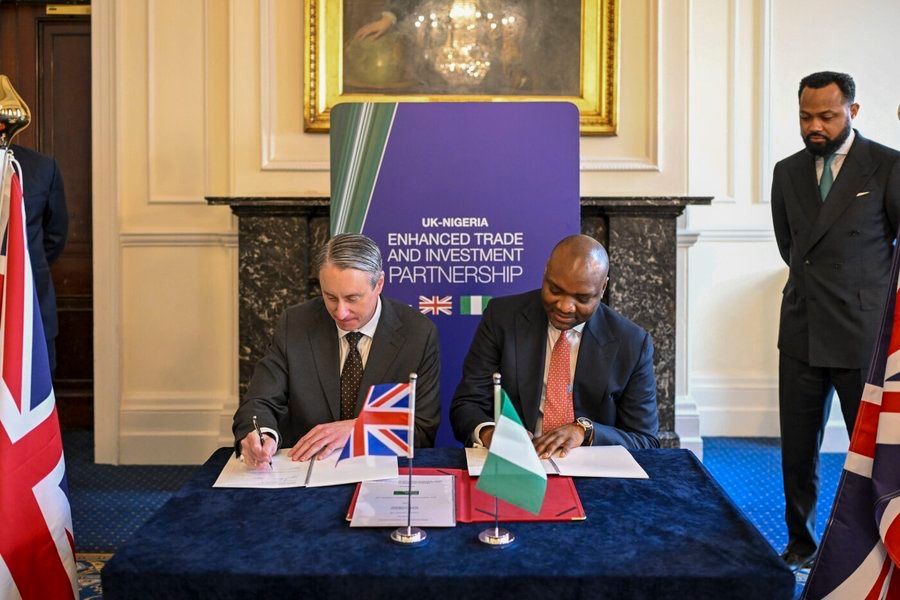
The Nigeria dairy investment project is gaining momentum after the Nigeria Sovereign Investment Authority (NSIA) signed a $500 million agreement with Asset Green Ltd in London on March 18, 2026, ahead of Bola Tinubu’s UK state visit.
This landmark Asset Green agriculture deal is being positioned as a cornerstone of the Nigeria food security plan and a catalyst for dairy industry localisation Nigeria through a large-scale, integrated production system.
At its foundation, the project is designed to move Nigeria away from heavy dairy import dependence by building a fully functional domestic value chain.
With 20,000 hectares allocated for feed and crop cultivation and 10,000 milking cows planned, the scale reflects a deliberate shift toward industrial agriculture under the broader NSIA dairy initiative.
The processing component is equally critical. The system will produce fresh milk, milk powder, butter, and up to 15,000 metric tonnes of infant formula annually.
This positions the Nigeria dairy investment project not just as a farming effort but as a complete farm-to-factory ecosystem capable of serving both domestic demand and future export potential.
Nigeria’s reliance on imported dairy products has remained a persistent economic challenge. Over 70 percent of consumption is sourced from abroad, costing approximately $1.5 billion annually in foreign exchange.
The Nigeria dairy investment project directly addresses this imbalance by focusing on local production capacity, a move that supports both the Nigeria food security plan and broader economic stability.
Infant formula production stands out as a strategic component.
As one of the most import-dependent dairy products, localising its production under the dairy industry localisation Nigeria strategy could significantly reduce external reliance while improving supply reliability for households.
For farmers and agripreneurs, the implications extend far beyond dairy alone. Large-scale operations like this require an extensive support ecosystem. The NSIA dairy initiative will depend on consistent supply chains for maize, soybean, and fodder crops, creating opportunities for crop farmers to tap into stable, long-term demand.
Logistics is another key area. Transporting feed, raw milk, and finished products will require efficient systems, opening doors for transport operators and supply chain businesses. Veterinary services will also see increased demand, as maintaining herd health is essential for productivity at this scale.
Processing and packaging industries are expected to benefit as well. As output grows, so will the need for modern packaging solutions, cold storage, and distribution infrastructure. These interconnected opportunities highlight how the Asset Green agriculture deal extends its impact across multiple sectors of the economy.
Job creation is a major component of the project’s appeal. While up to 5,000 direct jobs are projected, the indirect employment potential is far greater. From farm inputs to retail distribution, the ripple effects could support thousands more livelihoods.
Despite its promise, the success of the Nigeria dairy investment project will depend heavily on execution.
Infrastructure challenges—particularly power supply and road networks—remain significant hurdles. Dairy processing requires consistent electricity, and transporting perishable goods demands reliable logistics.
Security is another critical factor. Agricultural investments of this magnitude require stable environments to ensure continuity and protect assets. Without this, even well-funded projects can struggle to deliver results.
Equally important is disciplined implementation. Nigeria has seen ambitious agricultural initiatives fall short due to weak execution and policy inconsistency. For the NSIA dairy initiative to succeed, sustained commitment and effective management will be essential.
For individuals in agriculture, the takeaway is clear: opportunities lie in participation, not observation. Whether through crop production, logistics, veterinary services, or processing, the ecosystem surrounding this Nigeria dairy investment project offers multiple entry points for growth.
Ultimately, this initiative could mark a turning point. By advancing the dairy industry localisation Nigeria agenda and reinforcing the Nigeria food security plan, it has the potential to reshape the country’s agricultural landscape.
Read also: Iran US war Strait of Hormuz escalation intensifies as Trump launches offensive and Israel strikes energy targets
But its legacy will depend on delivery. It could either become a defining success in Nigeria’s journey toward food sovereignty—or another ambitious plan that fails to reach its full potential.
About The Author
